



Pope Leo XIV’s Basketball Stunt Sparks Global Reactions Amid Rising Geopolitical Tensions
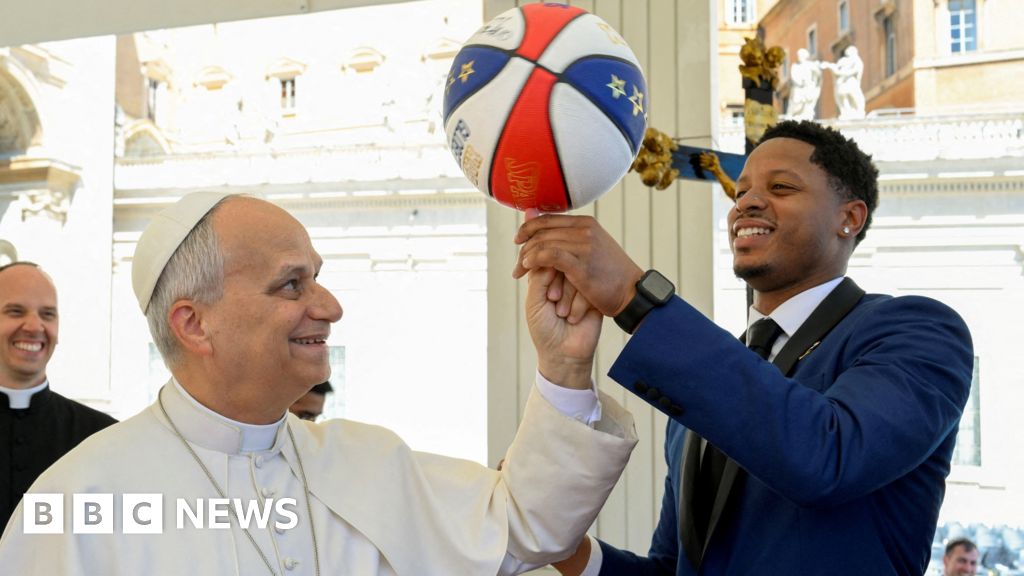
VATICAN CITY — In an unexpected and lighthearted moment during his weekly general audience in Saint Peter’s Square, Pope Leo XIV spun a basketball on his finger, flanked by players from the Harlem Globetrotters, as thousands of onlookers erupted in cheers. The spectacle, a rare departure from the Vatican’s usual solemnity, unfolded against a backdrop of escalating global conflicts, economic instability, and deepening ideological divides. While the scene offered a fleeting respite from grim headlines, analysts question whether such displays of levity can bridge the widening chasms in an increasingly fractured world.
A Pontiff’s Playful Gesture in Turbulent Times
The Pope’s basketball demonstration, aided by the Harlem Globetrotters—an American exhibition team known for their theatrics—marked a deliberate shift toward cultural diplomacy. Vatican spokespersons framed the event as a symbolic gesture of unity, emphasizing the Church’s outreach to youth and global audiences. Yet the timing raises eyebrows: as wars rage in Eastern Europe and the Middle East, and authoritarian regimes tighten their grip, critics argue that such spectacles risk appearing tone-deaf.
The stunt, however brief, underscores the Vatican’s ongoing struggle to remain relevant in a world where faith institutions compete with digital distractions and political disillusionment. Pope Leo XIV, known for his unconventional approach, has previously used sports and pop culture to engage younger demographics—a strategy that has drawn both praise and skepticism.
Global Reactions: From Delight to Disapproval
Reactions to the Pope’s basketball moment were sharply divided. Social media platforms lit up with memes and admiration, particularly from younger Catholics who welcomed the break from tradition. Meanwhile, conservative factions within the Church expressed discomfort, arguing that the papacy should prioritize doctrinal clarity over entertainment.
Beyond religious circles, geopolitical analysts noted the stark contrast between the Vatican’s playful display and the grim realities dominating global headlines. In Ukraine, Russian drone strikes continue to devastate civilian infrastructure. In Gaza, ceasefire negotiations stall as casualties mount. And in Taiwan, military drills heighten fears of a broader conflict. Against this backdrop, the Pope’s basketball spin risks being perceived as escapism rather than engagement.
Why This Matters: Soft Power in a Hardened World
The Vatican’s foray into sports diplomacy is not new—Pope Francis has met with football stars, and John Paul II famously skied—but the current geopolitical climate makes such gestures more contentious. Soft power, the ability to influence through culture rather than coercion, has long been a tool of the Holy See. Yet as global conflicts intensify, the effectiveness of symbolic acts is under scrutiny.
For the Vatican, the challenge lies in balancing relatability with authority. The Pope’s basketball moment may endear him to some, but others demand stronger stances on war, poverty, and climate change. With Catholic influence waning in Europe and growing in Africa and Asia, the Church’s messaging must resonate across vastly different cultural and political landscapes.
A World in Crisis Seeks More Than Symbolism
While the Pope’s basketball antics provided a momentary distraction, they also highlighted a deeper tension: in an era of unprecedented crises, people crave substance over spectacle. The United Nations warns of record displacement due to conflict, inflation strains economies worldwide, and democratic institutions face erosion. Against these challenges, can a spinning basketball carry any weight?
The answer may lie in what follows. If the Vatican leverages this moment to amplify calls for peace or humanitarian aid, the stunt could be remembered as a strategic opener. If not, it risks becoming a footnote in a pontificate struggling to navigate an increasingly fractured world.
Conclusion: Levity in the Shadow of Conflict
Pope Leo XIV’s basketball display was undeniably entertaining, a rare flash of joy in a world starved of it. But as wars rage and alliances shift, the question lingers: can such gestures foster real unity, or are they merely brief diversions in an age of upheaval? The Vatican’s next moves will determine whether this moment was mere theater—or the prelude to something more profound.
For now, the world watches, waiting for signals that transcend symbolism. Because in the end, no amount of basketball tricks can dribble away the gravity of our times.
