



Historic Lunar Mission Concludes as Artemis II Astronauts Safely Return to Earth
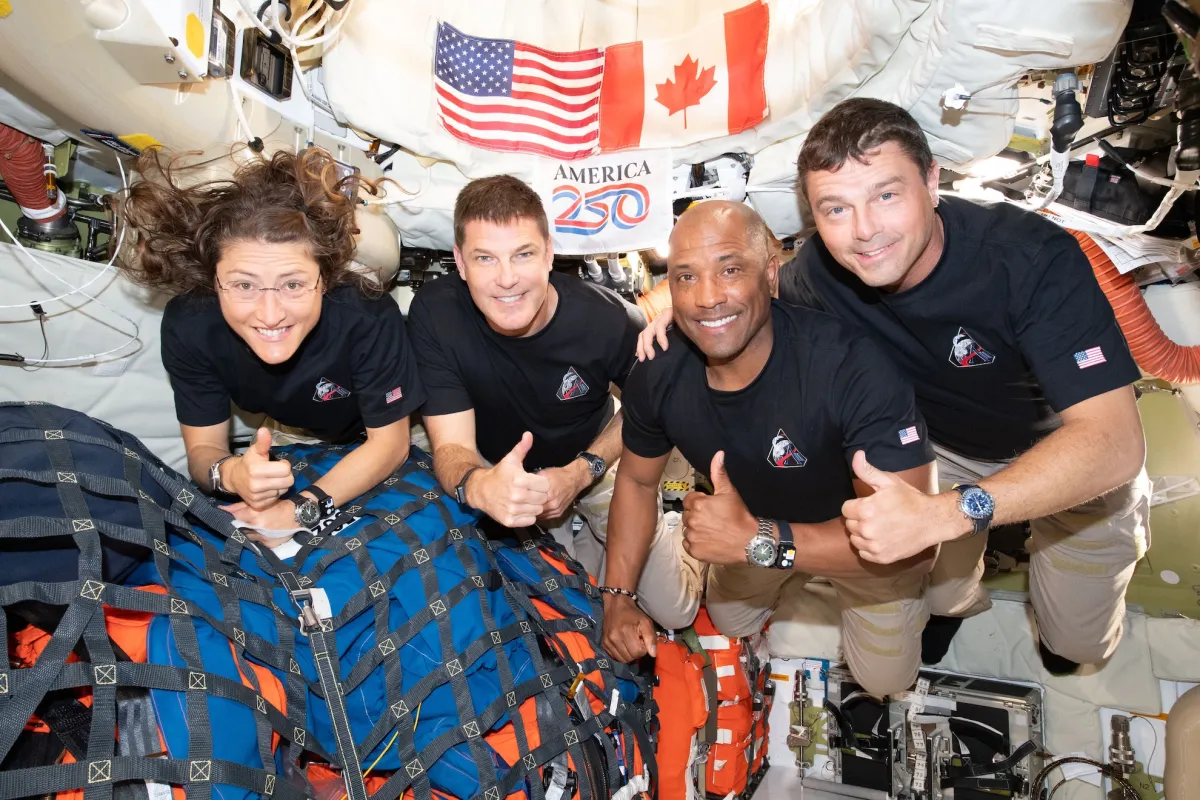
After a groundbreaking journey that pushed the boundaries of human exploration, the four-member crew of NASA’s Artemis II mission has returned safely to Earth, marking a triumphant conclusion to the first crewed lunar flight in over half a century. The Orion spacecraft, aptly named Integrity, splashed down in the Pacific Ocean off the coast of San Diego, California, at 5:07 p.m. Pacific Time on Tuesday, October 27, 2026. The astronauts—Commander Reid Wiseman, Pilot Victor Glover, and Mission Specialists Christina Koch and Jeremy Hansen—emerged from the capsule in excellent health, signaling the success of the 10-day mission. This momentous achievement not only reaffirms humanity’s ability to venture beyond Earth but also sets the stage for NASA’s ambitious plans to return humans to the Moon and beyond.
A Journey Into the Unknown
The Artemis II mission, part of NASA’s broader Artemis program, represents a significant leap forward in space exploration. It was the first crewed flight of NASA’s Space Launch System (SLS) rocket and the Orion spacecraft, both critical components of the agency’s long-term vision. The mission’s primary objective was to test the spacecraft’s capabilities in deep space while ensuring the crew’s safety during the journey. The astronauts traveled an unprecedented 252,760 miles from Earth—the farthest distance humans have ever ventured—and orbited the Moon, capturing breathtaking images of its surface and conducting scientific observations.
During their flyby, the crew identified previously unseen lunar craters, named one after Commander Wiseman’s late wife, Carroll, who passed away from cancer in 2020. This poignant gesture added a deeply personal touch to the mission’s scientific achievements. Additionally, the astronauts witnessed a rare total solar eclipse from space, a celestial phenomenon that underscored the awe-inspiring nature of their voyage.
A Legacy of Exploration
Artemis II builds on the legacy of NASA’s Apollo program, which last sent humans to the Moon in 1972. However, this mission is not merely a nostalgic nod to the past—it is a critical step toward a sustainable future in space exploration. The Artemis program aims to establish a permanent human presence on the Moon, serving as a proving ground for technologies and strategies that will eventually enable missions to Mars and beyond.
NASA Administrator Jared Isaacman hailed the mission as a resounding success, praising the crew for their courage and professionalism. “These were the ambassadors to the stars that we sent out there,” he said during a post-landing press conference. “I can’t imagine a better crew. It was a perfect mission.”
Isaacman also emphasized the significance of Artemis II as a precursor to even more ambitious endeavors. In a post on X, he wrote, “America is back in the business of sending astronauts to the Moon and bringing them home safely. This was a test mission, the first crewed flight of SLS and Orion, pushing farther into the unforgiving environment of space than ever before, and it carried real risk. They accepted that risk for all we stood to learn and for the exciting missions that follow, as we return to the lunar surface, build a Moon base, and prepare for what comes next.”
The Crew’s Contributions
The Artemis II crew’s diverse backgrounds and expertise reflect NASA’s commitment to inclusivity and collaboration. Commander Reid Wiseman, a seasoned astronaut who previously served aboard the International Space Station, brought invaluable leadership to the mission. Pilot Victor Glover, the first Black astronaut to pilot a lunar mission, highlighted the evolving face of space exploration. Mission Specialist Christina Koch, who holds the record for the longest continuous spaceflight by a woman, and Canadian astronaut Jeremy Hansen, the first non-American to participate in a lunar mission, further underscored the mission’s international significance.
Their contributions extended beyond technical expertise, as they also served as ambassadors for science, education, and inspiration. Throughout the mission, they engaged with audiences worldwide, sharing their experiences and fostering excitement about the future of space exploration.
What’s Next for Artemis?
With the success of Artemis II, NASA is now poised to accelerate its plans for Artemis III, which aims to land astronauts on the lunar surface by the late 2020s. This mission will include the first woman and the next man to walk on the Moon, further diversifying humanity’s footprint in space. Beyond Artemis III, NASA envisions establishing a sustainable lunar outpost, leveraging the Moon’s resources to support long-term exploration and scientific research.
The Artemis program also serves as a collaborative effort, with international partners like the Canadian Space Agency and private industry players contributing to its success. This global cooperation underscores the shared ambition to explore new frontiers and address fundamental questions about our place in the universe.
Balancing Triumph and Challenges
While the Artemis II mission is a cause for celebration, it also highlights the inherent challenges of space exploration. The mission’s success was the result of meticulous planning, rigorous testing, and the willingness of the crew to embrace significant risks. As NASA prepares for future missions, ensuring the safety of astronauts remains paramount, particularly as they venture into increasingly hostile environments.
Moreover, the Artemis program faces logistical and budgetary hurdles, requiring sustained political and public support to achieve its ambitious goals. Nonetheless, the successful return of the Artemis II crew demonstrates that with determination and collaboration, humanity’s aspirations in space are within reach.
Conclusion
The safe return of the Artemis II astronauts marks a pivotal moment in the history of space exploration. It reaffirms humanity’s ability to venture beyond Earth, explore uncharted territories, and push the boundaries of scientific knowledge. As NASA and its international partners prepare for the next phase of the Artemis program, the world watches with anticipation, eager to see what new discoveries and achievements lie ahead. For now, the Artemis II crew’s journey serves as a powerful reminder of the boundless potential of human ingenuity and the enduring spirit of exploration.
As we celebrate this historic milestone, the Artemis II mission reminds us that the stars are not the limit—they are just the beginning.
