


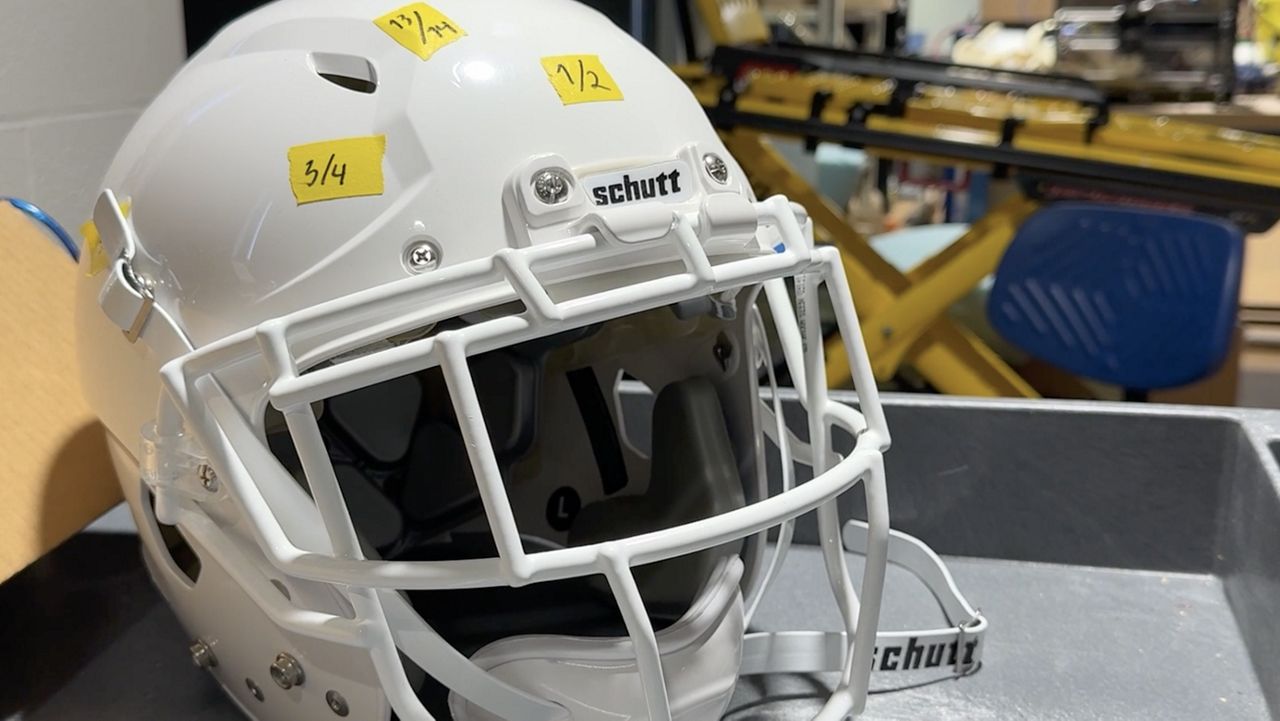

New Football Helmets Improve Safety but Struggle with Back-of-Head Protection, Study Reveals
Cincinnati, Ohio – Modern football helmets are proving more effective at protecting players from concussions, according to recent testing conducted at the University of Cincinnati. However, researchers caution that significant vulnerabilities remain, particularly when it comes to impacts to the back of the head.
The study, led by Professor Eric Nauman of UC’s Biomedical Engineering Department, highlights that while helmets have made substantial strides over the past decade, they still fall short in safeguarding players against rotational forces caused by rear impacts.
“Helmets are primarily designed to resist translational acceleration, which is the straight-line force of a hit. But rotational acceleration, which can twist the brain inside the skull, is often responsible for the most severe injuries,” Nauman explained. “The back of the helmet remains a weak point, performing at only about 55% effectiveness compared to other areas.”
This finding is particularly concerning given the high number of concussions sustained in youth football. According to the Centers for Disease Control and Prevention, young athletes experience approximately 400,000 concussions annually.
Innovations and Recommendations
To address these risks, organizations like the Cincinnati United Youth Football League (CUYFL) are taking proactive measures. Milan Laneir, president of CUYFL, emphasized the league’s commitment to player safety by introducing additional padding in helmets.
“We replace helmets every three years to ensure they’re up-to-date. We’ve also recommended extra padding, which has made a noticeable difference in reducing injuries,” Laneir said. “If a player suffers a concussion, we advise adding specialized concussion pads to their helmet. Many parents are even opting to add these pads preemptively to protect their kids.”
Laneir also noted that the extra padding provides a critical buffer during impacts, making collisions feel “more like a tap instead of a slap.” However, he acknowledged that the added weight can be a challenge for younger players.
“For smaller kids, like five- and six-year-olds, the helmets can feel heavy. The same padding that works for older players might not be ideal for younger ones,” he suggested. “Developing lighter, smaller helmets for younger athletes could be a game-changer.”
A Call for Further Innovation
While the current generation of helmets represents a significant improvement, experts agree that there’s still room for enhancement, especially in addressing rotational forces and rear impacts. Nauman pointed out that helmet design has evolved considerably in recent years but urged manufacturers to focus on improving protection for the back of the head.
“The back of the helmet remains a critical area that needs attention. Most other parts of the helmet are performing well, but this specific weakness must be addressed to better protect players,” he said.
As football continues to grapple with concerns over player safety, findings like these underscore the importance of ongoing research and innovation. For leagues like CUYFL, the goal is clear: ensure that every player, regardless of age or size, can enjoy the game with minimal risk of injury.
— Reported by Nexio News
