



Innovative Pool Cleaning Robot Shows Promise but Faces Challenges in Performance and Usability
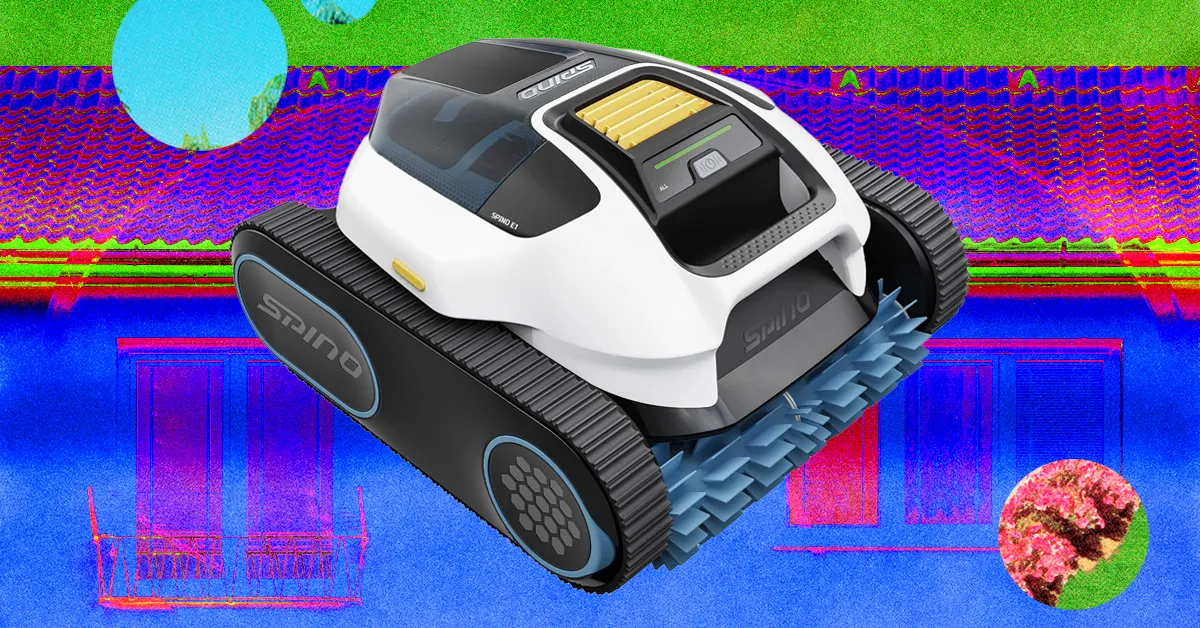
The Spino E1, a latest-generation robotic pool cleaner developed by Mammotion, promises to revolutionize pool maintenance with its sleek design and smart connectivity features. Designed to automate the tedious task of cleaning pools, the device leverages Bluetooth and Wi-Fi technology to integrate seamlessly with modern smart home ecosystems. However, while it offers convenience and advanced features, its performance leaves room for improvement, particularly in debris collection and user experience.
Smart Connectivity Meets Practical Functionality
At its core, the Spino E1 is engineered to simplify pool maintenance. Using Bluetooth, the robot communicates directly with a smartphone app, while 2.4-GHz Wi-Fi enables over-the-air firmware updates. This ensures the device stays up-to-date with the latest software enhancements, although real-time control is not supported. Initial setup involves connecting the robot to a temporary network before bridging it to a home Wi-Fi system—a process described as quick and hassle-free.
However, testing revealed that firmware updates were not proactively pushed to the device, requiring users to manually check the Device Information menu for available updates. Even then, installation attempts often necessitated multiple tries, highlighting potential inefficiencies in the update process. This raises questions about user convenience and the robustness of Mammotion’s software infrastructure.
Limited App Functionality Leaves Users Wanting More
The Spino E1’s companion app, while functional, is notably constrained in its capabilities. Users can select from four standard operating modes and make minor adjustments, such as configuring maximum speed and enabling beta features. Among these beta offerings is a “Turbo Cleaning” mode, which enhances suction power at the expense of battery life, and an improved method for cleaning steps and platforms.
Curiously, these features are not enabled by default, leaving users puzzled as to why they must manually activate them for each cleaning cycle. Turbo Cleaning mode, in particular, proved effective during testing without significantly impacting battery life—a puzzling omission from the default settings. Mammotion’s decision to keep these features in beta suggests ongoing refinement, but their potential improvements to performance underscore the need for faster integration into the standard user experience.
Performance: Hits and Misses
In real-world testing, the Spino E1 demonstrated mixed results. While the robot performed adequately in some areas, it struggled with others, leaving a noticeable amount of debris behind. Using synthetic leaves as test material, the cleaner achieved an average cleanup rate of approximately 80 percent. Debris was not confined to hard-to-reach corners or steps but was scattered across the pool floor, indicating potential limitations in suction power or design efficiency.
Organic debris posed similar challenges, with smaller particles like dirt often remaining uncleared. In one instance, the pool floor appeared smeared with debris rather than thoroughly cleaned—an unusual outcome that suggests the device may lack sufficient power for optimal performance. Despite these drawbacks, the robot excelled in cleaning steps and platforms, showcasing its capabilities in navigating complex pool geometries.
Turbo Mode: A Glimpse of Potential
The standout feature in testing was the Turbo Cleaning mode, which significantly improved debris collection. Notably, the enhanced suction did not deplete the battery faster, as one might expect. This raises the possibility that Turbo Mode could become the default setting in future updates, potentially addressing some of the device’s performance shortcomings. However, its current beta status and the need for manual activation limit its effectiveness for casual users.
Usability Concerns: Room for Improvement
One of the Spino E1’s most glaring usability issues is its lack of real-time notifications. When the cleaning cycle concludes, the robot ascends to the pool’s waterline and waits for retrieval. However, users are not alerted via the app, leaving them unaware of the device’s status. Adding to this frustration, the robot’s propulsion jets must remain active to keep it afloat, consuming battery power. After approximately 10 minutes, the battery dies, causing the robot to sink. While a retrieval hook is provided for emergencies, this design flaw diminishes the product’s convenience and reliability.
Context: The Growing Smart Pool Cleaning Market
The Spino E1 enters a competitive market for robotic pool cleaners, where brands like Dolphin, Hayward, and Polaris dominate with feature-rich offerings. These devices often boast superior suction power, advanced navigation algorithms, and seamless app integration, setting a high bar for newcomers. Mammotion’s entry, while innovative in its use of Bluetooth and Wi-Fi, must overcome significant performance and usability hurdles to carve out a niche in this crowded space.
Industry experts note that consumers increasingly prioritize efficiency, ease of use, and reliability in smart home devices. The Spino E1’s promising features, such as Turbo Cleaning mode and step-cleaning capabilities, demonstrate potential, but its inconsistent debris collection and absence of real-time notifications highlight areas for improvement.
Conclusion: A Work in Progress
The Spino E1 represents a bold step forward in pool cleaning technology, blending smart connectivity with practical functionality. Its ability to integrate with home networks and its promising Turbo Cleaning mode are commendable features. However, its inconsistent performance, limited app functionality, and usability challenges suggest that Mammotion still has work to do to refine its product.
As the company continues to iterate and improve, the Spino E1 could become a formidable contender in the robotic pool cleaner market—provided it addresses its current shortcomings. For now, it remains a promising yet imperfect solution for those seeking to automate their pool maintenance routine. Balancing innovation with practicality, the Spino E1’s journey is emblematic of the challenges and opportunities in the rapidly evolving smart home industry.
