


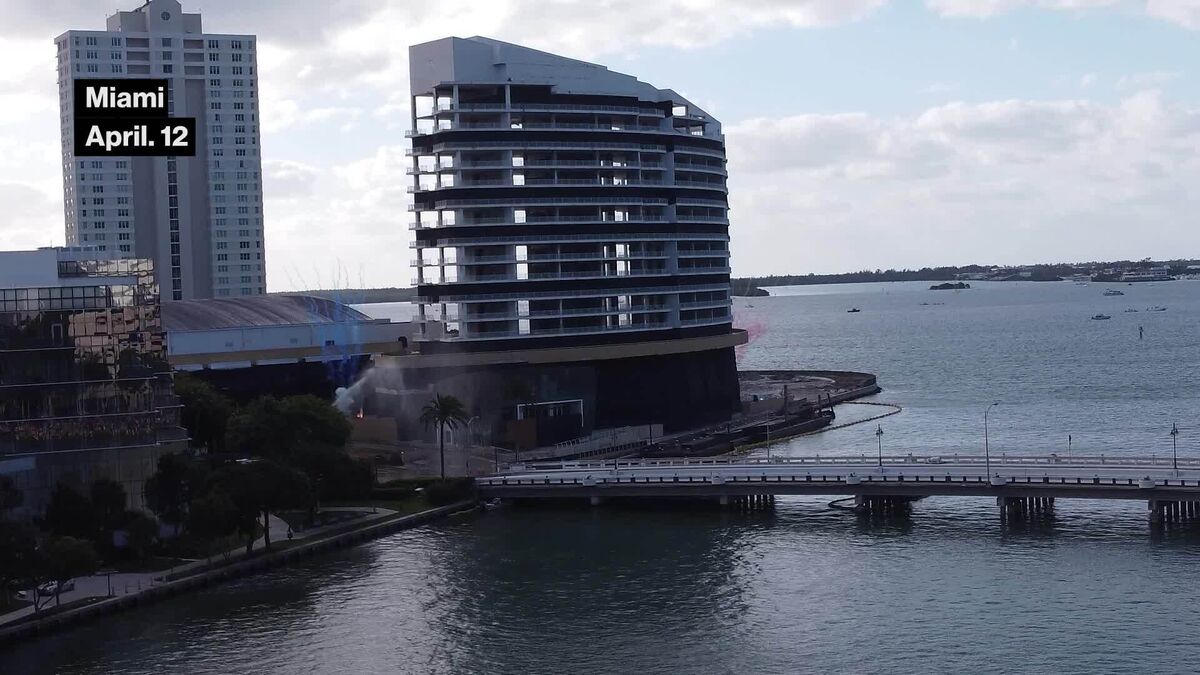

Historic Miami Hotel Reduced to Rubble in Controlled Implosion, Marking End of an Era
Miami, Florida – April 12, 2026
In a dramatic display of engineering precision, the iconic former Mandarin Oriental hotel on Brickell Key was reduced to rubble in a controlled implosion early Sunday morning, marking the end of a prominent chapter in Miami’s architectural and hospitality history. The nearly 20-story structure, once a symbol of luxury and sophistication in the heart of Miami’s bustling financial district, was demolished to make way for a new high-rise development, signaling the city’s relentless march toward modernization.
The implosion, captured in a stunning visual spectacle by local media and bystanders, lasted mere seconds but drew a mix of awe, nostalgia, and anticipation from onlookers. As the sun rose over Biscayne Bay, the building collapsed inward in a choreographed sequence of explosions, sending plumes of dust into the air before workers swiftly moved in to secure the site. The operation, carried out by experienced demolition experts, ensured minimal disruption to the surrounding area, though the event temporarily closed nearby streets and waterways.
A Legacy of Luxury and Innovation
Built in 2000, the Mandarin Oriental Miami was celebrated for its sleek design and prime waterfront location on Brickell Key, a man-made island in Biscayne Bay. The hotel quickly became a landmark in Miami’s skyline, attracting affluent travelers, celebrities, and business elites. With its award-winning spa, Michelin-starred dining, and panoramic views of the bay and downtown Miami, the hotel was a cornerstone of the city’s luxury hospitality scene.
However, as Miami’s real estate market evolved, the hotel faced growing competition from newer, more opulent developments. In 2023, the property was sold to a consortium of developers for a reported $200 million, paving the way for its eventual demolition. The decision to tear down the hotel sparked debates among preservationists and urban planners, who argued that the building still held architectural and cultural value.
“It’s bittersweet to see such an iconic structure go,” said Maria Lopez, a Miami-based architectural historian. “The Mandarin Oriental was a testament to Miami’s rise as a global city in the early 21st century. Its demolition is a reminder of how quickly our urban landscapes can change.”
Economic Forces and Urban Transformation
The implosion of the Mandarin Oriental is emblematic of broader trends shaping Miami’s real estate market. Over the past decade, the city has experienced a surge in demand for luxury condominiums, office space, and mixed-use developments, fueled by an influx of domestic and international investors. Brickell Key, in particular, has become a hotspot for high-end residential and commercial projects, with developers eager to capitalize on its waterfront location and proximity to downtown Miami.
The new project slated for the site, designed by acclaimed architectural firm Foster + Partners, promises to be a modern masterpiece. Plans include a 60-story mixed-use tower featuring luxury residences, a five-star hotel, and retail spaces. The development is expected to attract even more global attention to Miami, further cementing its status as a hub for business, tourism, and innovation.
“This is not just about replacing an old building with a new one,” said Carlos Alvarez, CEO of the development consortium. “It’s about creating a space that reflects Miami’s dynamic spirit and meets the demands of the 21st-century global elite.”
Community Reactions and Environmental Concerns
While many residents and business leaders have welcomed the development as a sign of progress, others have raised concerns about its potential impact on the community and environment. Brickell Key, originally developed in the 1980s, has long been a serene enclave amidst Miami’s urban sprawl. Critics worry that the influx of high-density developments could disrupt the island’s delicate ecosystem and exacerbate traffic congestion in the area.
Environmental groups have also called for greater transparency and accountability in the construction process, urging developers to adhere to sustainable building practices. “We understand that growth is inevitable, but it must be done responsibly,” said Sofia Martinez, a spokesperson for the Miami-based non-profit Green Future Initiative. “The developers have an opportunity to set a new standard for environmentally conscious urban development.”
A Moment of Reflection
As the dust settles on the Mandarin Oriental site, Miami finds itself at a crossroads, balancing its past with its future. The hotel’s demolition serves as a poignant reminder of the impermanence of urban landscapes and the constant push for reinvention in a rapidly changing world.
“Cities are living organisms,” said Dr. Jonathan Harris, a professor of urban studies at the University of Miami. “They evolve, adapt, and sometimes shed their skin. The Mandarin Oriental’s implosion is a moment of transformation—a chance for Miami to redefine itself yet again.”
The new development, expected to break ground later this year, will undoubtedly shape the city’s skyline and identity for decades to come. Yet, as the echoes of the implosion fade, Miami’s residents and leaders must grapple with the question of how to honor the past while embracing the future.
For now, the former Mandarin Oriental site stands as a blank canvas, ready to be painted anew.
As the city moves forward, one thing is certain: Miami’s story is far from over.
