



UK Government Proposes Sweeping Powers to Align with EU Single Market Without Parliamentary Approval
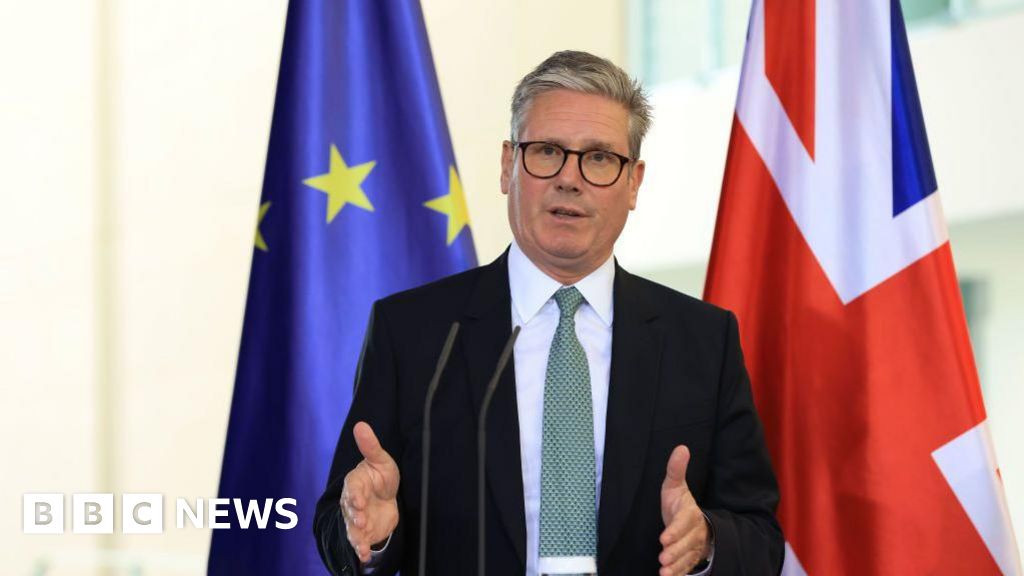
London, United Kingdom – In a move that could redefine the UK’s post-Brexit relationship with the European Union, Sir Keir Starmer, leader of the Labour Party, has unveiled plans to introduce legislation granting the government unprecedented authority to adopt EU single market rules without parliamentary oversight. The proposal, which has sparked fierce debate across political and economic circles, underscores the UK’s ongoing struggle to balance sovereignty with economic necessity in a rapidly shifting global landscape.
This development comes at a critical juncture for Britain, as it continues to grapple with the economic fallout of Brexit and seeks to bolster its trade ties with its largest trading partner, the EU. The proposed law, if enacted, could significantly streamline regulatory alignment but risks reigniting tensions over democratic accountability and national independence.
The Proposal: A Bold Step or a Democratic Risk?
Sir Keir Starmer’s plan centers on empowering the UK government to adopt EU single market regulations directly, bypassing the traditional requirement for parliamentary debate and approval. This would allow the UK to maintain closer alignment with EU standards, particularly in areas such as product safety, environmental regulations, and trade protocols. Proponents argue that such a mechanism would reduce bureaucratic hurdles, enhance trade efficiency, and provide businesses with the stability they need to thrive in a post-Brexit world.
However, critics have raised alarm over the potential erosion of parliamentary sovereignty, a cornerstone of the UK’s democratic system. The Brexit referendum of 2016 was, in large part, a rejection of EU-imposed rules and a call for greater national control. Opponents argue that granting the executive such sweeping powers could undermine the very principles Brexit was meant to uphold.
Global Context: Sovereignty vs. Economic Integration
The UK’s dilemma is not unique. Across the globe, nations are wrestling with the tension between maintaining sovereignty and integrating into broader economic systems. From the United States’ complex relationship with international trade agreements to China’s balancing act between globalization and authoritarian control, the push-and-pull of economic integration versus national autonomy is a defining challenge of the 21st century.
For Britain, the stakes are particularly high. The EU remains its largest trading partner, accounting for nearly half of its total trade. Post-Brexit disruptions have exposed the fragility of this relationship, with businesses struggling to navigate new customs checks, tariffs, and regulatory divergences. By aligning more closely with the EU single market, the UK could mitigate these challenges and strengthen its economic resilience. Yet, such alignment risks alienating Brexit supporters and deepening political divisions.
Why It Matters: A Test for Post-Brexit Britain
Sir Keir Starmer’s proposal is more than a policy debate—it is a litmus test for post-Brexit Britain’s identity. At its core, the issue raises fundamental questions about the UK’s role in the world. Should it prioritize economic integration, even at the cost of democratic oversight? Or should it safeguard sovereignty, potentially at the expense of trade efficiency and economic growth?
The outcome of this debate will have far-reaching implications, not only for the UK but for the global community. As a major player in international trade and a key NATO member, Britain’s decisions reverberate across continents. A closer alignment with the EU could signal a shift toward renewed cooperation, while a rejection of such measures could reinforce the trend of economic nationalism and fragmentation.
Human Impact: Businesses and Citizens in the Balance
Beyond the political and economic dimensions, the proposal has profound implications for British businesses and citizens. For companies operating in sectors reliant on EU trade, such as manufacturing, agriculture, and finance, regulatory alignment could offer much-needed stability and predictability. It could reduce costs, streamline supply chains, and open up new opportunities for growth.
Conversely, the potential loss of parliamentary oversight raises concerns about transparency and accountability. Citizens wary of centralized power may view the proposal as a step backward, undermining trust in democratic institutions. The debate thus transcends policy, touching on the very fabric of British society.
The Road Ahead: A Divided Nation
As the proposal moves through the legislative process, it is certain to encounter fierce opposition from both sides of the political spectrum. Brexit hardliners are likely to frame it as a betrayal of the nation’s independence, while pro-EU advocates may see it as a pragmatic step toward economic recovery. The Labour Party’s ability to navigate this complex terrain will be crucial to its success—or failure—in shaping the UK’s post-Brexit future.
Meanwhile, the international community will be watching closely. The UK’s decision could influence global perceptions of Brexit’s viability and set a precedent for other nations grappling with similar dilemmas.
Conclusion: A Defining Moment for Britain
Sir Keir Starmer’s proposal represents a defining moment for post-Brexit Britain, encapsulating the tensions between sovereignty and economic integration that define our era. As the UK stands at a crossroads, the choices it makes will shape not only its own future but also its role in the global order.
In a world increasingly defined by uncertainty, the UK’s decision will send a powerful message—whether one of renewed cooperation or steadfast independence. The stakes could not be higher, and the outcome will resonate far beyond its shores. For Britain, this is more than a policy debate; it is a test of its identity in a changing world.
