


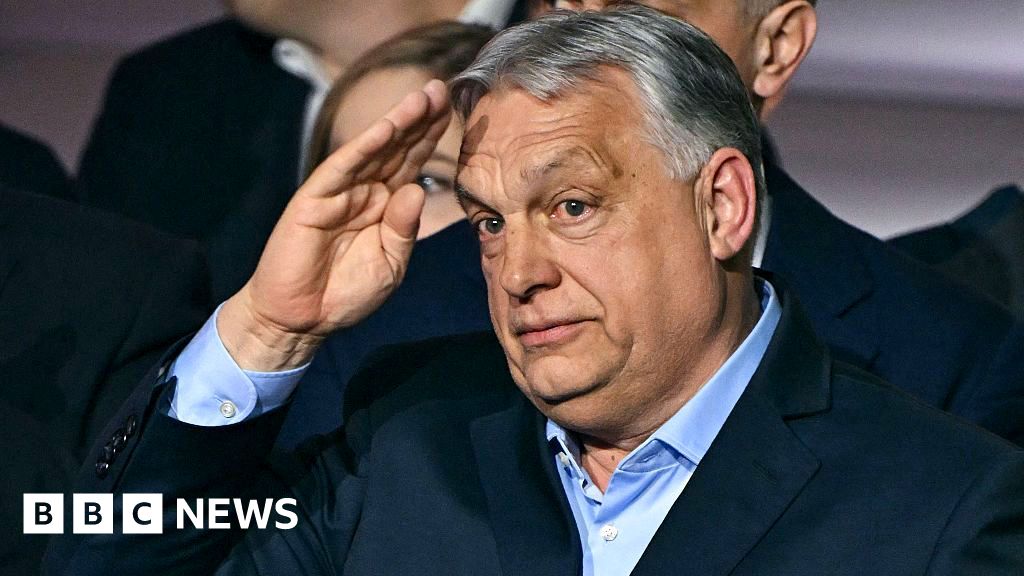

Péter Magyar’s Historic Victory Signals a Turning Point for Hungary After Years of Orbán’s Polarizing Rule
In a dramatic shift that has reverberated across Hungary’s political landscape, Péter Magyar, a former insider turned reformist, has claimed a historic victory in a pivotal election. His triumph comes as a beacon of hope for a nation fatigued by years of divisive governance under Prime Minister Viktor Orbán. The outcome not only marks a potential end to Orbán’s dominance but also raises questions about Hungary’s future trajectory within the European Union and its role on the global stage.
A Nation Weary of Division
For over a decade, Hungary has been a focal point of political polarization, with Viktor Orbán at the helm. Orbán’s leadership, characterized by nationalist rhetoric, centralized power, and clashes with the EU over democratic norms, has deeply divided the country. Critics accuse him of eroding checks and balances, stifling dissent, and fostering an environment of cronyism. Meanwhile, his supporters laud his policies as protective of Hungary’s sovereignty and cultural identity.
Yet, this polarization has taken its toll. Protests over government corruption, deteriorating public services, and allegations of electoral manipulation have become a common sight in Budapest. The electorate, once galvanized by Orbán’s promises of renewal, now appears weary, craving stability and transparency. This fatigue has created fertile ground for Péter Magyar’s rise, a man who once belonged to Orbán’s inner circle but has since become a vocal critic of the administration.
The Rise of Péter Magyar
Péter Magyar’s journey to this moment is as unlikely as it is compelling. A former high-ranking official within Orbán’s Fidesz party, Magyar’s insider perspective lent him credibility when he began publicly criticizing the government. His campaign focused on combating corruption, restoring democratic institutions, and bridging the deep divides within Hungarian society.
Magyar’s message resonated particularly with younger voters and urban populations, who have long felt marginalized by Orbán’s policies. His promise of a “new Hungary” free from cronyism and authoritarianism struck a chord, mobilizing a coalition of disillusioned Fidesz supporters, centrists, and progressive voters. His victory signals a rejection of the status quo and a demand for accountability in a country grappling with economic challenges and widespread disillusionment.
Global Implications of Hungary’s Shift
Hungary’s political transformation extends far beyond its borders. As a member of the European Union and NATO, Hungary’s internal dynamics have significant implications for global security and geopolitical stability. Orbán’s alignment with illiberal leaders like Russia’s Vladimir Putin and his resistance to EU policies on migration and sanctions have often placed him at odds with Western allies.
Magyar’s ascent could herald a recalibration of Hungary’s foreign policy. A move toward greater alignment with EU values and a more cooperative stance on issues such as Ukraine’s defense and regional security could strengthen transatlantic unity. Conversely, any hesitation or deviation from Orbán’s policies will be closely scrutinized by both allies and adversaries, given Hungary’s strategic location in Central Europe.
Furthermore, Magyar’s victory could serve as a model for other nations grappling with the rise of populist leaders. It demonstrates that political fatigue and a desire for reform can overcome even the most entrenched regimes, offering lessons for democracies worldwide.
Challenges Ahead
Despite his historic win, Magyar faces an uphill battle in delivering on his promises. Orbán’s legacy is deeply ingrained in Hungary’s political institutions, with many key positions held by loyalists. Unraveling entrenched corruption, restoring judicial independence, and addressing economic inequality will require not only political will but also broad public support.
Moreover, Magyar must navigate a fragmented political landscape, with opposition parties wary of his insider past and Orbán’s supporters unlikely to relinquish their influence without resistance. The coming months will be critical in determining whether Magyar can translate his victory into meaningful change or if Hungary’s political tensions will persist.
A New Chapter for Hungary
As Hungary stands on the precipice of a new era, the stakes could not be higher. Péter Magyar’s victory represents more than a change in leadership; it is a test of whether a nation exhausted by division can forge a path toward unity and renewal.
In a world increasingly defined by geopolitical uncertainty and ideological polarization, Hungary’s transformation holds lessons for us all. It reminds us that even in the face of entrenched power, the desire for accountability and reform can prevail. As Magyar steps into this new role, the eyes of Europe and the world will be watching, hoping that Hungary’s journey toward peace and stability can inspire a broader movement for democratic renewal.
