


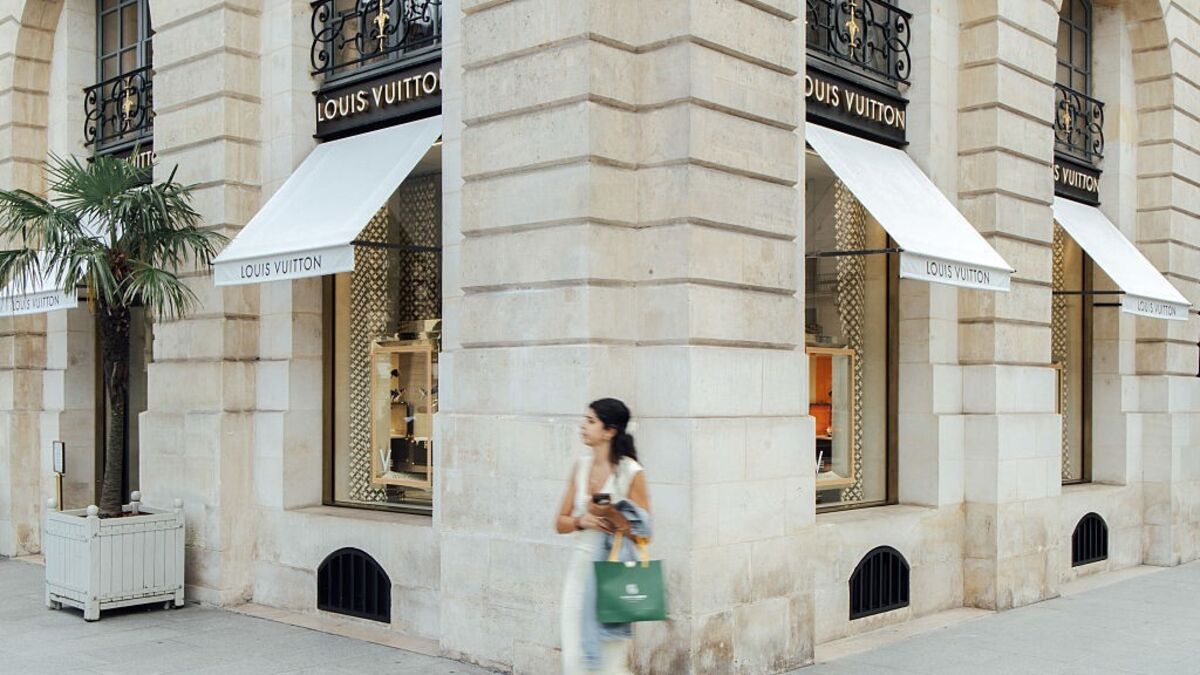

LVMH’s First-Quarter Revenue Falls Short as Luxury Demand Cools
Paris, France – The world’s largest luxury conglomerate, LVMH Moët Hennessy Louis Vuitton, has reported weaker-than-expected first-quarter revenue, signaling a potential slowdown in the high-end retail sector. The French powerhouse, home to iconic brands such as Louis Vuitton, Dior, and Tiffany & Co., posted organic revenue growth of just 3% year-over-year—falling short of analyst projections and raising concerns about broader market trends.
The disappointing figures, disclosed in an earnings release on Tuesday, were largely attributed to sluggish performance in LVMH’s flagship fashion and leather goods division, which accounts for nearly half of the group’s total sales. The results arrive at a critical juncture for the luxury industry, with rivals Kering and Hermès set to unveil their own quarterly reports later this week. Analysts are now questioning whether the sector’s post-pandemic boom is losing steam amid economic uncertainty and shifting consumer behavior.
A Closer Look at the Numbers
LVMH’s total revenue for the first three months of 2024 reached €20.7 billion ($22.1 billion), marking a 3% organic increase compared to the same period last year. While the company emphasized “resilience” in its statement, the growth rate represents a sharp deceleration from the double-digit surges seen in recent years. The fashion and leather goods unit, typically the group’s strongest performer, grew by a mere 2%, far below the 5-6% anticipated by market watchers.
Other segments showed mixed results: wines and spirits saw a modest uptick, while selective retailing—which includes Sephora and duty-free operator DFS—posted stronger gains. However, the muted performance of LVMH’s core luxury labels has drawn the most scrutiny, particularly as the company sets the tone for an industry already grappling with inflationary pressures and geopolitical instability.
What’s Behind the Slowdown?
Several factors may be contributing to the cooling demand for luxury goods. After years of explosive growth fueled by pent-up spending post-COVID, high-net-worth consumers—particularly in key markets like China and the U.S.—appear to be tightening their purse strings. Economic headwinds, including rising interest rates and a weaker yuan, have dampened discretionary spending in China, where luxury brands have long relied on robust demand.
Meanwhile, in Europe and North America, inflation and cost-of-living pressures have led some affluent shoppers to rethink their splurges. “The era of unchecked luxury spending may be coming to an end,” noted Andrea Felsted, a Bloomberg Opinion columnist specializing in retail. “Brands that thrived on pandemic-era indulgence now face a more cautious consumer.”
LVMH’s struggles also reflect broader challenges in the industry, where aspirational buyers—those who stretch their budgets for a single designer handbag—are pulling back. With entry-level luxury products losing their luster, brands may need to recalibrate their strategies to retain both high-end clientele and middle-class aspirants.
The Ripple Effect Across the Industry
All eyes are now on Kering and Hermès, which will report earnings in the coming days. Kering, owner of Gucci and Saint Laurent, has already warned of declining sales in Asia, while Hermès—known for its ultra-exclusive Birkin bags—has historically been more resilient due to its wealthier customer base.
The divergence in performance could highlight a growing bifurcation in the luxury market. “The ultra-high-end segment, catering to the top 1%, remains relatively insulated,” explains Luca Solca, a senior research analyst at Bernstein. “But brands targeting the ‘affordable luxury’ space are far more vulnerable to economic swings.”
Investors reacted cautiously to LVMH’s report, with shares dipping nearly 2% in early trading. The company’s stock has underperformed the broader European market this year, reflecting broader skepticism about the sector’s near-term prospects.
LVMH’s Path Forward
Despite the setback, LVMH remains optimistic. Bernard Arnault, the group’s billionaire CEO, has long emphasized long-term brand building over short-term gains. The company continues to invest heavily in craftsmanship, retail expansion, and digital innovation, including recent high-profile collaborations and pop-up activations aimed at younger shoppers.
China remains a focal point. While growth has slowed, LVMH is doubling down on localized marketing and exclusive in-store experiences to reignite demand. The recent rebound in Chinese tourism to Europe could also provide a lift, as travelers resume luxury shopping abroad.
Still, analysts caution that a full recovery may take time. “The golden age of luxury growth is behind us,” says Felsted. “The winners in this new environment will be those who can balance exclusivity with accessibility while navigating an increasingly volatile global economy.”
A Sector at a Crossroads
As the luxury industry braces for a potential reset, LVMH’s earnings serve as a barometer for wider challenges. The sector’s reliance on China, its exposure to macroeconomic fluctuations, and the evolving tastes of younger consumers all pose significant hurdles.
For now, the message is clear: even the mightiest players are not immune to shifting tides. Whether this quarter’s results mark a temporary blip or the start of a more profound correction remains to be seen—but one thing is certain, the luxury world is entering a new chapter.
As the dust settles on LVMH’s earnings miss, the industry watches and waits to see if this is a stumble—or the first sign of a larger storm.
