


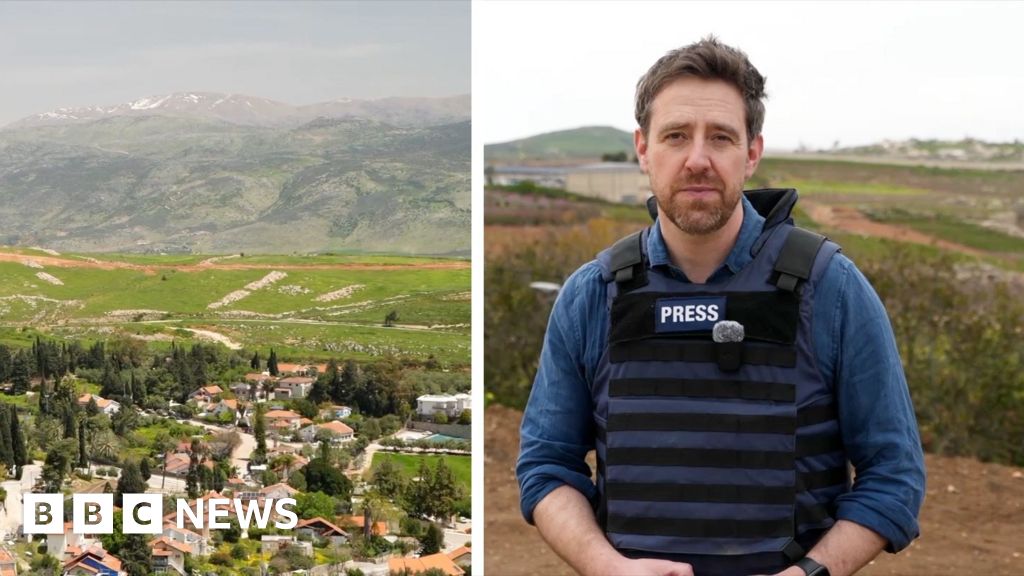

Tensions Escalate on Israel-Lebanon Border as Hezbollah Rockets Target Northern Town
A Town on the Frontlines
Nestled along Israel’s northern border, the quiet town of Metula has become a flashpoint in the escalating conflict between Israel and Hezbollah. Surrounded on three sides by Lebanon, the community of 1,600 residents now lives under the constant threat of rocket fire from the Iranian-backed militant group. Over the past six weeks, Israeli authorities report that 14 people—12 soldiers and two civilians—have been killed in Hezbollah attacks, marking one of the most intense periods of violence since the 2006 Lebanon War.
Meanwhile, Lebanese officials claim that more than 2,000 people have died in retaliatory Israeli airstrikes since clashes reignited on March 2. The cross-border hostilities have raised fears of a wider regional war, with global powers scrambling to prevent further escalation.
Why Metula Matters
Metula, Israel’s northernmost town, is more than just a picturesque hillside community—it is a strategic military and symbolic target. Founded in 1896 by Jewish settlers, the town has historically been vulnerable due to its proximity to Lebanon. Today, it serves as a microcosm of the broader Israel-Hezbollah conflict, where every rocket fired and every airstrike launched carries the risk of spiraling into a full-scale war.
Hezbollah, designated as a terrorist organization by the U.S. and EU, has long been Iran’s most powerful proxy in the region. Its arsenal of precision-guided missiles poses a direct threat to Israeli cities, while Israel’s military superiority ensures devastating retaliatory strikes. The current cycle of violence underscores the fragile balance of deterrence that has kept the region on edge for years.
A Global Security Concern
The escalating violence between Israel and Hezbollah is not just a localized conflict—it has far-reaching implications for global security. The U.S. and European nations have repeatedly warned against further escalation, fearing a repeat of the 2006 war, which displaced over a million people and caused billions in damage.
With Iran’s backing, Hezbollah’s actions risk dragging other regional actors into the fray, including Syria and Yemen’s Houthi rebels. The conflict also threatens vital shipping routes in the Mediterranean, where recent attacks have already disrupted trade. For Western governments, the priority is containment—preventing a war that could destabilize the Middle East and trigger a broader humanitarian crisis.
Human Cost and Humanitarian Fallout
Beyond the geopolitical stakes, the fighting has exacted a heavy toll on civilians. In Lebanon, entire villages near the border have been evacuated as Israeli airstrikes target Hezbollah positions. Hospitals in southern Lebanon report severe shortages of medical supplies, while in Metula, residents live in fortified shelters, their daily lives dictated by air raid sirens.
The UN has called for an immediate de-escalation, warning that further hostilities could lead to mass displacement. However, with both sides vowing to retaliate for any attacks, the prospects for a ceasefire remain bleak.
What Comes Next?
Diplomatic efforts led by the U.S. and France are underway to broker a temporary truce, but neither Israel nor Hezbollah appears willing to back down. Israel has signaled it will continue targeted strikes to degrade Hezbollah’s capabilities, while the militant group insists it will keep firing rockets until Israel halts its operations in Gaza.
The longer the conflict persists, the higher the risk of a miscalculation that could ignite a full-scale war. For now, the world watches nervously as Metula—and the broader region—teeters on the edge of catastrophe.
Conclusion: A Powder Keg Waiting to Explode
The fighting along the Israel-Lebanon border is more than a regional skirmish—it is a litmus test for Middle Eastern stability. With global powers struggling to mediate and civilians paying the highest price, the situation remains dangerously volatile. If diplomacy fails, the consequences could reverberate far beyond Metula, reshaping the security landscape of the entire region. For now, the world holds its breath, hoping that restraint prevails before it’s too late.
