



China’s Petrochemical Sector Faces Production Cuts Amid Rising Costs and Weak Demand
Industry Hits Lowest Seasonal Output in Three Years as Margins Shrink
Beijing, China – China’s petrochemical industry, a critical supplier of raw materials for textiles, plastics, and manufacturing, has sharply reduced production to its lowest seasonal level in three years, according to industry analysts. The cuts come as rising feedstock costs and sluggish export demand squeeze profit margins, forcing producers to scale back operations.
The slowdown reflects broader challenges in China’s industrial economy, where manufacturers grapple with fluctuating commodity prices, weakening global trade, and domestic overcapacity. With petrochemicals serving as a bellwether for downstream industries, the production slump signals potential ripple effects across global supply chains.
Squeezed Margins Force Production Cuts
Petrochemical plants across China have dialed back output in recent months as the cost of key feedstocks—including naphtha and liquefied petroleum gas (LPG)—has climbed. Meanwhile, demand from key export markets in Europe and North America remains subdued, leaving producers with swollen inventories and narrowing profits.
Data from industry monitors shows operating rates at ethylene crackers, a crucial production unit, have fallen to around 75%—marking the lowest seasonal utilization since 2021. Similarly, polyester producers, which rely on petrochemical intermediates, have cut output by nearly 15% year-on-year.
“Margins are under pressure from both ends,” said Li Wei, a Shanghai-based analyst at energy consultancy SCI99. “Feedstock prices are volatile due to geopolitical tensions, while overseas buyers are ordering less amid economic uncertainty.”
The downturn contrasts sharply with the post-pandemic rebound in 2022, when Chinese petrochemical firms ramped up production to meet surging global demand. Now, with Western economies slowing and China’s property sector still in crisis, the sector faces a prolonged period of adjustment.
Global Implications for Textiles and Plastics
China dominates global petrochemical supply, accounting for over 40% of the world’s polyester and nearly a third of polyethylene production. The current pullback could disrupt manufacturing timelines for apparel, packaging, and consumer goods industries worldwide.
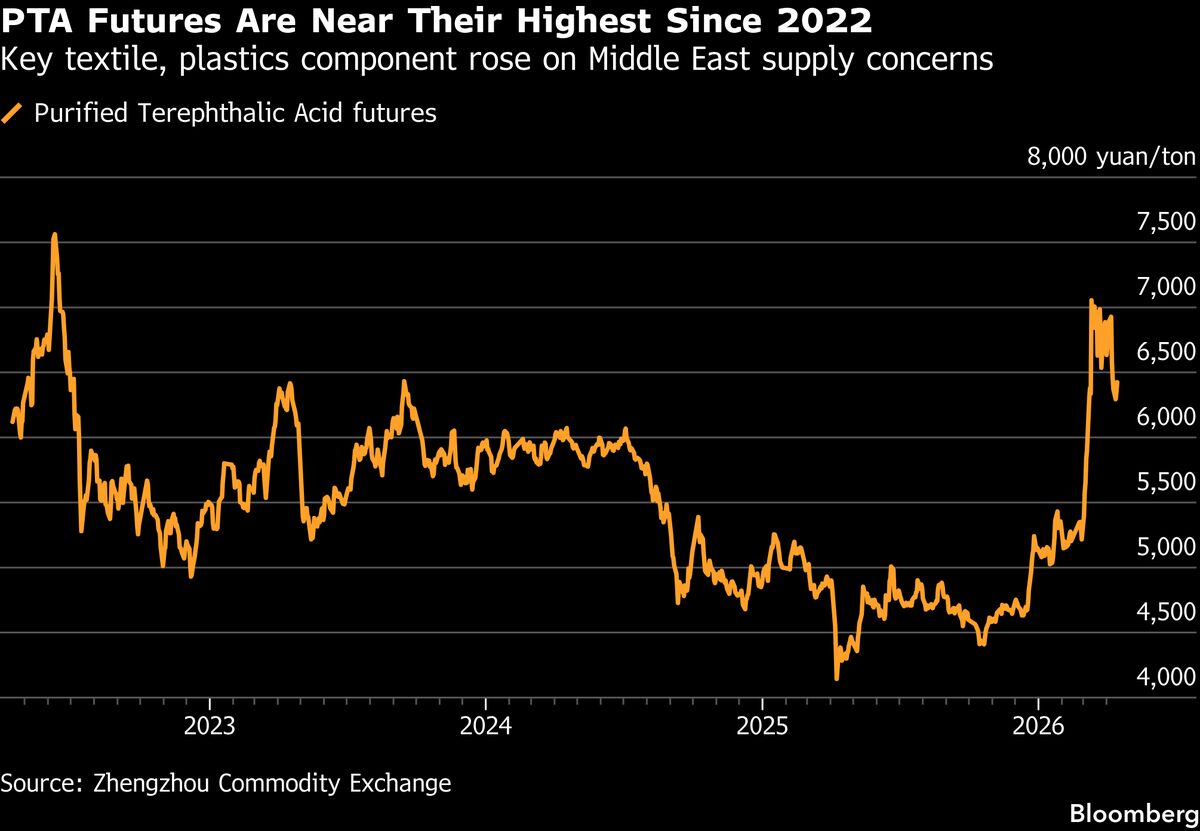
In Vietnam and Bangladesh—key hubs for textile exports—factories report delays in securing Chinese-made purified terephthalic acid (PTA), a key polyester ingredient. “Lead times have extended by two to three weeks,” said a sourcing manager for a major European fashion retailer. “If this continues, we may see autumn inventory shortages.”
Plastics manufacturers are also feeling the pinch. With polyethylene prices rising, packaging firms in Southeast Asia and India are exploring alternative suppliers from the Middle East, though logistical hurdles remain.
Domestic Overcapacity Adds to Struggles
Even before the latest downturn, China’s petrochemical sector was battling overcapacity after years of aggressive expansion. Dozens of new plants came online in 2022-23, particularly in coastal provinces like Shandong and Zhejiang, flooding the market with supply just as demand began to soften.
“Many firms bet big on sustained growth, but now they’re stuck with excess inventory,” said Chen Yuwen, an industry researcher at BloombergNEF. “Smaller players may need to consolidate or shut down.”
The government has urged companies to focus on high-value chemical products rather than bulk commodities, but transitioning production lines takes time and capital—resources that are now in short supply.
Long-Term Headwinds: Energy Transition and Trade Tensions
Beyond cyclical challenges, China’s petrochemical giants face structural pressures. The global push toward sustainability is dampening demand for single-use plastics, while Europe’s carbon border tax could penalize energy-intensive exports.
At the same time, trade restrictions are mounting. The U.S. has maintained tariffs on certain Chinese chemicals, and the EU is investigating subsidies in the sector. “Protectionism is making it harder to offload surplus production abroad,” noted a report by Wood Mackenzie.
Some firms are pivoting to specialty chemicals or biodegradable materials, but these niches require heavy R&D investment—a tough proposition when earnings are declining.
Outlook: A Waiting Game for Recovery
Analysts say a meaningful rebound hinges on three factors: a stabilization in crude oil prices (which dictate feedstock costs), a pickup in global manufacturing, and stronger domestic consumption in China. None appear imminent.
“Until demand recovers, we’ll see more production discipline—and possibly consolidation,” said Li Wei. “The era of breakneck expansion is over.”
For now, China’s petrochemical sector remains in a holding pattern, caught between rising costs and uncertain demand. The world’s factories, in turn, will be watching closely.
