


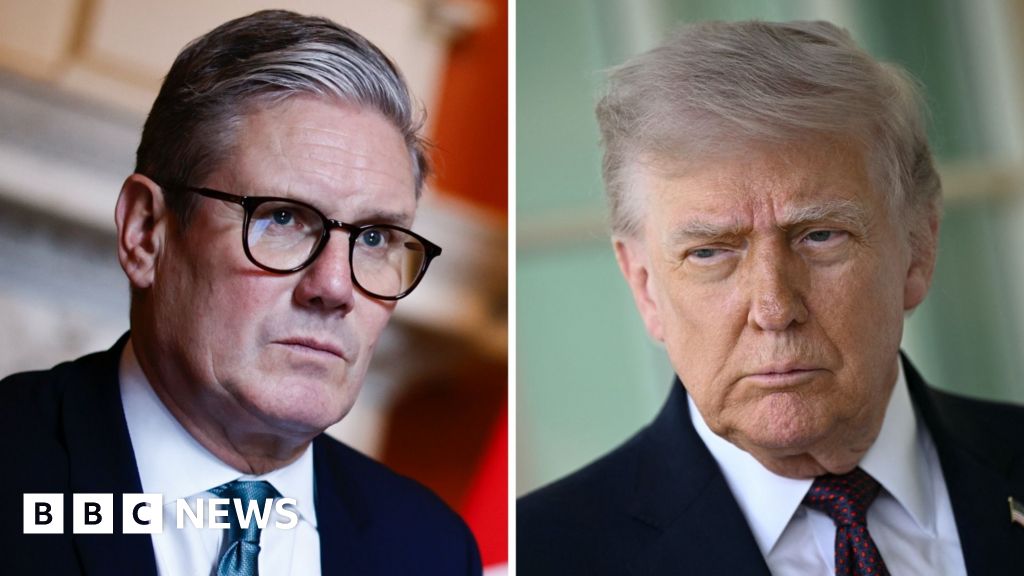

UK Prime Minister Sir Keir Starmer and US President Donald Trump Clash Over Iran Conflict
The growing rift between UK Prime Minister Sir Keir Starmer and US President Donald Trump over the escalating conflict in Iran has sharply highlighted the strains in the longstanding transatlantic alliance. The disagreement centers on Britain’s reluctance to join the US in military involvement in Iran, with Sir Keir asserting he will “not yield” to pressure from Washington.
The tension escalated after President Trump publicly criticized the UK’s stance, telling Sky News that when the US sought British support in the Iran conflict, “they were not there.” Trump’s remarks were accompanied by a veiled threat to revisit the tariff agreement between the two nations, reached last year, which he suggested “can always be changed.”
The comments mark a significant departure from the traditionally close diplomatic and military ties between the US and UK. Sir Keir, who assumed office just months ago, has been vocal about maintaining Britain’s independent foreign policy. “The UK will not be dragged into conflicts without clear justification and a transparent strategy,” he stated in a recent press briefing.
The Iran conflict, which has seen heightened tensions following recent airstrikes and proxy warfare in the region, has become a focal point of global concern. The US has accused Iran of supporting militant groups destabilizing the Middle East, while Iran has condemned American intervention as imperialist aggression. The UK, under Sir Keir’s leadership, has opted for a more cautious approach, emphasizing diplomatic solutions and multilateral engagement through platforms like the United Nations.
Sir Keir’s stance reflects a broader shift in British foreign policy, which seeks to balance its historic alliance with the US while asserting its sovereignty in a rapidly changing geopolitical landscape. His position has garnered support from some quarters, who argue that Britain must prioritize its own strategic interests and avoid being drawn into protracted conflicts.
President Trump’s frustration with the UK’s reluctance to join forces is indicative of his administration’s increasingly unilateral approach to foreign policy. The US has been a key player in rallying international support for its actions in Iran, but the lack of British backing underscores a growing divide in global perspectives on the conflict.
The dispute also casts a shadow over the US-UK trade agreement finalized last year, which was hailed as a cornerstone of post-Brexit economic cooperation. Trump’s suggestion that tariffs could be renegotiated adds a new layer of complexity to the bilateral relationship, raising concerns about the potential economic fallout.
Analysts suggest that the growing discord could have far-reaching implications for the global order. The US-UK alliance has long been a linchpin of Western diplomacy and security, and any erosion of this partnership could weaken coordinated responses to international crises.
Domestically, Sir Keir’s firm stance has been met with mixed reactions. While some applaud his commitment to independent decision-making, others fear that distancing the UK from the US could isolate Britain on the world stage. The Labour Party, which Sir Keir leads, has historically advocated for multilateralism and restraint in foreign policy, but the current situation poses a delicate balancing act.
The Iran conflict itself remains a volatile and unpredictable flashpoint. The region has seen a surge in violence in recent months, with escalating proxy wars and mounting civilian casualties. The international community remains deeply divided on how best to address the crisis, with some nations advocating for military intervention while others push for dialogue and de-escalation.
Sir Keir’s refusal to align with Trump’s approach may signal a broader recalibration of UK foreign policy in the post-Brexit era. As Britain seeks to redefine its role on the global stage, its leaders are increasingly asserting independence from traditional allies while forging new partnerships.
Looking ahead, the rift between the UK and US over Iran could have significant implications for both nations and the broader international community. If the partnership continues to fray, it may weaken efforts to address global challenges such as terrorism, climate change, and nuclear proliferation.
Moreover, the disagreement underscores the shifting dynamics of global power, with nations increasingly pursuing divergent paths in response to complex geopolitical threats. For Sir Keir and Trump, navigating these tensions will require careful diplomacy and a willingness to find common ground, even as their respective approaches diverge.
As the Iran conflict unfolds, the world will be watching closely to see how the US and UK navigate this pivotal moment in their relationship—and what it means for the future of international cooperation.
