


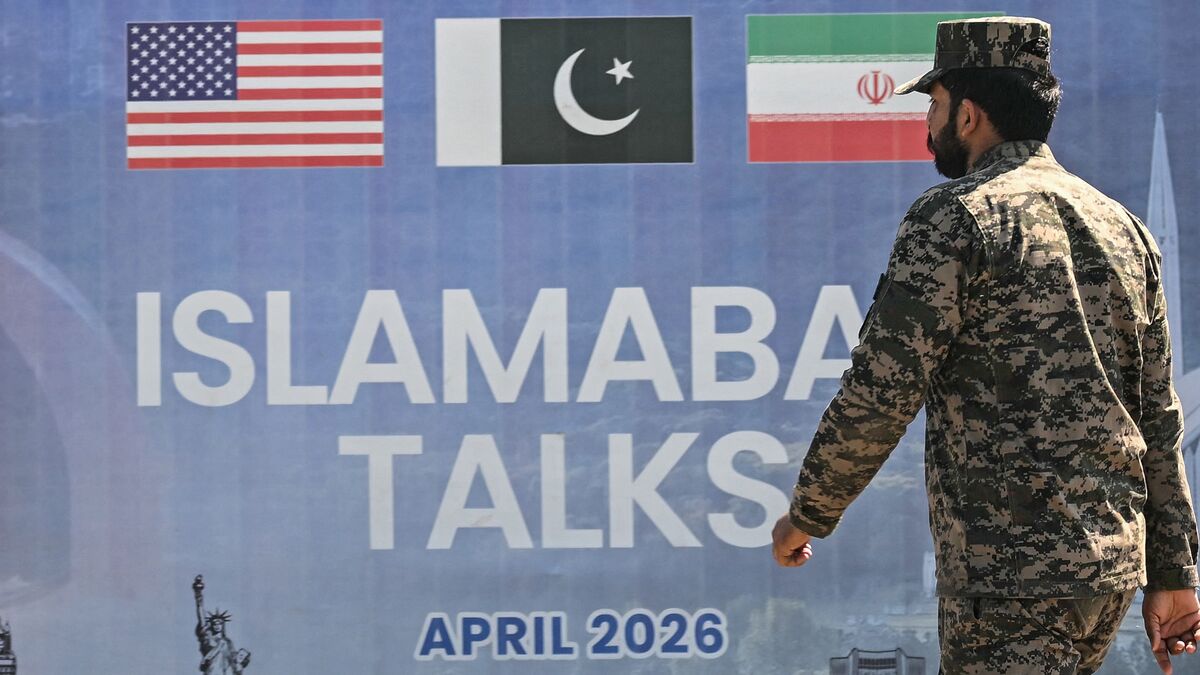

Trump Sends Envoys to Pakistan Amid Escalating Iran Tensions, Warns of Strikes on Civilian Infrastructure
In a dramatic development that underscores the fragility of the geopolitical landscape in the Middle East, U.S. President Donald Trump announced plans to dispatch representatives to Pakistan for talks aimed at de-escalating the simmering conflict with Iran. The announcement, made during a press briefing on Monday evening, came alongside a stern warning that the U.S. would target civilian infrastructure in Iran if diplomatic efforts failed to yield a resolution. The move signals a potential shift in strategy as tensions between Washington and Tehran reach a boiling point, with global observers closely monitoring the implications for regional stability and international security.
The decision to involve Pakistan in the mediation process highlights the country’s strategic importance in the region. Pakistan shares a border with Iran and maintains complex diplomatic ties with both Tehran and Washington. Historically, Islamabad has played a pivotal role in mediating conflicts in the Middle East, leveraging its relationships with key stakeholders to facilitate dialogue. However, this latest initiative comes at a time when Pakistan itself faces domestic challenges, including economic instability and strained relations with India, raising questions about its capacity to broker peace in an increasingly volatile theater.
President Trump’s announcement also underscores the administration’s broader approach to Iran, characterized by a combination of aggressive rhetoric and sporadic diplomatic overtures. Since withdrawing from the landmark 2015 Iran nuclear deal in 2018, the Trump administration has pursued a policy of “maximum pressure,” imposing sweeping sanctions on Tehran and targeting its oil exports. The strategy, intended to force Iran back to the negotiating table, has instead exacerbated tensions, with Tehran responding by ramping up its uranium enrichment activities and escalating military provocations in the Persian Gulf.
The president’s threat to strike civilian infrastructure marks a significant escalation in the U.S.’s posture toward Iran. Such a move would represent a departure from conventional military tactics, which typically prioritize military targets over civilian ones. Critics warn that targeting civilian infrastructure could lead to unintended humanitarian consequences and further destabilize the region. “The implications of such a strategy are profound,” said Dr. Sarah Harrison, a Middle East analyst at the International Crisis Group. “Not only does it risk violating international law, but it could also embolden hardliners in Tehran and deepen the cycle of retaliation.”
The timing of the announcement is particularly noteworthy, coming just weeks after Iran’s top nuclear scientist, Mohsen Fakhrizadeh, was assassinated in a targeted attack widely attributed to Israel. The killing sparked outrage in Iran, with Tehran vowing to avenge the death of a man regarded as the architect of its nuclear program. While the U.S. has denied involvement in the assassination, the incident has further strained relations between Washington and Tehran, raising fears of a wider conflict.
Against this backdrop, the decision to engage Pakistan as a mediator suggests a recognition of the limitations of unilateral action. “The U.S. is navigating a delicate balancing act,” said Marc Caputo, White House reporter for Axios. “On one hand, it wants to project strength and deter Iranian aggression. On the other, it understands that diplomatic channels are essential to avoiding a full-blown war.”
The role of Pakistan in this context is both promising and fraught with challenges. While Islamabad has historically maintained cordial relations with Tehran, its alliance with Washington has been strained in recent years, particularly over accusations that Pakistan harbors terrorist groups operating in Afghanistan. Islamabad’s ability to act as an impartial mediator may be further complicated by its own strategic calculations, including its desire to maintain influence in the region and its reliance on economic aid from the U.S.
Meanwhile, the global community has reacted cautiously to the latest developments. European leaders, who have been vocal critics of the Trump administration’s Iran policy, have called for restraint and emphasized the importance of diplomacy. “The stakes are too high for reckless escalation,” said Josep Borrell, the European Union’s foreign policy chief. “All parties must prioritize dialogue and de-escalation to avoid a catastrophic outcome.”
China and Russia, both key players in the region with vested interests in Iran, have also weighed in. Beijing has urged Washington to abandon its policy of sanctions and return to the negotiating table, while Moscow has warned against unilateral actions that could destabilize the region.
As the world watches the unfolding situation with bated breath, the coming weeks will be critical in determining whether diplomacy can prevail over confrontation. The U.S.’s decision to engage Pakistan represents a potential turning point, but the path to peace remains fraught with uncertainty.
In his closing remarks, President Trump reiterated his commitment to achieving a deal with Iran but left little doubt about the consequences of failure. “We’re ready to talk, but we’re also ready to act,” he said. “Iran knows what’s at stake.”
For now, the ball is in Tehran’s court. Whether Iran’s leaders choose diplomacy over defiance could shape the future of the Middle East—and the world.
