


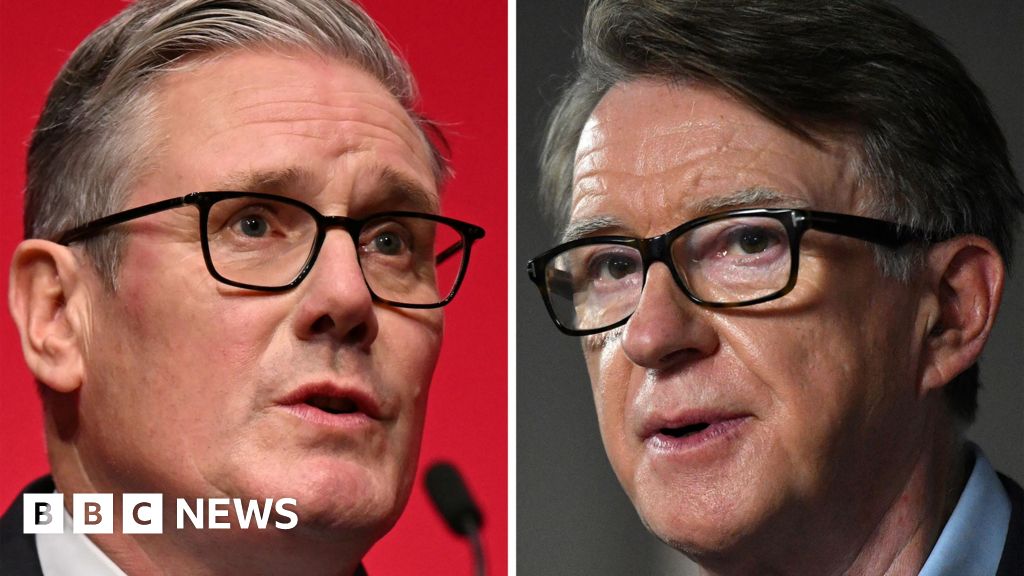

Email Reveals Security Clearance Requirements for Lord Mandelson’s Role
LONDON — A newly surfaced email from February 2023 has shed light on the stringent security clearance requirements surrounding Lord Peter Mandelson’s appointment to a high-profile role. The email, addressed to Mandelson, highlights that the position demanded “DV+STRAP” clearance, one of the highest levels of security vetting in the United Kingdom. The document, part of a broader release of government papers, underscores the sensitivity and specificity of the security protocols tied to the role.
The email, found on page 76 of a publicly accessible government dossier, explicitly states that Mandelson’s new position would necessitate a fresh application for STRAP (Short-Term Role Access Pass) clearance. STRAP clearance is tailored to individual roles, reflecting the need for rigorous security measures tailored to the responsibilities at hand. The email notes, “a new STRAP application form will need to be submitted as STRAP clearance is role specific.”
Lord Mandelson, a seasoned political figure and former European Trade Commissioner, has been a central figure in British politics for decades. His career has spanned roles in government, diplomacy, and business, often placing him at the intersection of policy and high-stakes international negotiations. The revelation of the security clearance requirements underscores the critical nature of his recent appointment, though the specific role referenced in the email has not been publicly disclosed.
Context and Significance
The security clearance levels mentioned in the email—DV (Developed Vetting) and STRAP—are reserved for positions involving access to highly classified information. DV clearance, the most comprehensive level of vetting in the UK, involves intense scrutiny of an individual’s personal and professional background, including financial history, family ties, and potential vulnerabilities to coercion. STRAP clearance, while shorter-term, is equally stringent and tailored to specific roles, ensuring that access to sensitive information is strictly controlled.
The email’s inclusion in a government dossier highlights the transparency measures adopted by UK authorities in recent years. However, it also raises questions about the nature of Mandelson’s role and the level of classified information he would have been handling. Given his extensive experience in international trade and diplomacy, the role likely involved matters of national security or high-stakes international negotiations.
The timing of the email is also noteworthy. Sent in early February 2023, it coincides with a period of heightened geopolitical tensions and economic uncertainty, particularly in the wake of the Ukraine conflict and ongoing trade negotiations post-Brexit. Mandelson’s expertise in these areas would have made him a natural candidate for roles requiring access to sensitive information and strategic decision-making.
Security Clearance in High-Profile Roles
The revelation of Mandelson’s security clearance requirements underscores the broader significance of vetting processes in government and diplomatic roles. In an era of increasing cybersecurity threats and geopolitical complexity, ensuring that individuals in positions of power are thoroughly vetted is paramount.
The DV+STRAP clearance combination is typically reserved for roles involving access to top-secret information and critical decision-making processes. Such clearances are not granted lightly and require ongoing monitoring to ensure compliance with security protocols. The necessity of a fresh STRAP application for Mandelson’s role indicates that the position involved access to information beyond the scope of his previous clearances.
The UK government has faced scrutiny in the past over the handling of security clearances, particularly in cases involving high-profile individuals. In 2019, the issue of vetting processes became a focal point of public debate following allegations of lapses in scrutiny for certain appointments. The Mandelson email serves as a reminder of the rigorous standards now in place, though it also invites questions about the transparency and consistency of these processes.
Future Implications
The disclosure of the email raises broader questions about the balance between transparency and security in government appointments. While the release of such documents fosters accountability, it also risks exposing sensitive information about security protocols. Moving forward, the UK government may face pressure to clarify the criteria for such disclosures while safeguarding national security interests.
For Lord Mandelson, the revelation underscores the complexity and sensitivity of his recent role, though it does not suggest any impropriety on his part. Instead, it highlights the intricate web of security measures that govern high-stakes government positions.
As the UK navigates an increasingly complex global landscape, the importance of robust security clearance processes will only grow. The Mandelson email serves as a case study in the challenges of balancing transparency, security, and accountability in an era defined by rapid change and heightened risks.
The coming months may see further scrutiny of security clearance protocols, particularly as the UK prepares for upcoming elections and potential shifts in leadership. The Mandelson email is a timely reminder of the critical role that vetting processes play in safeguarding national security and ensuring the integrity of government appointments.
