


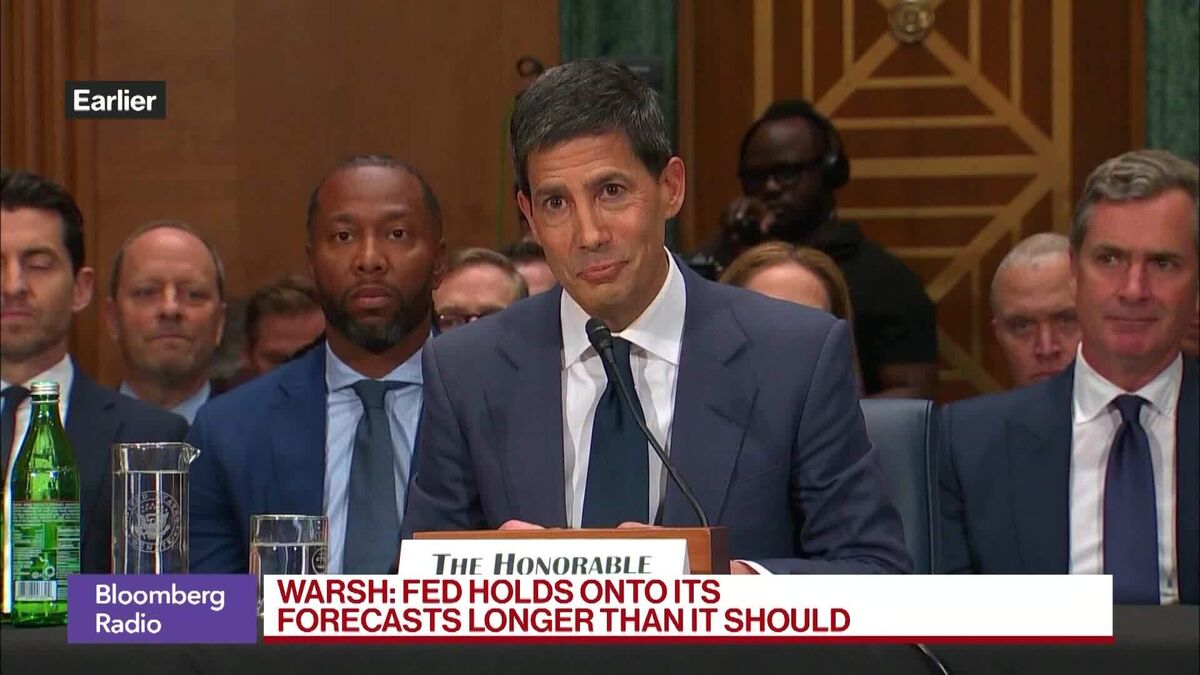

Fed Nominee Kevin Warsh Signals Major Policy Shifts in Confirmation Hearing
Washington, D.C. — President Biden’s nominee for Federal Reserve chair, Kevin Warsh, laid out a vision for sweeping changes to the central bank’s policymaking approach during his Senate confirmation hearing on Tuesday, signaling potential shifts in economic guidance, internal communications, and the Fed’s broader transparency framework. Warsh, a former Fed governor and longtime Wall Street economist, openly criticized the institution’s reliance on forward guidance—a tool used to shape market expectations—while also suggesting tighter controls on public remarks by Fed officials ahead of key decisions.
The hearing, closely watched by economists and investors worldwide, offered the first detailed glimpse into how Warsh might steer the world’s most influential central bank at a time of persistent inflation, geopolitical uncertainty, and lingering financial instability. His remarks hinted at a more restrained Fed, one that could move away from explicit policy signaling in favor of greater operational flexibility—a stance that could redefine monetary policy for years to come.
A Departure from Forward Guidance?
One of the most striking revelations from Warsh’s testimony was his skepticism toward the Fed’s long-standing use of forward guidance—the practice of telegraphing future policy moves to stabilize markets and guide economic behavior. Since the 2008 financial crisis, the Fed has relied heavily on this tool, offering detailed projections on interest rates, inflation, and employment to shape investor expectations.
But Warsh argued that such guidance has become overly rigid, potentially boxing the Fed into predetermined paths even as economic conditions shift. “Forward guidance should not be a straitjacket,” he told the Senate Banking Committee. “Markets thrive on clarity, but they also need adaptability. The Fed must preserve its ability to pivot when circumstances demand.”
His comments suggest a possible shift toward a more discretionary approach, where policymakers retain greater leeway to adjust course without being bound by prior commitments. If confirmed, Warsh could push for a less prescriptive Fed—one that communicates in broader terms rather than locking itself into specific rate trajectories.
Reining in the Fed’s Public Messaging
Another key theme from the hearing was Warsh’s emphasis on curbing public statements by Fed officials in the lead-up to major policy meetings. In recent years, a chorus of regional Fed presidents and board members have made headlines with speeches, interviews, and op-eds that sometimes appear to preempt or contradict the central bank’s official stance.
Warsh warned that such decentralized messaging risks creating unnecessary market volatility and confusion. “When individual voices drown out the committee’s collective judgment, it undermines the credibility of our decisions,” he said. While stopping short of calling for a formal gag order, he indicated a preference for stricter internal discipline—a move that could centralize communications under the chair’s office.
This stance aligns with longstanding concerns among some policymakers that the Fed’s “open mic” culture has occasionally led to mixed signals, complicating efforts to maintain a coherent monetary strategy.
Balancing Transparency and Flexibility
Warsh’s testimony did not advocate for full-scale opacity—he reaffirmed the importance of transparency in maintaining public trust. However, he stressed that clarity should not come at the expense of agility. “The Fed must be both predictable and nimble,” he said. “That means knowing when to speak and when to let actions do the talking.”
His approach appears to draw from his tenure as a Fed governor during the 2008 crisis, when rapid, unscripted interventions were often necessary to stabilize markets. Some analysts speculate that Warsh’s skepticism of forward guidance stems from that experience, where rigid long-term commitments proved impractical amid fast-moving financial turmoil.
Market and Political Reactions
Financial markets showed muted but attentive reactions to Warsh’s remarks, with equities holding steady and Treasury yields ticking slightly higher. Investors seem cautiously optimistic about the prospect of a more adaptable Fed, though some worry that reduced guidance could increase short-term volatility.
On Capitol Hill, reactions split along partisan lines. Republicans largely praised Warsh’s emphasis on Fed independence and restraint, while some Democrats expressed concerns that looser communication standards might reduce accountability. Senator Elizabeth Warren (D-MA) pressed Warsh on whether his approach would favor Wall Street over Main Street, to which he replied that his priority was “economic stability for all Americans.”
What Comes Next?
With the Senate narrowly divided, Warsh’s confirmation is not guaranteed, though he remains the clear frontrunner. If approved, his leadership could usher in one of the most consequential evolutions in Fed policy since the Volcker era.
For now, economists and traders will parse every word from the Fed’s upcoming meetings for signs of whether Warsh’s vision is already gaining traction—or if he will face resistance from within the institution itself.
As the global economy stands at a crossroads, the debate over the Fed’s future is no longer just about interest rates—it’s about how much the central bank should say, how soon, and to whom. One thing is certain: under Warsh, silence might speak louder than words.
