



U.S. and Iran Clash Over Alleged Execution Threats Against Women Activists
A Diplomatic Firestorm Ignites
Tensions between Washington and Tehran flared this week after U.S. President Donald Trump claimed credit for preventing the execution of eight Iranian women activists—an assertion swiftly denied by Iranian officials, who dismissed the allegations as “fake news.” The dispute highlights the deepening mistrust between the two nations, already locked in a protracted standoff over nuclear sanctions, regional influence, and human rights.
The controversy raises urgent questions about the fate of detained activists in Iran, where executions for political offenses remain a grim reality. It also underscores the broader geopolitical struggle playing out between the U.S. and Iran, where propaganda battles often overshadow facts.
Trump’s Claim: A Rescue or Rhetoric?
In a late-night social media post, President Trump declared that his administration’s intervention had “saved eight innocent women from execution” in Iran. He provided no further details on the identities of the women or the nature of the charges against them, leaving analysts scrambling to verify his claims.
Historically, Iran has executed individuals for offenses ranging from espionage to political dissent, but Tehran insists that none of the women Trump referenced were ever sentenced to death. Iranian Foreign Ministry spokesman Abbas Mousavi accused the U.S. president of spreading “baseless propaganda” to justify Washington’s hardline stance against the Islamic Republic.
Who Are the Women in Question?
While neither government has released names, human rights groups speculate that Trump may have been referring to a group of female activists arrested in recent months for protesting mandatory hijab laws or advocating for gender equality. Iran has cracked down heavily on dissent since nationwide protests in 2022, with reports of arbitrary detentions and harsh sentences for activists.
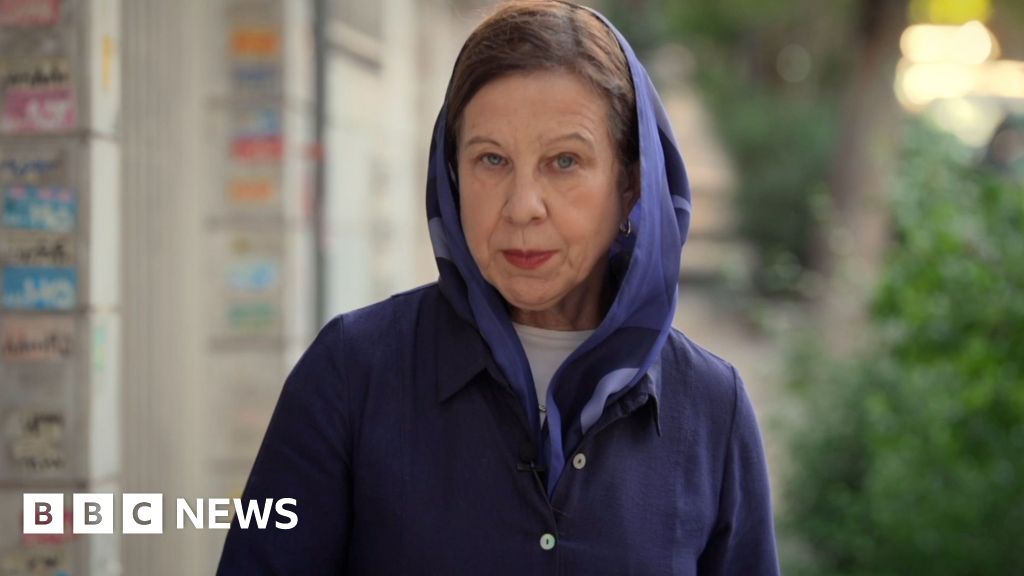
The BBC’s Chief International Correspondent Lyse Doucet, reporting from Tehran under strict Iranian media restrictions, noted that verifying Trump’s claims is nearly impossible without official confirmation. “The lack of transparency from both sides makes it difficult to separate fact from political posturing,” she observed.
Why This Matters Beyond U.S.-Iran Relations
The dispute is more than just another war of words between Washington and Tehran—it reflects a growing global concern over Iran’s human rights record and the weaponization of misinformation in international diplomacy.
- Human Rights Under Scrutiny – Iran remains one of the world’s top executioners, with Amnesty International reporting over 250 executions in 2023 alone. Women’s rights activists, ethnic minorities, and LGBTQ+ individuals face particularly harsh treatment.
- The Credibility of U.S. Claims – Trump’s unverified assertions risk undermining future U.S. efforts to advocate for political prisoners, especially if Tehran can credibly dismiss them as exaggeration.
- A Test for Global Media – With foreign journalists in Iran operating under severe restrictions, verifying government statements from either side becomes a challenge, leaving the public reliant on incomplete narratives.
Iran’s Counter-Narrative: Accusations of Western Meddling
Iranian officials have long accused the U.S. and its allies of fabricating human rights crises to justify sanctions and regime change efforts. State media has framed Trump’s latest remarks as part of a broader “psychological war” against Tehran.
“The U.S. has no moral authority to lecture Iran on human rights,” said one Iranian lawmaker, pointing to America’s own record on police brutality and mass incarceration. While such rhetoric is standard in Iranian political discourse, it resonates with nations skeptical of U.S. foreign policy, complicating efforts to build international consensus on Iran’s rights abuses.
What Happens Next?
With no independent verification of Trump’s claims, the immediate fallout is likely to be diplomatic rather than substantive. However, the incident could have lasting repercussions:
- Eroding Trust in Negotiations – If future U.S. statements on Iran’s human rights record are met with skepticism, it could weaken pressure campaigns.
- Increased Scrutiny on Detainees – Advocacy groups may push for more transparency on the status of imprisoned activists.
- A Propaganda Win for Iran? – If Tehran successfully portrays Trump’s claims as false, it could bolster its narrative of resisting Western interference.
Conclusion: Truth Caught in the Crossfire
As Washington and Tehran trade accusations, the real victims may be the activists whose fates remain uncertain—and the truth, obscured by the fog of geopolitical rivalry. In an era where misinformation spreads faster than facts, this clash serves as a stark reminder of how high-stakes diplomacy can devolve into competing narratives, leaving the world to wonder: Who, if anyone, is telling the whole story?
For now, the women at the center of this storm remain unnamed, their real circumstances unknown. And in the absence of transparency, their plight risks becoming just another pawn in a much larger game.
