


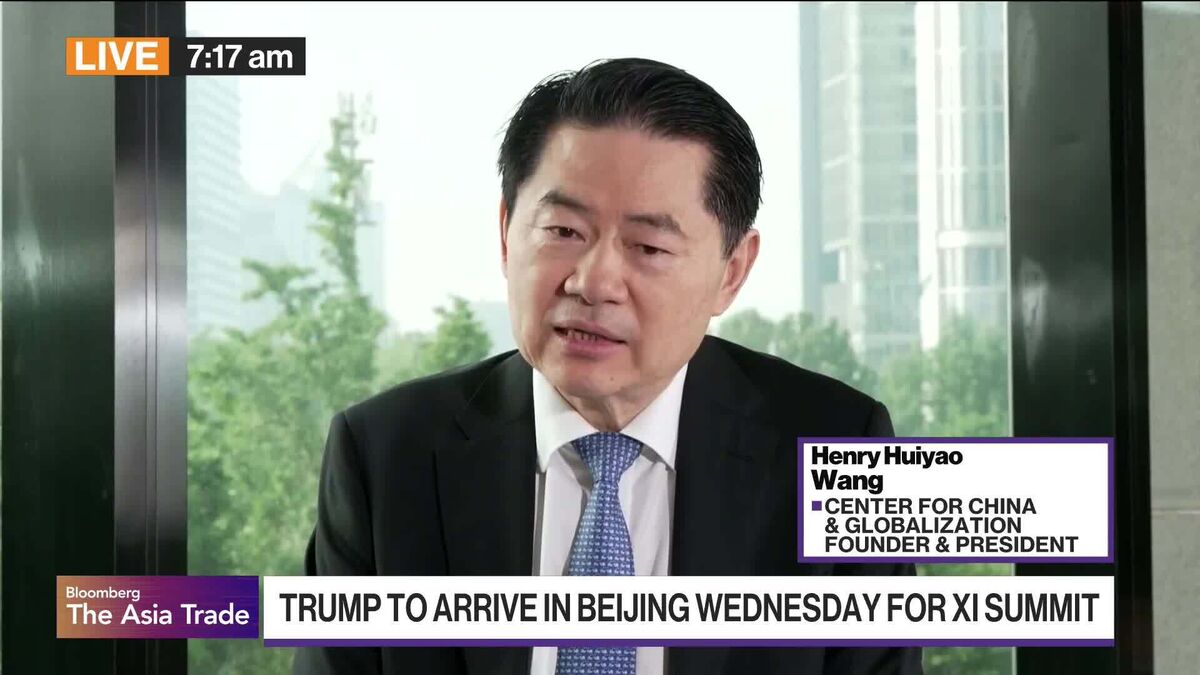

China Offers to Mediate as U.S. and Iran Seek De-escalation, Says Top Think Tank Leader
Beijing, [Date] – As tensions between the United States and Iran continue to simmer, a leading Chinese policy expert has suggested that Beijing could play a crucial mediating role in facilitating a diplomatic off-ramp for both nations. Henry Huiyao Wang, founder and president of the influential Center for China and Globalization (CCG), stated in a recent interview that both Washington and Tehran appear keen to avoid further escalation—and that China could provide the necessary platform for a peaceful resolution.
Wang’s remarks come at a critical juncture in Middle East geopolitics, where tit-for-tat strikes and heated rhetoric have raised fears of a broader regional conflict. His comments also coincide with heightened anticipation for an upcoming U.S.-China summit, where Presidents Joe Biden and Xi Jinping could potentially discuss avenues for stabilizing global flashpoints.
A Delicate Balancing Act
The U.S. and Iran have been locked in a tense standoff since the 2018 collapse of the Iran nuclear deal (JCPOA), with recent incidents—including drone strikes and retaliatory actions—further straining relations. While both nations have signaled a desire to avoid all-out war, neither has yet found a face-saving way to de-escalate.
Wang argues that China, with its growing diplomatic influence and neutral stance, could serve as an intermediary. “Both sides need a ladder to climb down gracefully,” he told Bloomberg’s The Asia Trade in Beijing. “China has the relationships and the strategic patience to help facilitate that.”
Beijing has long positioned itself as a mediator in global conflicts, from brokering the Saudi-Iran détente last year to hosting peace talks on Ukraine. Wang’s suggestion aligns with China’s broader foreign policy strategy of presenting itself as a stabilizing force amid U.S.-led Western dominance.
The U.S.-China Factor
The proposal also intersects with the delicate state of U.S.-China relations. Despite ongoing trade disputes and technological rivalries, both nations have cautiously engaged in dialogue to prevent outright confrontation. Wang hinted that if Biden and Xi reach a broader consensus at their forthcoming meeting, collaboration on Iran could become a tangible confidence-building measure.
“Great powers have a responsibility to manage crises, not exacerbate them,” Wang said. “If Washington and Beijing can find common ground, it opens doors for cooperation beyond bilateral issues.”
Why China?
Unlike Western powers, China maintains robust economic ties with Iran, including a 25-year strategic partnership signed in 2021. At the same time, Beijing has cautiously navigated its relationship with the U.S., avoiding direct alignment with either side. This neutrality, Wang suggests, makes China an ideal mediator.
“China doesn’t have the historical baggage that the U.S. or Europe carries in the Middle East,” he noted. “That allows for more pragmatic, less politicized dialogue.”
Still, skepticism remains. Some analysts question whether Beijing has the leverage—or the willingness—to pressure Tehran into concessions. Others argue that any mediation would require quiet U.S. backing, which is far from guaranteed given current geopolitical rivalries.
What’s Next?
For now, the ball appears to be in the diplomatic court. If the U.S. and China can align their priorities, Wang’s vision of Beijing as a peace broker may gain traction. However, with elections looming in both America and Iran, domestic politics could complicate any breakthrough.
As the world watches for signs of de-escalation, one thing is clear: in an era of multipolar tensions, the need for neutral mediators has never been greater. Whether China can rise to the occasion remains an open question—but the opportunity, at least, is on the table.
“In geopolitics, sometimes the quietest voices carry the most weight,” Wang concluded. “The question is who’s willing to listen.”
