


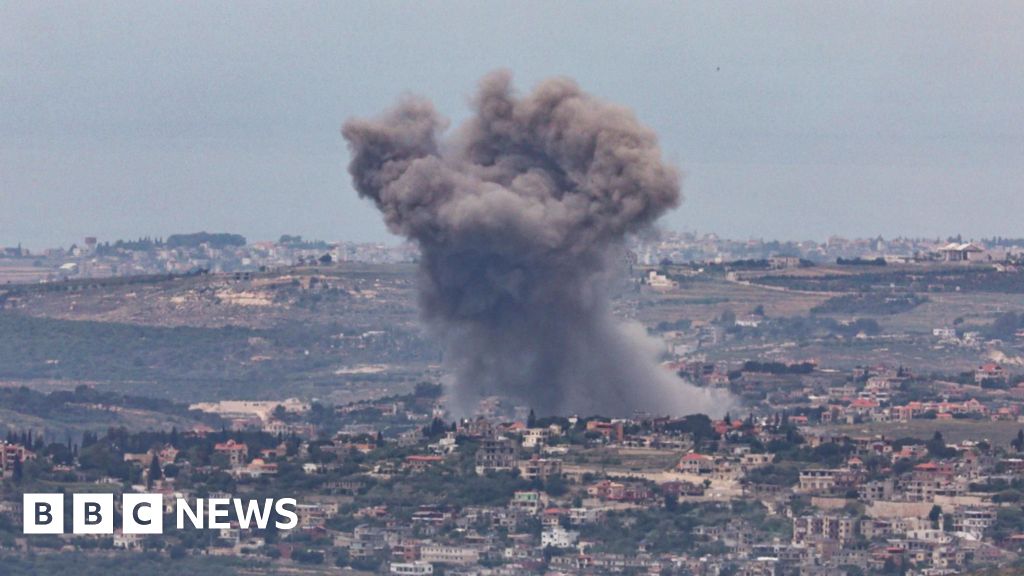

Escalating Violence in Lebanon: Paramedics Targeted Amid Rising Regional Tensions
A Deadly Attack on First Responders
In a stark reminder of Lebanon’s fragile security situation, paramedics responding to an earlier attack in the southern town of Nabatieh were themselves targeted, according to the country’s health ministry. The initial strike had already claimed one life, and the subsequent assault on medical personnel underscores the growing dangers faced by civilians and aid workers in a region teetering on the edge of wider conflict.
The incident, still under investigation, highlights the increasing volatility along Lebanon’s southern border, where exchanges of fire between Hezbollah and Israeli forces have intensified since the outbreak of the Israel-Hamas war in October 2023. With global powers warning of a potential regional escalation, this latest attack raises urgent questions about the safety of humanitarian workers and the risks of a broader war.
Why This Attack Matters
Targeting medical personnel violates international humanitarian law, yet such incidents have become tragically common in conflict zones from Ukraine to Sudan. In Lebanon, where the healthcare system is already strained by economic collapse and political instability, attacks on first responders further cripple an essential lifeline for civilians caught in the crossfire.
Beyond the immediate human cost, the Nabatieh strike amplifies fears that Lebanon—already hosting over a million Syrian refugees and grappling with internal divisions—could become a full-fledged battleground. The country’s southern border has seen near-daily exchanges of fire, displacing tens of thousands and pushing the region closer to an all-out war that could draw in Iran, Israel, and Western powers.
The Broader Regional Context
The Israel-Hamas war has sent shockwaves across the Middle East, with Iran-backed groups—including Hezbollah in Lebanon and the Houthis in Yemen—launching attacks in solidarity with Gaza. Hezbollah, a powerful Shiite militant group and political force, has engaged in near-daily skirmishes with Israel, raising concerns that a single miscalculation could ignite a wider conflict.
The U.S. and European nations have repeatedly called for de-escalation, but diplomatic efforts have so far failed to halt the violence. Meanwhile, Lebanon’s government, weakened by years of corruption and infighting, struggles to maintain control as Hezbollah operates with significant autonomy in the south.
Global Implications of Escalation
A full-scale war between Israel and Hezbollah would have catastrophic consequences far beyond Lebanon’s borders. The 2006 conflict between the two sides left over 1,000 dead and displaced nearly a million people—a scenario that could pale in comparison to today’s tensions, given Hezbollah’s expanded arsenal and Israel’s hardened military stance.
Such a conflict would also risk drawing in Iran, which supplies Hezbollah with weapons and funding, potentially triggering direct confrontation with the U.S. and its allies. Global energy markets would likely reel, as Lebanon sits near key oil transit routes, and renewed hostilities could disrupt shipping in the Mediterranean.
A Call for Restraint—Before It’s Too Late
The attack on paramedics in Nabatieh is not just another headline in a distant conflict—it is a warning. With civilian casualties mounting and humanitarian access shrinking, the international community faces a critical test of its ability to prevent further bloodshed.
Diplomatic efforts must intensify to avert a wider war, but time is running out. As regional powers posture and proxy forces exchange fire, ordinary Lebanese civilians—already enduring one of the worst economic crises in modern history—are paying the price. The world cannot afford to look away.
