


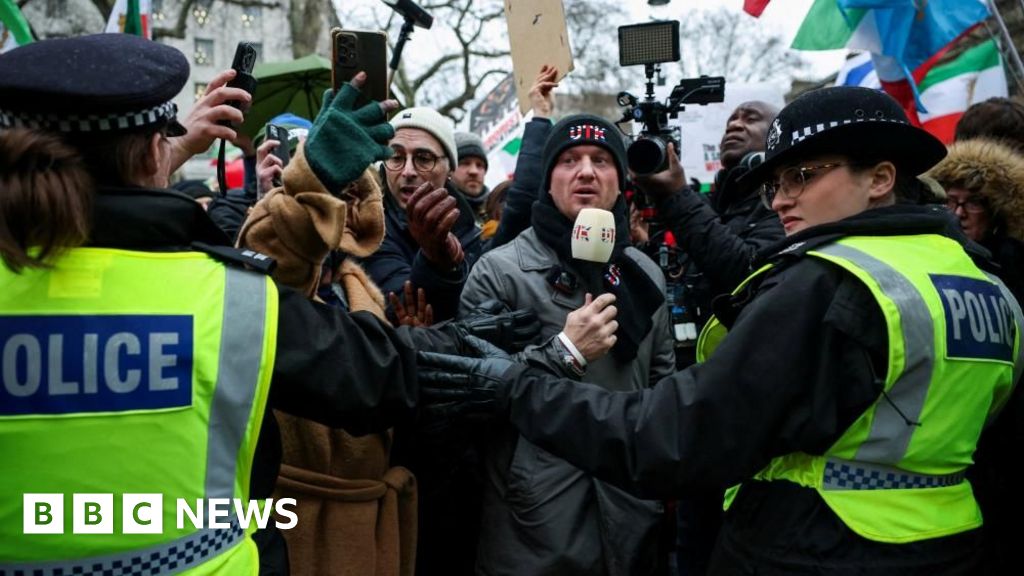

Anti-Islam Activist Tommy Robinson Leads Rally in Central London
Central London witnessed a significant gathering on Saturday as Stephen Yaxley-Lennon, widely known by his alias Tommy Robinson, organized a rally attracting hundreds of supporters. The event, held in Trafalgar Square, underscored ongoing tensions surrounding issues of free speech, immigration, and Islamophobia in the United Kingdom. Robinson, a prominent and polarizing figure in British politics, has long been associated with far-right activism and anti-Islam rhetoric.
The rally, which began in the early afternoon, featured speeches from Robinson and several guest speakers who echoed his critiques of multiculturalism and what they described as the failures of the UK government to address perceived threats posed by immigration and Islamic extremism. Supporters waved Union Jack flags and carried placards with slogans such as “Free Speech Not Hate Speech” and “Protect Our Borders.”
Robinson, addressing the crowd, accused the British government and mainstream media of silencing dissenting voices and failing to address concerns about national security and cultural identity. “We are here today to demand that our voices be heard,” he declared. “This country is at a crossroads, and we must fight to preserve our way of life.”
The event was not without controversy. Counter-protesters, including anti-fascist groups and human rights organizations, gathered nearby to denounce Robinson and his supporters. They accused him of spreading hate speech and perpetuating division in British society. Clashes between the two groups were narrowly avoided as police maintained a heavy presence throughout the afternoon.
The Metropolitan Police confirmed that the rally was conducted peacefully, with minor incidents reported but no arrests made. Authorities had previously expressed concerns about potential unrest but praised organizers and attendees for adhering to guidelines.
Robinson’s activism has been a lightning rod for debate in the UK for over a decade. A former leader of the English Defence League (EDL), a far-right group known for its anti-Islam stance, he has faced multiple legal challenges, including convictions for contempt of court and fraud. Despite these controversies, he remains a influential figure among certain segments of the population who view him as a champion of free speech and nationalism.
The rally comes at a time of heightened political and social tensions in the UK. Issues such as immigration, integration, and national identity have dominated public discourse, particularly following the 2016 Brexit referendum. Robinson’s rhetoric often taps into these concerns, resonating with those who feel marginalized or disillusioned with mainstream politics.
Critics argue that Robinson’s message fosters division and intolerance, pointing to his history of inflammatory statements and associations with far-right groups. They warn that events like Saturday’s rally risk normalizing extremist views and undermining social cohesion.
Supporters, however, argue that Robinson provides a platform for voicing legitimate concerns that are often ignored by politicians and the media. They contend that his focus on issues such as national security and cultural preservation reflects widespread anxieties within British society.
The UK government has yet to issue an official statement on the rally, though spokespersons have reiterated their commitment to protecting free speech while condemning hate speech and extremism in all forms. Prime Minister Rishi Sunak’s administration faces ongoing pressure to address these complex issues, particularly as the country heads into a general election year.
The rally also highlights broader debates about the role of free speech in a democratic society. While the UK upholds the right to free expression, it also imposes legal limits on speech deemed hateful or inciteful. This balancing act has become increasingly contentious in recent years, with debates over censorship, cancel culture, and the boundaries of acceptable discourse.
As temperatures rise both politically and socially, events like Saturday’s rally underscore the deep divisions within British society. They also raise questions about how the UK will navigate these challenges in the years to come.
Looking ahead, Robinson’s influence is unlikely to wane. He has vowed to continue his activism, with plans for further rallies and campaigns in the coming months. His ability to mobilize supporters and dominate headlines suggests that he will remain a significant—and controversial—figure in British politics.
Ultimately, Saturday’s rally serves as a microcosm of broader struggles over identity, inclusion, and democracy in the UK. As the country grapples with these issues, the divide between those who see Robinson as a hero and those who view him as a provocateur is likely to deepen.
The implications of this polarization extend beyond the UK, offering a cautionary tale for other nations facing similar challenges. How Britain addresses these tensions will not only shape its future but also influence global conversations about multiculturalism, free speech, and the rise of populism.
For now, the echoes of Saturday’s rally linger, a reminder of the power—and peril—of words in an increasingly fractured world.
