



The Tech and AI Stock Surge: A Rally Balanced on a Knife’s Edge
As global markets continue their whirlwind performance in 2023, investors are riding a wave of enthusiasm for technology and artificial intelligence (AI) stocks, propelling indices to impressive heights. However, beneath the surface of this exuberant rally lies a growing unease: rising bond yields threaten to destabilize equity markets, casting a shadow over the otherwise bullish sentiment. The tug-of-war between soaring tech optimism and macroeconomic pressures has become a defining narrative of the year, leaving market participants to navigate a precarious landscape fraught with opportunity and risk.
The Tech and AI Boom: Fueling the Rally
The technology sector, particularly AI-focused companies, has emerged as the star performer of 2023. Driven by groundbreaking advancements in generative AI, including the rapid adoption of tools like ChatGPT and Bard, investors have flocked to companies at the forefront of this revolution. Giants such as Nvidia, Microsoft, and Alphabet have seen their valuations skyrocket, with Nvidia briefly joining the exclusive $1 trillion club—a rare feat in corporate history. Meanwhile, startups and smaller players in the AI ecosystem have also enjoyed significant inflows, reflecting the broader market’s fascination with the transformative potential of artificial intelligence.
This enthusiasm is not unfounded. AI is increasingly seen as a game-changer across industries, from healthcare and finance to manufacturing and entertainment. Its ability to enhance productivity, reduce costs, and unlock new revenue streams has captured the imagination of both businesses and investors. Moreover, the sector’s resilience during economic downturns—tech stocks often outperform during periods of uncertainty—has further solidified its appeal.
Rising Yields: A Looming Threat
However, the tech rally’s meteoric rise has coincided with another significant development: a sharp increase in bond yields. The yield on the U.S. 10-year Treasury note, a key benchmark for global borrowing costs, has climbed steadily in recent months, driven by robust economic data and persistent inflationary pressures. Higher yields make borrowing more expensive for companies and consumers alike, potentially dampening economic growth.
For equities, rising yields pose a dual threat. First, they make bonds more attractive relative to stocks, prompting investors to reallocate their portfolios away from riskier assets. Second, higher yields increase the discount rate used to value future earnings, which disproportionately impacts high-growth sectors like technology. This dynamic has already led to periods of market volatility, with tech stocks experiencing sharp pullbacks whenever yields spike.
The Federal Reserve’s monetary policy adds another layer of complexity. While the central bank has signaled a potential pause in its aggressive rate-hiking cycle, it has also emphasized that inflation remains stubbornly above its 2% target. This leaves the door open for further rate increases, which could exacerbate upward pressure on yields and unsettle equity markets.
Historical Context: Lessons from the Past
The current scenario echoes events from recent history, offering valuable lessons for investors. In 2021, technology stocks rode a similar wave of optimism, only to face a brutal selloff in 2022 as the Federal Reserve began raising interest rates. The Nasdaq Composite, heavily weighted toward tech, plunged more than 30% last year, underscoring the sector’s vulnerability to shifting macroeconomic conditions.
Yet, history also shows that tech stocks have an unparalleled ability to rebound. Companies that innovate and adapt—particularly those leading the AI charge—tend to emerge stronger from downturns. For instance, during the dot-com crash of the early 2000s, while many tech firms collapsed, others like Amazon and Apple laid the groundwork for decades of dominance.
Global Implications: A Divergent Path
The dynamics of the tech rally and rising yields are playing out differently across regions. In the United States, where the technology sector accounts for a significant portion of the S&P 500, the interplay between these forces is particularly pronounced. Europe and Asia, meanwhile, face their own challenges. In Europe, tighter monetary policy and slower economic growth are weighing on equities, while Asia is grappling with China’s uneven recovery from the pandemic and geopolitical tensions.
Emerging markets, often sensitive to U.S. monetary policy, are also feeling the pinch. Higher yields in developed economies can trigger capital outflows from emerging markets, leading to currency depreciation and heightened financial instability.
Investor Sentiment: Caution Amid Optimism
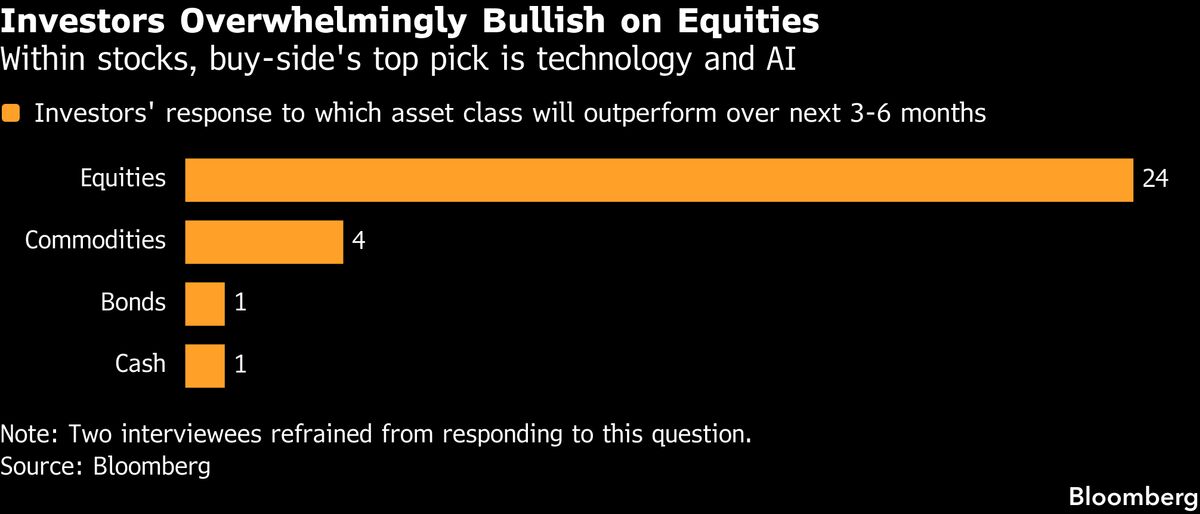
Despite these risks, investor sentiment remains broadly positive. Many market participants view the AI-driven rally as fundamentally different from previous tech booms, grounded in tangible advancements rather than speculative hype. Moreover, the sector’s long-term growth prospects are compelling, with analysts predicting that AI could add trillions of dollars to the global economy over the next decade.
However, seasoned investors are increasingly urging caution. “The tech rally is exciting, but it’s not immune to macroeconomic headwinds,” warns Jane Doe, chief strategist at Global Investment Partners. “Investors need to balance their optimism with a disciplined approach to risk management.”
The Road Ahead: Navigating Uncertainty
As the year progresses, the interplay between tech stocks and rising yields will likely remain a central theme in financial markets. Key events, such as upcoming Federal Reserve meetings, inflation reports, and corporate earnings announcements, could tip the scales in either direction.
For investors, the challenge lies in balancing short-term volatility with long-term opportunities. Diversification, careful asset allocation, and a focus on fundamentally strong companies may offer a path forward in this uncertain environment.
Ultimately, the tech and AI rally represents a fascinating intersection of innovation and economic forces. While the rising threat of yields cannot be ignored, the transformative potential of artificial intelligence continues to inspire hope and drive progress. As the world watches this unfolding story, one thing is clear: the future of markets—and perhaps society itself—will be shaped by the delicate balance between risk and reward.
