


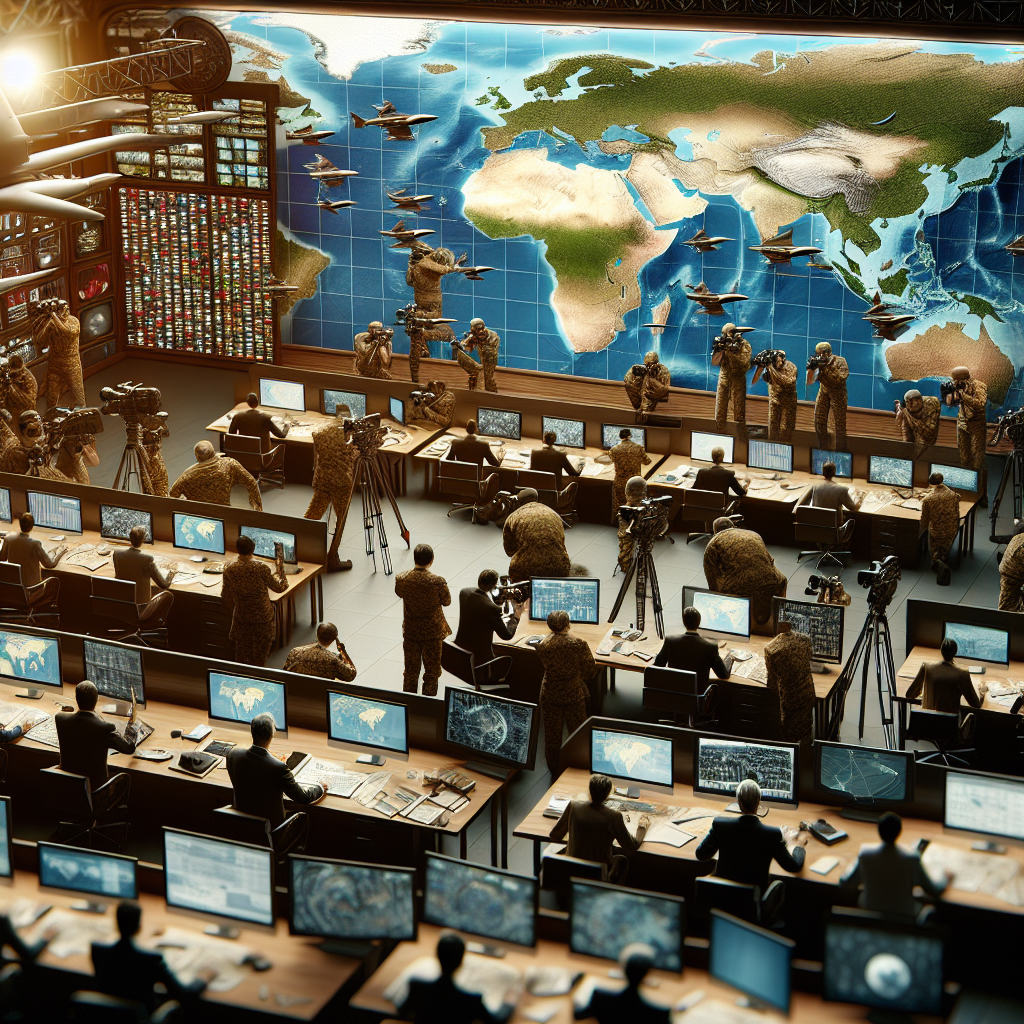

Escalation in the Middle East: U.S. Military Presence Intensifies Amid Rising Tensions with Iran
In a dramatic turn of events that has sent shockwaves through international diplomatic circles, the United States has announced a significant increase in military deployments to the Middle East. This decision comes against the backdrop of mounting tensions with Iran, a situation that is capturing global attention and raising concerns about a potential escalation into open conflict. Analysts warn that these developments could reshape not only the geopolitical landscape of the region but also influence global security dynamics for the foreseeable future.
Background: Historical Context of U.S.-Iran Relations
The relationship between the United States and Iran has been fraught with conflict since the 1979 Iranian Revolution, which resulted in the overthrow of the pro-Western Shah and the establishment of an Islamic Republic. Over the decades, tensions have escalated due to a variety of factors, including Iran’s nuclear program, its involvement in proxy wars across the Middle East, and its support for militant groups such as Hezbollah. The U.S. has responded with sanctions and military presence in the region, viewing Iran as a significant destabilizing force.
In recent years, escalating rhetoric, particularly during the Trump administration, has heightened fears of military confrontation, particularly after the U.S. withdrawal from the Joint Comprehensive Plan of Action (JCPOA)—the nuclear deal that aimed to limit Iran’s nuclear capabilities in exchange for sanctions relief. Since then, Iran has progressively breached its commitments under the deal, igniting a new cycle of hostility.
U.S. Military Build-Up: Strategic Objectives and Implications
The recent U.S. decision to bolster its military forces in the region underscores a strategic pivot aimed at deterring Iranian aggression. The Pentagon has stated that additional troops and assets will be deployed to the Gulf region to protect American interests and ensure the safety of allied nations. This escalation is characterized by the repositioning of naval forces, increased surveillance operations, and enhanced readiness of existing military installations.
This buildup is not merely a logistical maneuver; its implications reach far beyond the region. The increased presence of U.S. forces could embolden allies like Saudi Arabia and Israel, as well as potentially trigger an arms race among regional powers. Conversely, Iran’s response to this military escalation could involve retaliatory measures, including cyberattacks, militia mobilization, and disruptive activities across the Strait of Hormuz—a strategic chokepoint for global oil transportation.
Global Response: Reactions from Key International Players
In light of the escalating military presence, international reactions have been varied. European nations, which had previously sought to maintain diplomatic ties with Tehran through the JCPOA framework, have expressed concern over the risks of an all-out conflict. Diplomats from the EU have urged both the U.S. and Iran to engage in dialogue, fearing that military confrontation could rupture international oil markets and destabilize the global economy.
On the other hand, Russia and China—a potential counterbalance to U.S. initiatives—have voiced support for Tehran amid the U.S. escalation. Both nations have underscored the importance of respecting Iran’s sovereignty and have criticized U.S. unilateralism in the region. Such geopolitical dynamics not only complicate the immediate situation in the Middle East but also highlight the broader ideological confrontations between Western powers and emergent multipolar alliances.
Why This Matters: Implications for Global Security
The implications of heightened U.S. military engagement in the Middle East extend beyond regional interests; they resonate through global economic, security, and diplomatic landscapes. Any military clash between the U.S. and Iran could have profound repercussions. A disruption in the Strait of Hormuz could obstruct roughly 20% of the world’s oil supply, leading to dramatic increases in global energy prices.
Furthermore, the potential for a military conflict raises urgent questions regarding the safety of international troops stationed in the vicinity and the risk of terror actions from groups operating in the region. Additionally, a military escalation could lead to an influx of displaced persons, challenging international response capabilities and exacerbating existing humanitarian crises.
Looking Ahead: A Fragile Path to Resolution
As tensions surge and military postures adjust, the path forward remains precarious. The international community is looming over the unfolding events with bated breath, hoping for de-escalation rather than confrontation. Historical patterns indicate that military buildup often invites retaliatory actions; thus, a focused diplomatic effort is crucial to avoid spiraling into chaos.
In conclusion, the U.S. decision to escalate military presence in the Middle East amid rising tensions with Iran signals a watershed moment that could define global security dynamics for years to come. As the world watches closely, the hope remains that dialogue prevails over force, steering both nations away from brinkmanship towards a more stable and secure future. With the stakes higher than ever, the global community faces an urgent call to act decisively in advocating for peace and understanding amid uncertainty.
Source: https://www.bbc.com/news/articles/c875pey8vy2o?at_medium=RSS&at_campaign=rss
