


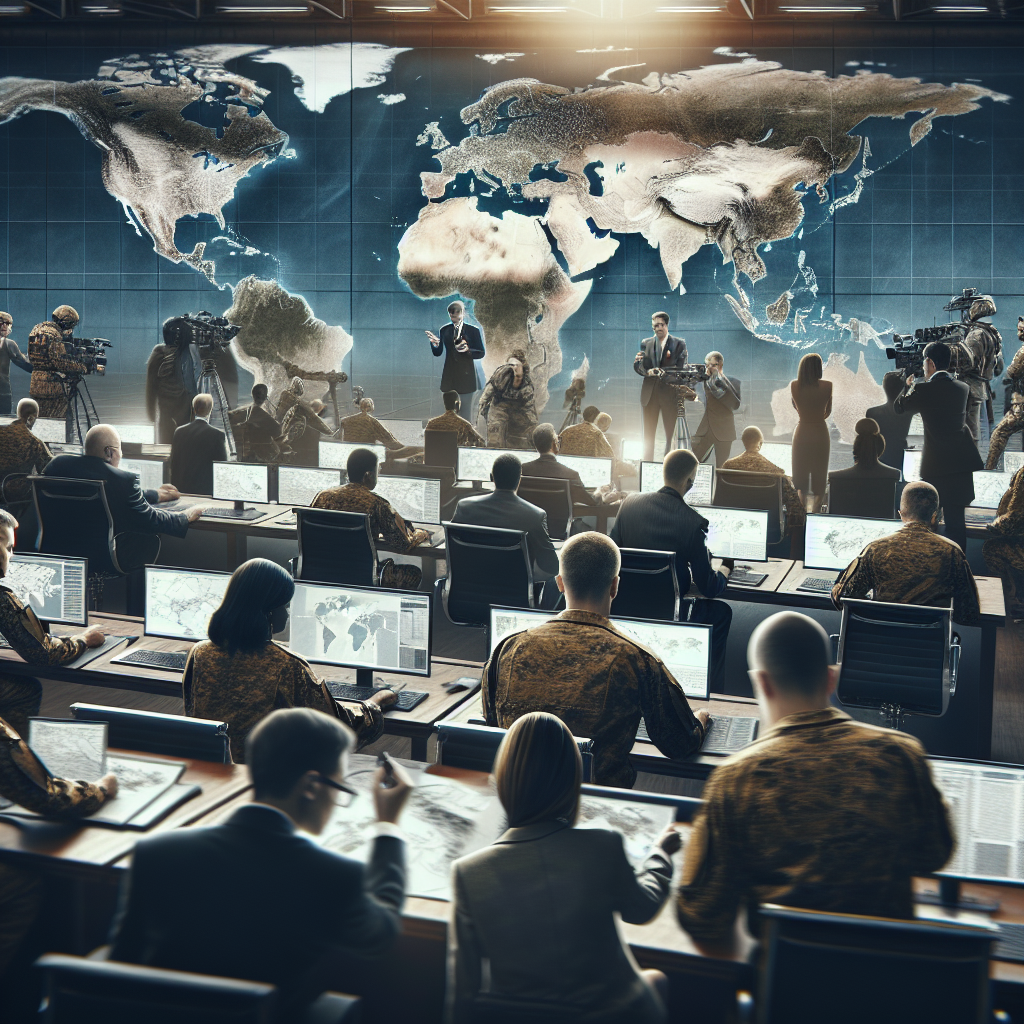

Tensions Escalate as US Military Deployments Surge in the Gulf Region
The geopolitical landscape in the Gulf region is experiencing an unprecedented shift as the United States ramps up military operations in response to rising tensions with Iran. The deployment of warships and aircraft, coupled with strategic positioning of airbases, marks a pivotal moment that could have profound implications not only for regional stability but also for global security dynamics.
Military Buildup in the Gulf
According to David Crump, CEO of the risk and intelligence firm Sibylline, the recent concentration of American military assets in the Gulf has not gone unnoticed. With eight airbases already operational in the area, the U.S. military is poised to conduct what experts describe as a “fairly intensive and sustained strike rate” — an estimated 800 sorties per day. This formidable deployment aims to ensure that any potential military response from Iran would be met with overwhelming force, thus neutralizing the threat before it materializes.
The U.S. military’s ability to execute such a high volume of operations underscores its commitment to maintaining peace and security in a region that has long been a flashpoint for conflict. This strategic positioning reflects a calculated move to deter aggression from Iran, which has historically been involved in various forms of military and paramilitary operations, both regionally and globally.
Historical Context and Current Tensions
The Gulf region has been a long-standing focal point of U.S. foreign policy, particularly in relation to Iran. Following the U.S. withdrawal from the Joint Comprehensive Plan of Action (JCPOA) in 2018, tensions have escalated significantly. Iran’s subsequent actions, including missile tests and proxy engagements in neighboring conflict zones—such as Syria and Yemen—have further strained relations.
With Iran’s influence expanding through its allied militias, the United States has felt compelled to bolster its presence, a move perceived as necessary to counteracts Iran’s calculated provocations. The stakes are alarmingly high, not just for the nations directly involved but also for global powers that depend on stability in this pivotal area, particularly for the uninterrupted flow of oil through the Strait of Hormuz.
Global Implications of U.S. Military Engagement
The implications of this military assertion extend far beyond the Gulf region. The increase in U.S. military capabilities and readiness signals to the international community America’s resolve to protect its interests and allies. This is particularly relevant as other global powers, such as China and Russia, watch closely and may react to what they consider a provocatively aggressive stance by the United States.
Increased military activity inevitably raises concerns about potential miscalculations that could lead to broader conflicts. Should hostilities erupt, the resulting humanitarian crisis could see millions destabilized, further complicating the already precarious geopolitical landscape. Nations worldwide must grapple with the repercussions of heightened military engagement in an area that serves as a vital artery for global commerce.
The Stakes for Regional Powers
For regional players, the U.S. military buildup poses significant questions about sovereignty and security. Countries such as Saudi Arabia and Israel have welcomed increased American military support, viewing it as a buffer against Iranian ambitions. However, nations like Iraq and Lebanon, where Iranian influence is entrenched, find themselves in a precarious position, often striving to balance complex relationships with both the U.S. and Iran.
In addition, the specter of sectarian tensions looms large. The Sunni-Shia divide has historically fueled conflicts in the region, and an escalation involving U.S. forces could reignite these divisions. The consequences could be catastrophic, extending violence to various communities and driving regional instability.
Conclusion: The Path Ahead
As the United States fortifies its military presence in the Gulf, the world watches with bated breath. The unfolding situation serves as a reminder of the fragile balance of power that exists in the region, and the delicate threads that hold together international relations.
With each military maneuver, the potential for conflict grows, transforming the dynamics of not just Middle Eastern politics, but global security as well. The actions taken by the U.S., and the responses elicited from Iran, will not only shape the immediate future but also set the stage for the complexities of international relations for years to come.
Source: https://www.bbc.com/news/articles/c1d64p3q2d0o?at_medium=RSS&at_campaign=rss
