


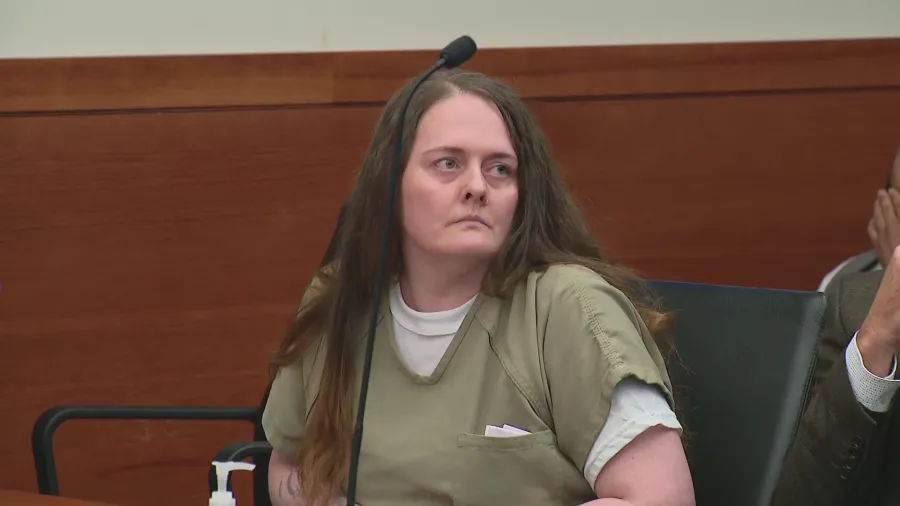

Rebecca Auborn Sentenced to Over Six Decades for Murders in Columbus, Ohio
COLUMBUS, Ohio — In a courtroom filled with the somber presence of affected families and friends, Rebecca Auborn was sentenced Thursday to a minimum of 60 years in prison for her role in the murders of four men. The decision marks a significant chapter in a case that has rattled the Columbus community and raised urgent questions around issues of public safety and justice.
Auborn, 30, pleaded guilty in December to four counts of murder and one count of felonious assault. Her guilty plea came after a lengthy investigation into a series of violent incidents that left four men dead over a span of several months. Each of the victims was known to Auborn, and their deaths have been described as the result of calculated and brutal acts.
The first incident dates back to early 2020, when the first victim was reported missing. Authorities launched an investigation that uncovered a disturbing pattern connected to Auborn. Subsequent fatalities followed, leading police to intensify their efforts. Eventually, the evidence against Auborn became overwhelming, resulting in her indictment on nearly 30 charges related to the deaths.
As part of her sentencing, Judge Janet Clapp emphasized the severity of her actions and the devastating impact they have had on the victims’ families. “What you did can never be undone,” Judge Clapp said, addressing Auborn directly. “The lives lost, the families shattered, and the community forever changed are the consequences of your choices.”
Families of the victims expressed their grief and anger during the hearing, highlighting the profound loss they endured. “No sentence can bring our loved ones back,” said a relative of one victim. “But we hope this serves as a message that such violence will not be tolerated.”
Beyond the immediate impacts on families, the case has sparked a broader conversation around violence and its root causes in Columbus. Local community leaders and law enforcement have noted an alarming increase in violent crime in recent years. With a city already grappling with rising rates of gun violence, Auborn’s actions have illuminated the urgent need for preventive measures.
Experts in criminology suggest that tackling the underlying issues of violence is crucial for communities like Columbus. They argue for increased support for mental health services, intervention programs, and proactive law enforcement strategies. “When individuals feel unheard or lost, the community as a whole suffers,” said Dr. Elaine Morris, a sociologist specializing in urban violence. “This case should galvanize us to confront these issues head-on.”
In response to the surge in violence, Mayor Andrew Ginther has pledged to work closely with local organizations to implement solutions aimed at reducing crime. “We must ensure our communities are safe and that our residents feel secure in their own neighborhoods,” Mayor Ginther stated at a recent press conference. “Rebecca Auborn’s actions are a tragedy not only for the families involved but for all of Columbus.”
Auborn’s case is now serving as a critical focal point for many community organizations engaged in violence prevention. Non-profit groups and social advocates are rallying together to emphasize that solutions require collective action. “We need to invest in our youth and provide meaningful opportunities for them to grow in safe environments,” asserted Maya Hart, director of a local community outreach program. “Only then can we break the cycle of violence.”
As Rebecca Auborn begins her prison sentence, the implications of her actions continue to ripple through the community, invoking both sorrow and resolve. Community leaders and residents are striving to find ways to heal, confront the realities of violence, and create a safer future.
The hope lies in transforming tragedy into action, reminding residents that every life lost is not simply a statistic but a fabric of the community that needs to be woven back together. As Columbus faces the ongoing challenge of crime, it stands at a crucial crossroads—balancing justice for victims with the need for long-term systemic change. The repercussions of this case may ultimately help shape community policies aimed at preventing further violence, ensuring that the memory of the four victims propels collective action toward a safer future.
