


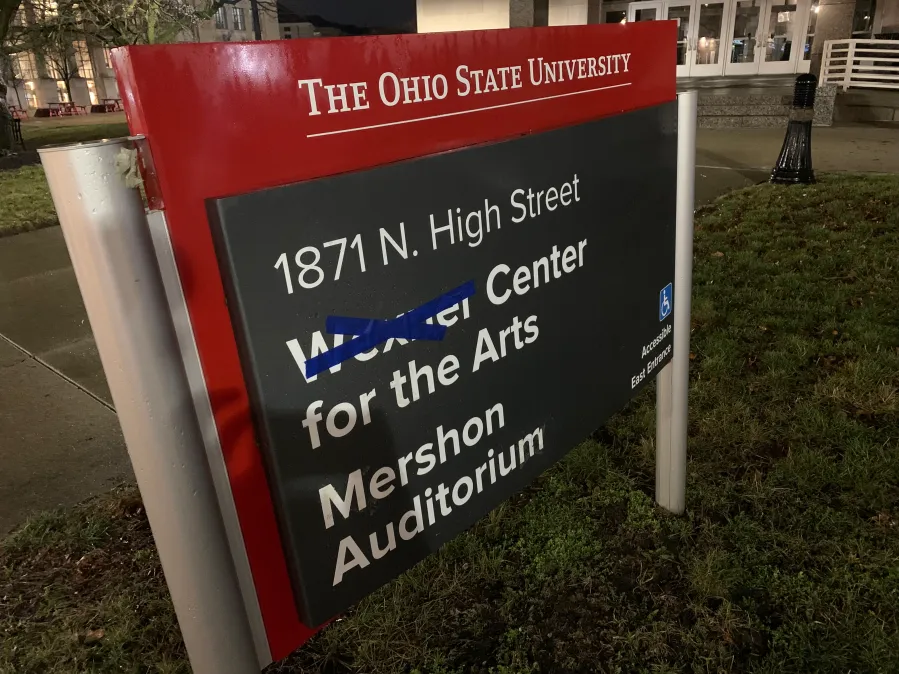

Calls to Remove Les Wexner’s Name from Ohio State University Buildings Intensify Following Deposition
COLUMBUS, Ohio – The movement to strip billionaire Les Wexner’s name from historic buildings at Ohio State University (OSU) is gaining explosive momentum after Wexner’s recent testimony in connection with his ties to Jeffrey Epstein. This development raises critical questions not just about institutional naming rights, but also about accountability in the wake of past associations with controversial figures.
Wexner, who is known for his long tenure as the CEO of L Brands, which owns Victoria’s Secret, has faced growing scrutiny over his relationship with Epstein, a convicted sex offender whose high-profile connections raised serious ethical concerns. Following a congressional deposition wherein Wexner was questioned about his dealings with Epstein, voices have intensified demanding the removal of his name from three prominent buildings on campus: the Wexner Center for the Arts, the Wexner Medical Center, and the Wexner Pavilion.
Advocates for the name change argue that such affiliations undermine the integrity of educational institutions and send a damaging message to students about accountability and values. “Universities should reflect the best ideals of our society, and maintaining Wexner’s name on these buildings no longer represents that ethos,” says Dr. Sarah Mitchell, a faculty member at OSU and a leading voice in the movement.
The pressure comes not just from faculty and student groups but also from community leaders and alumni. A recent petition drawing thousands of signatures has called on the OSU Board of Trustees to take decisive action. As some universities across the country have taken steps in similar situations, the Board is now facing mounting public scrutiny to make a timely decision.
The current climate raises important questions about the processes governing the naming of institutions and their facilities. According to university policy, the Board of Trustees has the authority to change names at will, particularly if the individual in question is found to have acted in a manner contrary to the university’s values. With two of the three Wexner-named entities being under direct control of the university, action could be imminent.
Despite the urgency, there are complexities to consider. The financial contributions made by Wexner, which have supported numerous campus initiatives, bring a layered perspective to the issue. Wexner’s donations benefitted the university’s arts programs and medical research, leading some to argue that removing his name could jeopardize funding and future philanthropic efforts. “We must consider the balance between acknowledging past contributions and holding individuals accountable for their actions,” stated university spokesperson, Jenna Reynolds.
While discussions are ongoing, various student organizations have begun staging protests, raising awareness not just about Wexner but about systemic issues related to sexual abuse and accountability in positions of power. Some students have pointed out that it’s imperative for the university to take a stand against any affiliation with individuals who have a troubled history. “It’s about creating a campus culture that prioritizes safety and integrity,” noted sophomore student Aisha Khan.
Epstein’s network included an array of wealthy and powerful individuals who have recently been scrutinized for their associations. Wexner’s long-standing relationship with Epstein, which allegedly included financial and managerial ties, adds a troubling dimension, especially given Epstein’s conviction and continued fallout from the investigation into sexual abuse. The situation raises ethical concerns as to how we honor figures within the educational landscape, particularly those tied to deeply troubling legacies.
Looking ahead, the implications of this situation could resonate beyond OSU. As universities grapple with the complexities of legacy and accountability, a broader discourse may emerge surrounding how institutions define their values in relation to their benefactors. This could lead to policy changes in naming rights not only in Ohio but across the country as educational institutions reconsider how they align themselves with individuals whose actions may cloud those values.
On the horizon, the OSU Board of Trustees will likely face crucial discussions regarding Wexner’s naming rights at its next meeting. As this narrative unfolds, it remains to be seen how educational institutions will respond to public sentiment and take a stand against affiliations that conflict with their fundamental mission of education and ethical integrity. The situation could set a precedent for other universities grappling with their ties to controversial figures, signaling a potential shift in how institutions navigate complex legacies in the digital age.
