



From State of the Union to Trade Tensions: A Politically Charged 24 Hours Across the United State
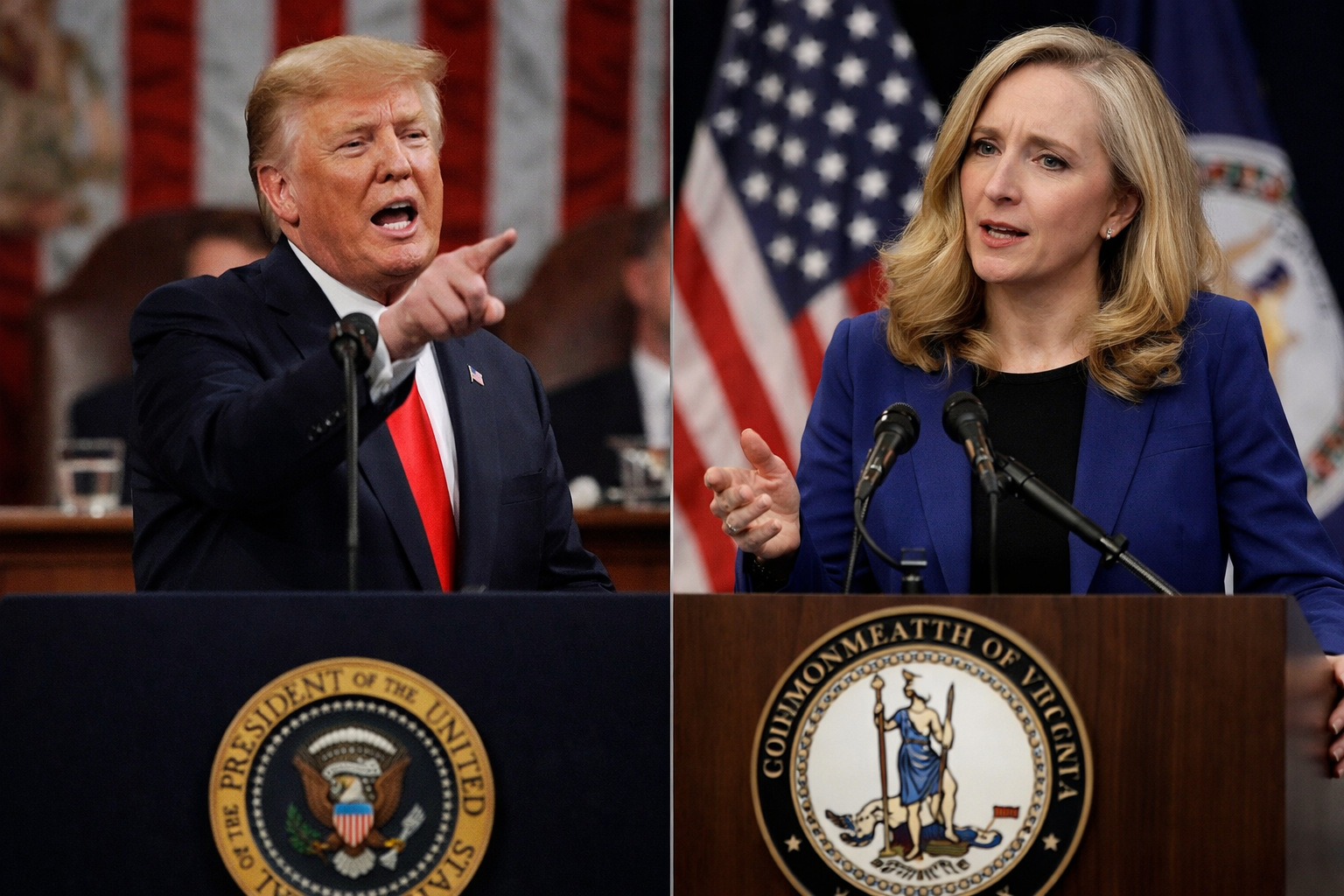
The United States experienced a politically intense and economically consequential 24 hours on February 24, 2026, as President Donald Trump delivered a marathon State of the Union address, Democrats issued a sharp rebuttal, markets reacted to growing trade uncertainty, and global partners watched closely as Washington signaled a more aggressive economic posture.
From Capitol Hill to Wall Street and across international capitals, the developments of the day reflected a nation navigating deep political divisions and far-reaching economic decisions.
Trump delivers marathon State of the Union
President Donald Trump addressed Congress and the nation in one of the longest State of the Union speeches in modern history, using the platform to present what he described as a resurgent America entering a new era of prosperity and strength.
The president framed his administration’s record as one of economic revival and global assertiveness, declaring that the United States is entering what he called a “golden age.” He cited falling gas prices, improved market performance and declining interest rates as indicators of progress.
Trump argued that his economic strategy has restored American confidence and placed the country in a stronger position globally. He also introduced a proposal for government-matched retirement savings contributions for workers without employer-sponsored plans, saying the measure would help strengthen long-term financial security for millions of Americans.
Throughout the speech, Trump emphasized economic nationalism and the need for policies that prioritize domestic industry, workers and energy independence.
Tariffs take center stage after court ruling
The most contentious portion of the address focused on tariffs and executive authority.
Following a recent Supreme Court ruling that limited certain emergency tariffs, Trump defended his trade strategy and signaled that his administration would continue pursuing aggressive tariff measures through alternative legal avenues.
He argued that tariffs generate revenue and give the United States leverage over foreign competitors, insisting that he does not require additional congressional approval to impose them. Trump also revived his long-standing proposal that tariffs could eventually replace income taxes as a major source of federal revenue, a claim that has sparked intense debate among economists.
The tariff issue has quickly become a central economic and constitutional battle in Washington.
Legal experts and lawmakers continue to debate the limits of presidential authority in trade policy, while businesses and investors weigh the potential impact on supply chains and consumer prices.
Democratic response challenges economic narrative
In the official Democratic response, Virginia Governor Abigail Spanberger offered a sharply different view of the country’s economic condition and political direction.
Speaking from Virginia, she argued that many Americans are not experiencing the prosperity described by the president and continue to struggle with high costs for housing, healthcare and everyday goods. She said tariffs function as hidden taxes that raise prices for consumers and create uncertainty for small businesses and farmers.
Spanberger also framed the moment as a test of constitutional balance, calling on Congress to assert its authority over major economic decisions and warning against what she described as executive overreach. Her response emphasized affordability, institutional stability and national unity, positioning Democrats as focused on everyday economic concerns.
The contrasting speeches underscored the deep political divide shaping national discourse, with each party presenting starkly different interpretations of economic data and policy outcomes.
Markets react to policy uncertainty
Financial markets responded cautiously throughout the day as investors assessed the implications of tariff escalation and ongoing political tensions.
Major indexes experienced fluctuations as traders reacted to uncertainty surrounding trade policy and global economic alignment. Analysts say unpredictability in tariffs and international trade agreements is making it harder for companies to plan investments and hiring.
Manufacturing, technology and retail sectors are particularly sensitive to tariff changes, as they rely heavily on international supply chains. Investors are closely monitoring signals from Washington and global partners to gauge how trade relations may evolve in the coming weeks.
Economists note that while some indicators show resilience in the U.S. economy, persistent policy uncertainty can dampen business confidence and slow long-term growth.
Global partners adopt cautious stance
International reaction to U.S. developments has been swift.
Several allied nations have signaled caution in advancing trade agreements with Washington until greater clarity emerges on tariff policy and legal authority.
European leaders are reviewing trade negotiations and seeking assurances that existing agreements will remain stable. Asian partners are also reassessing timelines for economic cooperation with the United States, exploring parallel arrangements that may reduce reliance on U.S. markets.
Foreign policy analysts warn that prolonged uncertainty could reshape global trade patterns and influence diplomatic relationships.
While the United States remains a dominant economic force, unpredictability in policy direction may encourage other nations to strengthen regional alliances.
Congress faces growing gridlock
On Capitol Hill, lawmakers from both parties are grappling with how to respond to the administration’s tariff strategy and broader economic agenda.
Republican leaders have acknowledged difficulty building consensus around sweeping tariff legislation, while Democrats continue to call for stronger oversight and clearer limits on executive authority. The lack of agreement suggests that many major economic decisions will continue to be driven by the executive branch and challenged in the courts rather than resolved through legislation.
Policy experts say this dynamic reflects a broader pattern of political polarization that complicates efforts to pass major economic reforms.
—
National mood reflects division and uncertainty
Public opinion remains divided as Americans assess the direction of the country.
Supporters of the administration highlight economic indicators they view as positive, while critics point to persistent cost-of-living challenges and political tensions.
The State of the Union and Democratic response have reinforced competing narratives about the nation’s trajectory. One emphasizes economic resurgence and assertive leadership; the other stresses affordability, institutional balance and the need for unity.
—
Looking ahead
As the United States moves deeper into the political and economic year, the questions raised over the past 24 hours are likely to shape national debate:
Will tariff disputes escalate into broader trade conflicts?
Can Congress find common ground on economic policy?
How will global partners respond to shifting U.S. trade strategy?
The answers will influence not only markets and diplomacy but also the political landscape heading into the next election cycle.
For now, the events of February 24, 2026, illustrate a nation at a pivotal moment — balancing economic ambition with political division, and navigating a complex global environment where decisions in Washington carry consequences far beyond its borders.
