



Four U.S. Service Members Killed in Iraq Aircraft Crash During Military Mission
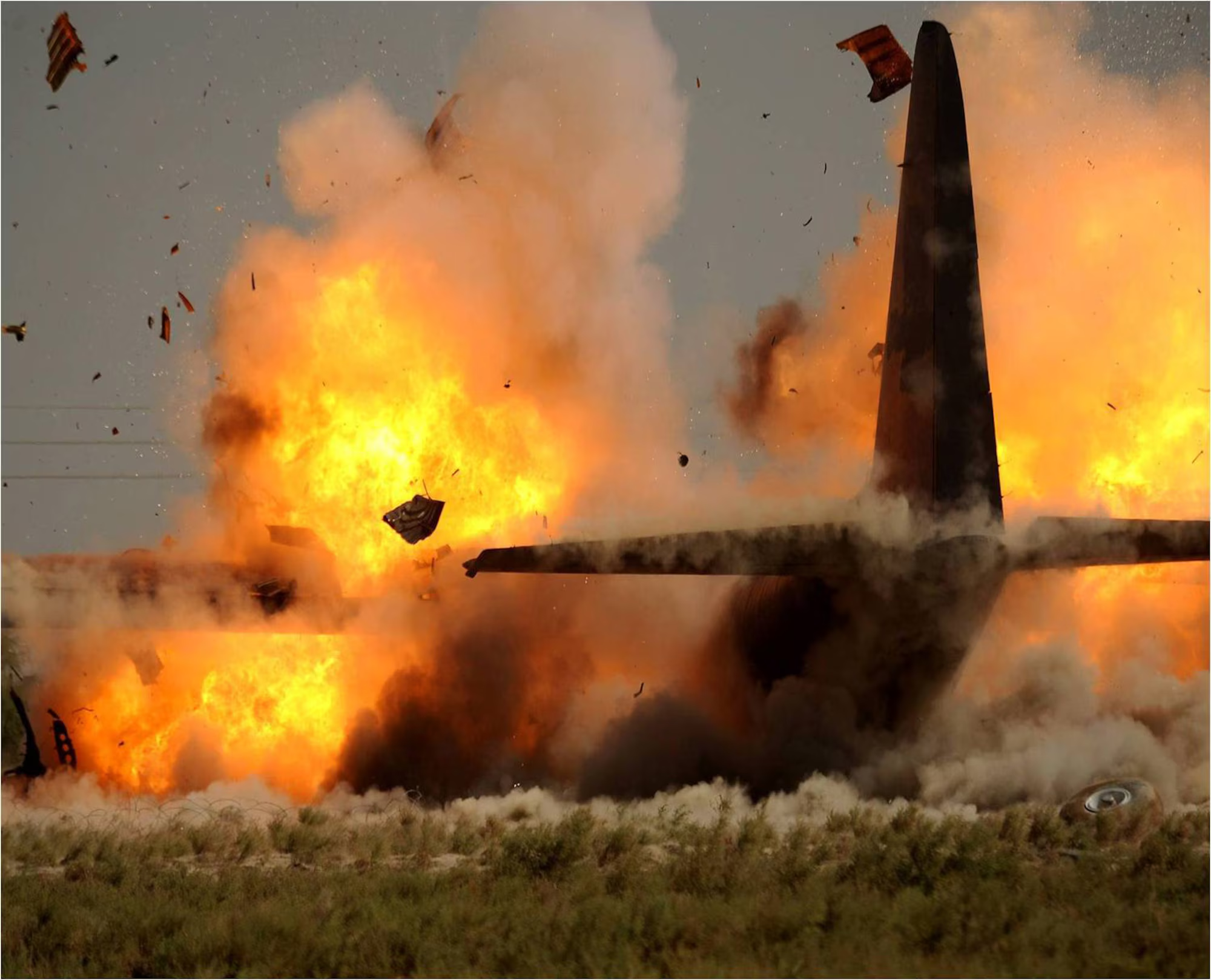
A tragic military aviation accident has claimed the lives of four American service members after a U.S. Air Force refueling aircraft crashed in western Iraq during a mission connected to ongoing military operations in the Middle East.
Officials from the United States Department of Defense confirmed that the aircraft involved was a KC-135 Stratotanker, one of the U.S. Air Force’s primary aerial refueling aircraft used to support fighter jets and bombers during combat and surveillance missions.
The aircraft went down while supporting operations related to escalating tensions in the region involving the United States, Israel, and Iran. Military officials said the crash resulted in the deaths of four service members, while rescue and recovery operations were initially launched to locate the remaining crew members.
The loss marks one of the most serious aviation incidents involving U.S. forces in the region in recent months.
The Aircraft and Its Mission
The aircraft involved in the crash was a KC-135 Stratotanker, a long-range aerial refueling plane that plays a crucial role in modern U.S. military operations.
Aerial refueling allows fighter jets, surveillance aircraft, and bombers to remain airborne for extended periods without returning to base to refuel. This capability significantly expands the operational range of U.S. military aircraft and is considered a critical component of air warfare.
The KC-135 fleet has served as the backbone of American aerial refueling operations since the Cold War. Although many aircraft have been upgraded over the years, the platform remains one of the oldest aircraft still widely used by the U.S. Air Force.
The mission being conducted at the time of the crash reportedly involved supporting aircraft operating over the Middle East as part of expanded military operations in response to rising tensions in the region.
What Happened Before the Crash
According to early reports from military officials, two U.S. refueling aircraft were flying as part of the same mission when an incident occurred.
Investigators say the aircraft that crashed may have experienced a mechanical problem or mid-air operational complication. Officials stressed that there is currently no evidence that the aircraft was shot down or struck by enemy fire.
The second aircraft involved in the mission reportedly landed safely after the incident.
Military authorities have not released further operational details due to security concerns related to ongoing operations in the region.
Search and Recovery Efforts
Immediately after the aircraft went down, U.S. military personnel and regional response teams launched a search and recovery operation near the crash site in western Iraq.
Rescue teams worked to secure the crash area and locate survivors or remains from the aircraft wreckage.
The identities of the four deceased service members have not yet been released publicly. U.S. military policy requires that families of fallen service members be notified before their names are made public.
Officials say more information will likely be released once the notification process is complete.
A Region on Edge
The crash comes at a time of heightened military tension across the Middle East.
The United States has increased its military operations in response to escalating hostilities involving Iran and regional allies. Military aircraft have been conducting frequent patrols, surveillance missions, and refueling operations across several countries in the region.
These operations often involve complex flight patterns and high-risk maneuvers, particularly when aircraft are flying in close proximity during aerial refueling missions.
Military aviation experts note that tanker aircraft such as the KC-135 often operate under demanding conditions, especially during extended combat support missions.
The KC-135: A Critical but Aging Fleet
The KC-135 Stratotanker has served the United States Air Force for more than six decades.
Originally introduced during the Cold War, the aircraft was designed to support strategic bombers carrying nuclear weapons. Over time, its mission evolved to support fighter jets, reconnaissance aircraft, and coalition air forces during conflicts around the world.
Despite its age, the aircraft remains one of the most widely used aerial refueling platforms in the U.S. military.
However, the Air Force has gradually begun replacing portions of the KC-135 fleet with the newer KC-46 Pegasus, a modern tanker aircraft designed to improve refueling capabilities and operational safety.
The transition to the KC-46 has been slow due to production delays and operational challenges, meaning many KC-135 aircraft continue to carry out essential missions.
Investigation Underway
Military authorities have launched a full investigation into the crash to determine its cause.
Investigators are expected to examine several key factors, including:
• aircraft maintenance records
• flight data recordings
• communications between the two aircraft involved
• environmental conditions during the mission
• potential mechanical failures
The investigation will likely take several weeks or months before final conclusions are reached.
Officials say understanding what caused the accident will be critical for preventing similar incidents in future military operations.
National Reaction and Tributes
The deaths of the four service members have prompted condolences from military leaders, lawmakers, and veterans’ organizations across the United States.
Defense officials praised the crew members for their dedication and service, emphasizing that they were performing a mission essential to protecting American and allied forces in the region.
Messages of sympathy have begun appearing across social media and veteran communities as Americans mourn the loss of the fallen service members.
Military families and advocacy groups have also called for continued support for troops deployed overseas.
The Human Cost of Military Operations
Although many Americans associate military casualties with combat operations, accidents remain a significant risk in military aviation.
Aircraft involved in aerial refueling missions must fly extremely close together at high speeds, often in difficult weather conditions or during night operations.
These missions require precision coordination between pilots and flight crews.
Even small technical issues or unexpected environmental conditions can quickly escalate into dangerous situations.
The loss of the four service members highlights the inherent risks faced by U.S. military personnel every day while carrying out missions around the world.
A Nation Reflects
As the investigation continues and families begin mourning their loved ones, the tragedy serves as a reminder of the sacrifices made by members of the U.S. military.
Across the country, Americans are reflecting on the risks undertaken by service members deployed far from home.
While geopolitical conflicts and political debates often dominate headlines, moments like this highlight the human cost behind military operations.
For the families of the fallen service members, the loss represents not just a national tragedy but a deeply personal one.
