



A Fractured World: The Legacy of 9/11 and America’s Pursuit of Power in the Middle East
It has been over two decades since the skies over New York City turned dark with smoke and ash, and the world watched in horror as the Twin Towers crumbled to the ground. The September 11, 2001, attacks, which claimed the lives of 2,977 innocent people, were not just an assault on the United States but a seismic event that reshaped geopolitics, redefined global security, and ignited a cascade of conflicts that continue to reverberate today. The aftermath of 9/11 saw the rise of hawkish ideologies in Washington, the controversial pursuit of Middle Eastern democratization, and a quest to reassert American dominance on the world stage—decisions that have left an indelible mark on international relations.
The Catalyst: 9/11 and Its Immediate Aftermath
The attacks on September 11, 2001, were unprecedented in their scale and audacity. Hijacked planes slammed into the World Trade Center, the Pentagon, and a field in Pennsylvania, leaving a nation in shock and a world on edge. The perpetrators, 19 hijackers affiliated with the terrorist group al-Qaeda, exposed vulnerabilities in global security and underscored the rise of non-state actors as formidable threats.
For the United States, the attacks were a wake-up call. They shattered the illusion of invincibility that had defined the post-Cold War era and thrust the nation into a new kind of warfare—one defined by asymmetric tactics, ideological extremism, and endless conflict. In the weeks and months that followed, the Bush administration launched the War on Terror, a sprawling campaign aimed at dismantling terrorist networks and preventing future attacks.
The Neoconservative Vision: Remaking the Middle East
Central to the U.S. response was the influence of neoconservative thinkers, who argued that the Middle East’s autocratic regimes and unstable political systems were incubators for extremism. Their vision was ambitious—and controversial. They sought to replace dictatorships with democracies, believing that political reform would foster stability and align these nations with Western interests.
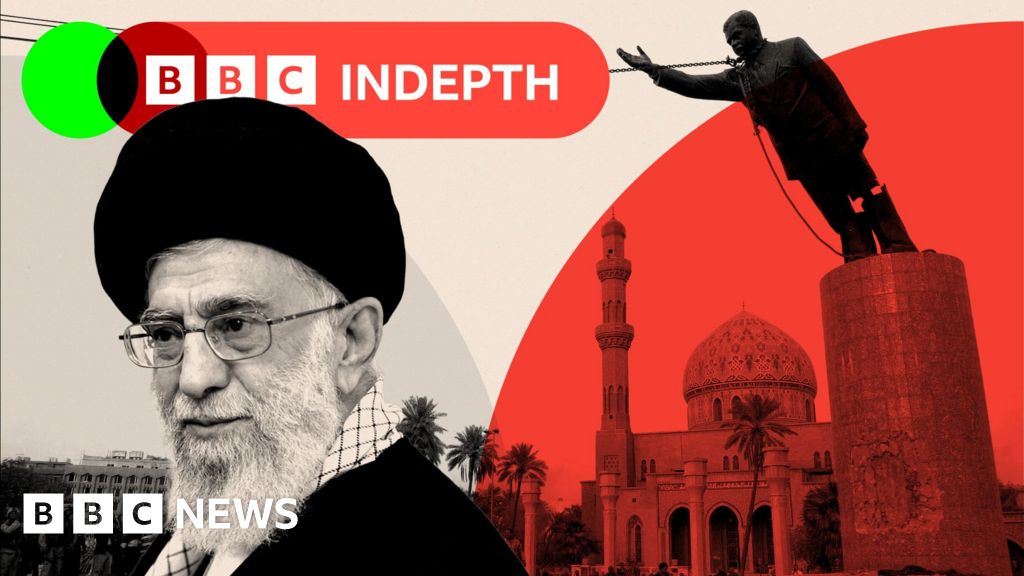
This ideology found its first major test in Iraq. In 2003, citing intelligence (later discredited) about weapons of mass destruction, the U.S. invaded Iraq, toppling Saddam Hussein’s regime. The operation was swift, but the aftermath was anything but. The power vacuum left by Hussein’s ouster plunged the country into chaos, fueling sectarian violence and insurgencies that persist to this day.
Neoconservatives also had their sights set on Iran, long viewed as a destabilizing force in the region. While Iraq was the immediate target, Tehran loomed as the next frontier in their democratization agenda. The idea of regime change in Iran gained traction in certain circles, though it never materialized into direct military action. Instead, Iran emerged emboldened, capitalizing on the instability in Iraq to expand its influence across the region.
The Hawkish Response: Reasserting American Deterrence
Beyond democratization, the post-9/11 era was also defined by a desire to restore America’s deterrent power. The attacks were seen as a direct challenge to U.S. supremacy, and many policymakers believed that a strong, decisive response was necessary to deter future aggressors.
This mindset shaped not only the invasion of Iraq but also the broader War on Terror. The U.S. launched military operations in Afghanistan, targeting al-Qaeda and the Taliban, and established a global network of intelligence and counterterrorism efforts. However, the focus on military might often came at the expense of diplomacy and long-term strategy, leading to unintended consequences.
For instance, the use of drone strikes to eliminate terrorist leaders became a hallmark of U.S. strategy, but it also sparked widespread backlash, particularly in countries like Pakistan and Yemen, where civilian casualties fueled anti-American sentiment. Similarly, the detention and interrogation of suspected terrorists at Guantanamo Bay drew sharp criticism from human rights groups, tarnishing America’s reputation on the global stage.
The Global Context: A World Forever Changed
The ripple effects of U.S. actions in the wake of 9/11 were felt far beyond the Middle East. The War on Terror reshaped alliances, redefined security priorities, and influenced the rise of new geopolitical players.
For NATO allies, the attacks underscored the need for collective defense, leading to heightened military cooperation and joint operations in Afghanistan. However, the Iraq war also exposed rifts within the alliance, with countries like France and Germany opposing the invasion. Meanwhile, China and Russia capitalized on U.S. preoccupation with the Middle East to expand their own spheres of influence, particularly in Asia and Eastern Europe.
The rise of ISIS in the mid-2010s further illustrated the unintended consequences of U.S. actions in the region. Born out of the chaos in Iraq, ISIS emerged as a brutal and effective terrorist organization, capturing vast swathes of territory and posing a direct threat to global security.
Why It Matters: Lessons for the Future
The events triggered by 9/11 continue to shape global security dynamics. The rise of non-state actors, the erosion of international norms, and the challenges of asymmetric warfare are issues that governments and policymakers grapple with to this day.
Moreover, the legacy of America’s interventions in the Middle East serves as a cautionary tale. It highlights the complexities of nation-building, the unintended consequences of military action, and the need for comprehensive, long-term strategies in addressing global threats.
Conclusion: A World Still Searching for Answers
Twenty-three years after the attacks of September 11, the world remains deeply interconnected yet profoundly fractured. The decisions made in the wake of that fateful day have left an enduring imprint on international relations, reminding us of the profound responsibility that comes with power. As new challenges emerge—from cyber warfare to climate-induced conflicts—the lessons of 9/11 underscore the importance of resilience, diplomacy, and a commitment to building a more secure and stable world. The path forward may be uncertain, but the stakes are clear: the choices we make today will shape the global landscape for generations to come.
