


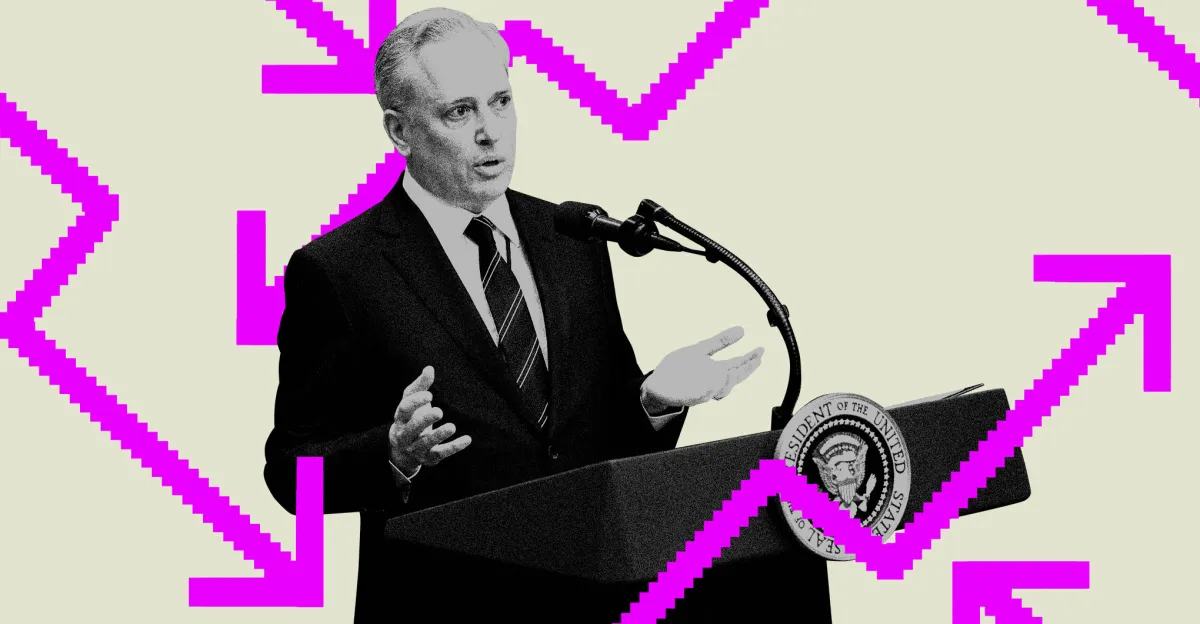

Escalation of Iran Conflict Could Trigger Humanitarian and Economic Crises, Warns White House AI and Crypto Czar
By [Author Name]
As tensions in the Middle East continue to simmer, David Sacks, the White House’s Special Advisor on Artificial Intelligence (AI) and Cryptocurrency, has issued a stark warning: a prolonged conflict with Iran could have dire consequences not only for regional stability but also for global industries reliant on critical resources. Speaking on the popular All In podcast, Sacks emphasized the urgent need for diplomatic solutions, framing the potential fallout as both humanitarian and economic.
Sacks, a former technology entrepreneur turned government advisor, highlighted the catastrophic risks of escalating hostilities with Iran. He expressed particular concern that Iran could target vital infrastructure across the Middle East, including oil and gas facilities, which are the lifeblood of the global energy market. However, his gravest warning centered on the possibility of attacks on desalination plants, which provide drinking water to millions in the water-scarce region. Such a move, Sacks argued, could precipitate a humanitarian crisis of unprecedented scale, rendering parts of the Middle East uninhabitable and displacing countless communities.
The warning comes amid heightened regional tensions following a series of Iranian drone strikes earlier this month, which forced QatarEnergy, one of the world’s largest producers of liquefied natural gas (LNG), to temporarily halt operations. QatarEnergy is also a key supplier of helium, a critical component in semiconductor manufacturing and other high-tech industries. According to Bloomberg, the company accounts for approximately one-third of the global helium supply, making its disruption a significant concern for industries reliant on this scarce resource.
A Broader Context: The Intersection of Conflict and Technology
Sacks’ comments underscore the interconnectedness of geopolitics and technology, particularly in the context of the booming AI industry. As the White House’s AI czar, Sacks has been tasked with overseeing the administration’s efforts to harness the transformative potential of AI while mitigating its risks. However, the ongoing conflict in the Middle East threatens to derail these efforts by creating bottlenecks in the supply chain for semiconductors and other critical components.
“This could potentially turn into a bottleneck for the entire AI story,” economist Andreas Steno Larsen told Yahoo Finance, echoing Sacks’ concerns. Larsen’s statement reflects the growing recognition of helium’s strategic importance in the tech sector. Used in the production of semiconductors, fiber optics, and even MRI machines, helium is essential for maintaining the pace of technological innovation. A prolonged disruption in its supply could have ripple effects across multiple industries, slowing advancements in AI, renewable energy, and healthcare.
Sacks’ warning also highlights the broader economic implications of the conflict. As a former venture capitalist and founder of companies like PayPal and Yammer, Sacks has maintained close ties to the private sector throughout his government tenure. His remarks on the podcast suggested that resolving the conflict is not just a matter of geopolitical stability but also of economic necessity. “What the markets would like to see,” he said, is a de-escalation of tensions to avoid further disruptions to global trade and investment.
Sacks’ Political Stance: Anti-Interventionism and Controversial Views
Sacks’ comments on the Iran conflict align with his long-standing anti-interventionist stance, a position that has often placed him at odds with mainstream foreign policy advocates. During the 2024 Republican National Convention, Sacks controversially claimed that the U.S. “provoked” Russia into invading Ukraine, a statement that drew sharp criticism from both sides of the political spectrum. While his views on international relations have made him a polarizing figure, they also reflect a broader skepticism toward military intervention that resonates with certain segments of the American public.
In the context of the Iran crisis, Sacks’ anti-interventionist approach underscores his belief in the primacy of diplomacy over military action. His call for an “off-ramp” suggests a preference for negotiated solutions that avoid further escalation—a position that could prove contentious given the complex dynamics of Middle Eastern politics. Critics argue that Iran’s aggressive behavior, including its support for militant groups and its nuclear ambitions, necessitates a firm response. However, Sacks contends that the potential humanitarian and economic fallout from intensified conflict outweighs the benefits of a hardline approach.
The Humanitarian Dimension: A Crisis in the Making
Perhaps the most alarming aspect of Sacks’ warning is its focus on the humanitarian consequences of the conflict. While much of the discussion around Iran has centered on its nuclear program and regional influence, Sacks draws attention to the potential targeting of desalination plants as a particularly devastating tactic. The Middle East is one of the most water-scarce regions in the world, and desalination technology plays a crucial role in meeting its water needs.
An attack on these facilities could deprive millions of access to clean drinking water, exacerbating existing challenges such as poverty, displacement, and food insecurity. In Sacks’ view, the resulting crisis could destabilize the region further, displacing populations and creating fertile ground for extremism. His warning serves as a reminder that the human cost of conflict often extends far beyond the battlefield, affecting vulnerable communities in profound and lasting ways.
A Call for Diplomatic Solutions
As the White House grapples with the complexities of the Iran crisis, Sacks’ remarks underscore the urgent need for diplomatic engagement. While military options may offer short-term gains, he argues that the long-term consequences of escalation are too severe to ignore. His emphasis on finding an “off-ramp” reflects a pragmatic approach that prioritizes stability over confrontation—a strategy that resonates with his broader anti-interventionist philosophy.
However, achieving a diplomatic resolution will require navigating a host of challenges, including Iran’s own strategic goals, the interests of regional allies, and the broader geopolitical landscape. As tensions continue to mount, the international community faces a critical juncture in determining the best path forward.
Conclusion
David Sacks’ warning about the potential fallout of a prolonged conflict with Iran serves as a timely reminder of the interconnectedness of geopolitics, economics, and technology. While the immediate risks to global markets and industries are significant, the humanitarian consequences of such a conflict demand equal attention. As the world watches the situation unfold, the challenge for policymakers will be to balance the need for security with the imperative of avoiding further escalation. In this high-stakes environment, diplomacy may prove to be the most effective tool for averting catastrophe.
