



Indonesia’s Financial Markets Rattled by Fears of Fiscal Policy Shift Under Prabowo Subianto
Indonesia’s financial markets witnessed significant turbulence this week as concerns mounted over potential changes to the country’s fiscal framework under President-elect Prabowo Subianto, who is set to take office in October. Stocks tumbled, and government bond prices fell sharply following reports that Subianto’s administration is considering removing the long-standing cap on the state budget deficit, a cornerstone of Indonesia’s economic policy for decades. Investors, both domestic and international, reacted swiftly to the news, fearing that such a move could destabilize Southeast Asia’s largest economy and undermine its reputation for fiscal prudence.
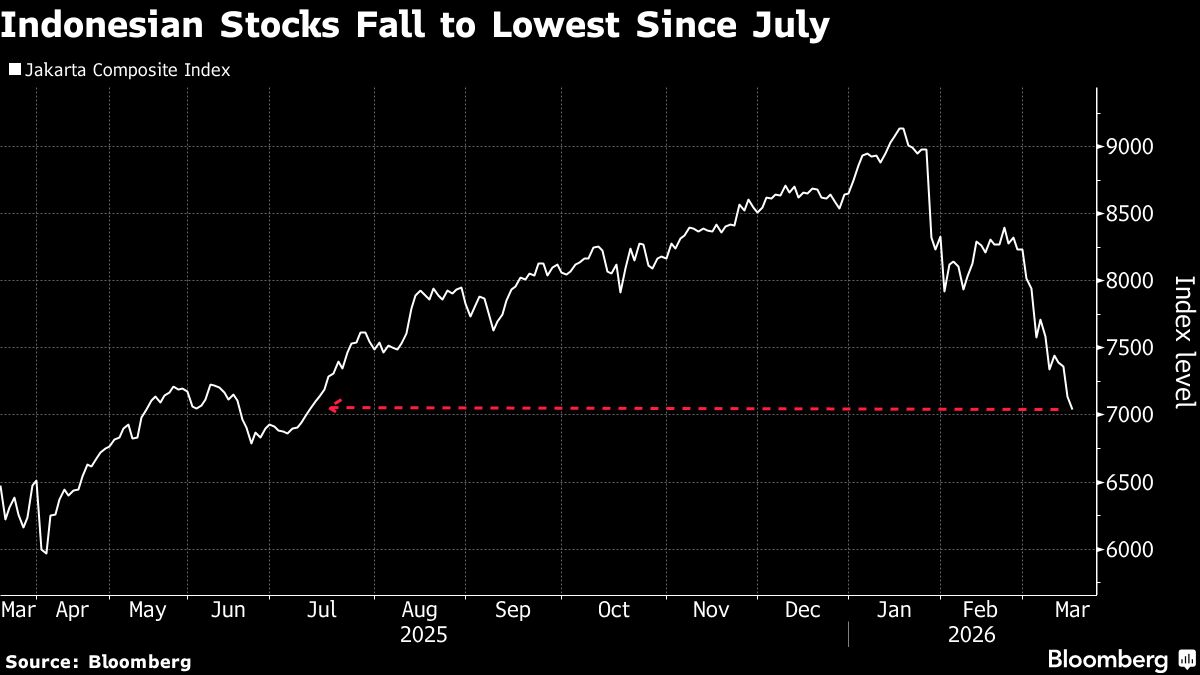
The Jakarta Composite Index (JCI), Indonesia’s benchmark stock index, dropped by over 2% in early trading, marking its steepest single-day decline in months. Meanwhile, yields on 10-year government bonds surged to their highest levels this year, reflecting heightened investor anxiety. The Indonesian rupiah also softened against the U.S. dollar, compounding the sense of unease in the financial markets.
At the heart of the concerns is the possible abandonment of Indonesia’s fiscal deficit ceiling, which has been enshrined in law since 2003. Currently, the government is mandated to keep the annual budget deficit below 3% of gross domestic product (GDP), a rule widely credited with maintaining macroeconomic stability and investor confidence. The policy has been a key pillar of Indonesia’s economic resilience, helping it weather global financial crises and external shocks. However, Subianto’s team has reportedly floated the idea of scrapping this limit to allow for greater public spending on critical infrastructure, social welfare, and defense projects.
The administration’s rationale hinges on the need to accelerate economic growth and address pressing social inequalities. Indonesia, a nation of over 270 million people, faces significant challenges in narrowing its wealth gap and improving access to basic services, particularly in remote regions. Proponents of lifting the deficit ceiling argue that increased government expenditure could drive job creation, boost productivity, and spur long-term development. Yet critics warn that such a move could lead to unsustainable debt levels, inflationary pressures, and a loss of investor trust.
Historical Context and Economic Implications
Indonesia’s fiscal deficit ceiling was introduced in the aftermath of the Asian Financial Crisis of 1997-1998, which devastated the country’s economy and forced it to seek a bailout from the International Monetary Fund (IMF). The crisis exposed vulnerabilities in Indonesia’s financial system and underscored the need for disciplined fiscal management. The 3% cap was subsequently adopted as part of broader reforms aimed at ensuring fiscal sustainability and restoring investor confidence. Over the years, the policy has been credited with helping Indonesia maintain its investment-grade credit rating and attract foreign capital.
The potential removal of the deficit ceiling comes at a delicate juncture for Indonesia’s economy. While the country has emerged as one of the fastest-growing economies in the region, it faces headwinds from slowing global demand, volatile commodity prices, and geopolitical uncertainties. Moreover, the COVID-19 pandemic forced the government to temporarily breach the 3% limit in 2020 and 2021 to fund its pandemic response, raising concerns about fiscal discipline.
Analysts caution that abandoning the deficit cap could have far-reaching consequences. “Indonesia’s fiscal credibility has been a key factor in its economic success,” said economist Dian Kuswandarini. “Any move to relax the deficit ceiling must be carefully calibrated to avoid undermining investor confidence and destabilizing the economy.”
Market Reactions and Investor Concerns
The market’s reaction reflects broader apprehensions about Subianto’s economic policies and their potential impact on Indonesia’s fiscal health. Investors are particularly wary of the risks associated with higher government borrowing, which could crowd out private investment and increase debt servicing costs.
“Indonesia’s bond yields are already rising, and the currency is under pressure. These are clear signs that markets are nervous about a shift in fiscal policy,” said Michael Teng, a portfolio manager at a Singapore-based investment firm. “Investors will be closely watching how the new administration balances its development ambitions with fiscal responsibility.”
The uncertainty has also prompted calls for greater clarity from Subianto’s team. “The government needs to articulate a clear and credible fiscal strategy,” said economist Andri Prasetyo. “Without that, markets will remain jittery, and Indonesia risks losing the trust it has worked so hard to build.”
Regional and Global Ramifications
Indonesia’s fiscal policy decisions carry significant implications not only for its domestic economy but also for the broader Southeast Asian region. As the largest economy in ASEAN, Indonesia plays a crucial role in driving regional growth and stability. Any erosion of its fiscal discipline could have ripple effects across neighboring economies, particularly in terms of investor sentiment and regional trade dynamics.
Globally, Indonesia’s fiscal stance could influence perceptions of emerging markets as a whole. In an environment of rising global interest rates and geopolitical tensions, investors are increasingly selective about where they allocate capital. A perceived weakening of Indonesia’s fiscal framework could lead to capital outflows and further volatility in emerging markets.
Looking Ahead
As Indonesia prepares for its leadership transition, the debate over fiscal policy is likely to intensify. Subianto’s administration faces the formidable task of reconciling its ambitious development goals with the imperative of maintaining fiscal stability. Whether it can strike this balance will determine Indonesia’s economic trajectory in the coming years.
For now, the financial markets remain on edge, awaiting concrete signals from the incoming government. As economist Dian Kuswandarini aptly put it, “Indonesia is at a crossroads. The choices it makes today will shape its future for generations to come.”
In a world where fiscal discipline and economic growth often pull in opposite directions, Indonesia’s next moves will be watched with keen interest. The nation’s ability to navigate this complex terrain will ultimately determine whether it continues its ascent as a global economic powerhouse or succumbs to the pitfalls of fiscal imprudence.
