



Innovative Burn Bandage Design by University of Akron Students Offers Hope for Burn Victims
AKRON, Ohio — Burn injuries affect nearly half a million Americans each year, with 45,000 requiring hospitalization, according to the American Burn Association. For Hailey Essinger, a fifth-year biomedical engineering student at the University of Akron, the pain of burns is all too personal. Two years ago, Essinger suffered burns on over 30% of her body in an industrial accident. Today, she’s channeling her experience into creating a groundbreaking solution to improve the healing process for burn victims.
“All I could think was, ‘Oh my gosh, this hurts, this hurts, this hurts,’” Essinger recalled of her ordeal. She described the excruciating daily process of removing and scrubbing dressings, a procedure that left her in immense pain despite medication. Motivated by her own recovery struggles, Essinger teamed up with fellow students Matthew Flaker and Andrew Martin to develop a new type of burn bandage.
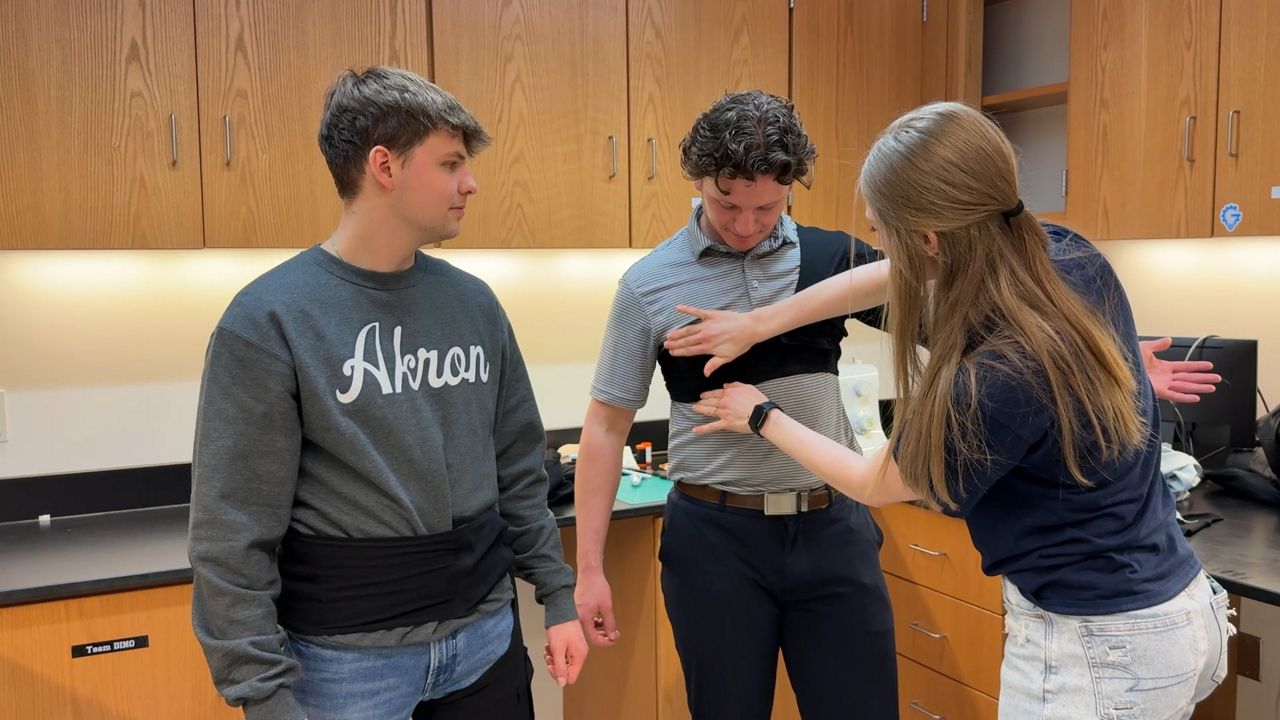
The goal? To revolutionize the way burns are treated. “We want to create a bandage that slips less, pulls on the skin less, and is easier to apply,” Essinger explained. The team’s design focuses on modularity, allowing caregivers to customize bandages based on the size and location of the injury. This innovation ensures that patients with burns on specific areas, like an arm or leg, won’t need to use oversized dressings.
For Martin, the project hits close to home as well. His uncle suffered severe chemical burns, inspiring him to join Essinger’s team. “I like bringing value to both the patient and the clinician,” Martin said. Originally considering a career in medicine, he found his calling in biomedical engineering, where he believes he can make a significant impact through innovative problem-solving.
Flaker, whose role involves selecting materials and managing project timelines, emphasized the challenges faced by clinicians and patients with current bandage options. “It’s very difficult for clinicians to apply existing solutions in hospitals, and it’s equally tough for caregivers at home,” he said. “I’m excited to help patients as an engineer—this is what I want to do.”
The trio’s dedication has already earned them recognition. They secured second place in the Northeast Ohio Medical University Bench to Bedside product design competition and first place in the University of Akron’s biomedical department design day. Despite graduating this May, the students plan to continue refining their design to ensure it provides the best possible healing experience for patients.
Essinger believes their bandages could have a wide-reaching impact. While initially designed for burn victims, she notes that the product can also benefit individuals with other skin conditions. “After graduation, we hope to keep improving our design so that patients can have the best recovery experience,” she said.
The team’s work highlights the power of turning personal adversity into innovation. By combining their engineering skills with firsthand experience, Essinger, Flaker, and Martin are paving the way for a future where burn treatment is less painful and more effective.
— Reported by Nexio News
