



Pessimism Grips European Luxury Stocks as Middle East Conflict Casts Shadow Over Recovery
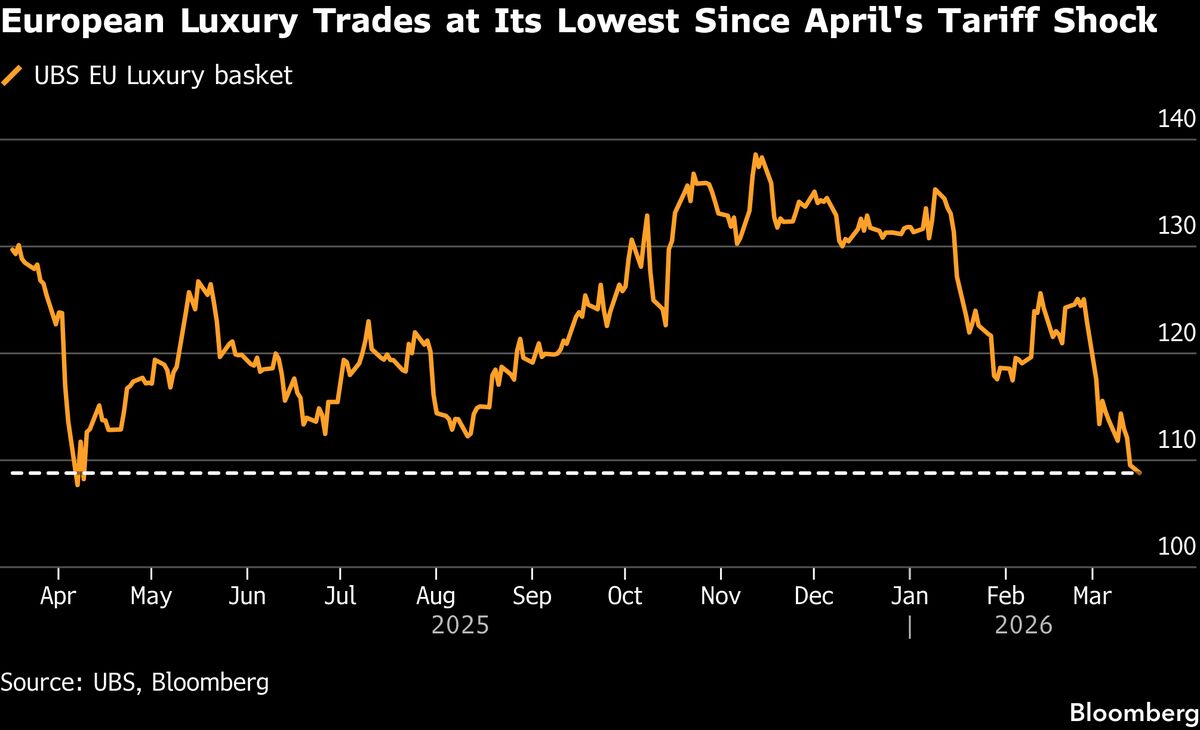
The once-booming European luxury sector is facing a crisis of confidence as investors adopt their gloomiest outlook in years, driven by fears that escalating conflict in the Middle East could derail a much-anticipated rebound in demand. According to a recent analysis by UBS, the region’s luxury stocks have plummeted to their lowest valuation levels in over a decade, reflecting mounting concerns about geopolitical instability and its potential impact on consumer spending. This downturn marks a stark reversal for an industry that had been a cornerstone of European economic resilience during previous global crises.
The luxury sector, long synonymous with stability and growth, has historically been a bellwether of global economic health. Companies like LVMH, Kering, and Hermès have consistently outperformed broader markets, buoyed by soaring demand from affluent consumers in emerging markets and developed economies alike. However, the sector has faced a challenging year, weighed down by slowing growth in China—its largest market—and inflationary pressures in Europe and the U.S. Just as analysts had begun to forecast a tentative recovery, the outbreak of a new conflict in the Middle East has injected fresh uncertainty, further dampening investor sentiment.
Geopolitical Tensions Amplify Risks
The renewed violence in the Middle East, particularly the ongoing conflict between Israel and Hamas, has sent shockwaves through global markets, with luxury stocks among the hardest hit. Investors fear that prolonged instability could disrupt consumer confidence, particularly among high-net-worth individuals who drive a significant portion of luxury sales. The Middle East itself is a key market for luxury goods, with cities like Dubai and Riyadh serving as hubs for high-end shopping. Any sustained disruption in the region could directly impact sales for European luxury brands.
Moreover, the conflict threatens to exacerbate already fragile global economic conditions. Rising oil prices, spurred by fears of supply disruptions, could fuel inflation and tighten consumer budgets worldwide. Luxury goods, often seen as discretionary purchases, are particularly vulnerable to such pressures. Analysts warn that even affluent consumers may delay or scale back spending on high-end fashion, watches, and jewelry in the face of economic uncertainty.
China’s Slow Recovery Adds to Woes
The luxury sector’s troubles are compounded by China’s sluggish post-pandemic recovery. Once the engine of growth for the industry, China has struggled to regain its pre-pandemic momentum, with consumers grappling with a weak property market, high youth unemployment, and a broader economic slowdown. European luxury brands, which derive a significant portion of their revenue from Chinese consumers, have been hit hard by this downturn. Despite hopes that China’s reopening earlier this year would spur a rebound, sales have remained subdued, disappointing investors and analysts alike.
UBS analysts note that the combination of geopolitical risks and China’s tepid recovery has created a “perfect storm” for the luxury sector. The bank’s report highlights that European luxury stocks are now trading at their lowest price-to-earnings ratio since 2016, reflecting heightened investor caution. This pessimism stands in stark contrast to the sector’s performance in recent years, when it consistently outperformed broader markets even during periods of global uncertainty.
Technological Shifts and Changing Consumer Preferences
Beyond geopolitical and economic challenges, the luxury sector is also grappling with broader structural changes. The rise of digital platforms and e-commerce has reshaped consumer behavior, forcing brands to adapt their strategies to meet the demands of a more tech-savvy clientele. Younger consumers, particularly millennials and Gen Z, are increasingly prioritizing sustainability and ethical practices, pushing luxury brands to rethink their supply chains and product offerings.
While many companies have embraced these shifts, the transition has not been seamless. Some brands have struggled to balance their heritage and craftsmanship with the need to innovate and appeal to a new generation of consumers. This tension has added another layer of complexity to an already challenging environment, further weighing on investor sentiment.
A Silver Lining?
Despite the current gloom, some analysts believe that the luxury sector’s fundamentals remain strong. The industry has weathered numerous crises in the past, including the 2008 financial meltdown and the COVID-19 pandemic, emerging stronger each time. UBS analysts suggest that the current downturn may present a buying opportunity for long-term investors, particularly given the sector’s historical resilience.
Additionally, the enduring appeal of luxury goods, driven by their exclusivity and aspirational value, suggests that demand could rebound once geopolitical tensions ease and economic conditions stabilize. Brands that successfully navigate the current challenges—whether by doubling down on sustainability, leveraging digital innovation, or expanding into new markets—could emerge even stronger in the long run.
A Delicate Balance
For now, however, the outlook for European luxury stocks remains uncertain. The sector’s fortunes are closely tied to global economic and geopolitical developments, making it highly susceptible to external shocks. While some investors see potential for a recovery, others remain cautious, wary of further disruptions in the Middle East and beyond.
As the luxury industry navigates this turbulent period, one thing is clear: the sector’s ability to adapt and innovate will be critical to its survival and growth. Whether it can reclaim its position as a market darling remains to be seen, but for now, the road ahead is fraught with challenges. As UBS analysts aptly concluded, “The luxury sector is at a crossroads, and the choices it makes today will shape its future for years to come.”
