


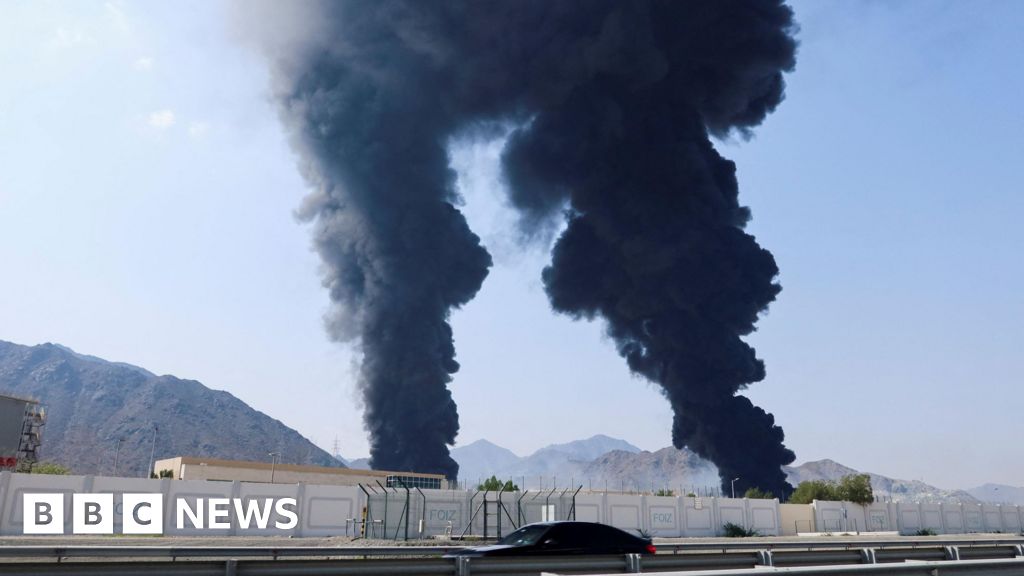

Fujairah Port: A Lifeline for Global Trade Amid Hormuz Tensions
The Strait of Hormuz, a narrow maritime chokepoint through which a fifth of the world’s oil supply flows, has long been a flashpoint for geopolitical tensions. Its strategic importance has made it a focal point of global concerns, particularly as conflicts in the Middle East escalate. Yet, in the shadow of this volatile waterway lies the port of Fujairah, an unsung hero of global trade. Positioned just outside the Strait, Fujairah has emerged as a critical alternative route for shipping, ensuring the uninterrupted flow of goods and energy supplies even when Hormuz faces blockade threats.
As international tensions rise, Fujairah’s role as a logistical lifeline underscores its significance not just for the United Arab Emirates (UAE) but for the stability of the global economy. Its ability to bypass Hormuz provides a rare safeguard against disruptions that could otherwise send shockwaves through supply chains, inflate energy prices, and destabilize markets worldwide.
The Strait of Hormuz: A Global Chokepoint
The Strait of Hormuz is arguably the most critical maritime passageway in the world. Located between Iran and Oman, it connects the Persian Gulf to the Arabian Sea, serving as the primary route for oil exports from Saudi Arabia, Iran, Iraq, Kuwait, Qatar, and the UAE. Approximately 21 million barrels of oil pass through the Strait daily, representing a significant portion of global energy supplies.
However, its strategic importance has also made it a hotspot for conflict. Iran has repeatedly threatened to close the Strait in response to international sanctions or military confrontations. In recent years, incidents such as ship seizures, drone attacks, and mine-laying operations have heightened concerns about the safety and reliability of this vital waterway.
An actual closure of the Strait of Hormuz would have catastrophic implications. Oil prices would skyrocket, disrupting industries and economies worldwide. Alternative routes, though available, are limited in capacity and efficiency, making Fujairah’s port an indispensable solution.
Fujairah’s Strategic Advantage
Fujairah, one of the seven emirates of the UAE, lies on the eastern coast of the Arabian Peninsula, outside the Strait of Hormuz. Its port is uniquely positioned to serve as a hub for maritime traffic that avoids the Strait entirely. Ships traveling from the Indian Ocean can dock directly at Fujairah, where cargo can be offloaded and transported via pipelines or road networks to destinations across the Gulf region and beyond.
The port’s infrastructure is a marvel of modern logistics. Equipped with state-of-the-art facilities for handling containers, bulk cargo, and oil, Fujairah can accommodate some of the largest vessels in the world. Its oil storage terminals, capable of holding millions of barrels, provide a critical buffer against supply disruptions.
Moreover, Fujairah’s free zone attracts businesses from around the globe, fostering trade and investment in the region. Its status as a secure and efficient transit point has made it a preferred destination for shipping companies seeking reliability in an increasingly uncertain geopolitical landscape.
Global Implications of Fujairah’s Role
The importance of Fujairah extends far beyond the Middle East. In a world where supply chains are increasingly interconnected, any disruption to key shipping routes can have cascading effects on global markets. The port’s ability to bypass the Strait of Hormuz ensures that vital goods, from energy resources to consumer products, continue to reach their destinations even in times of crisis.
For energy-dependent economies, particularly in Asia and Europe, Fujairah offers a crucial safety net. Countries like China, India, Japan, and South Korea rely heavily on Gulf oil imports, making the security of these supply routes a matter of national interest. By providing an alternative pathway, Fujairah helps mitigate the risks associated with Hormuz-related conflicts, contributing to global energy security.
The port also plays a pivotal role in maintaining food security. The UAE is a major importer of grains and other essential commodities, often sourced from countries like Australia, India, and the United States. Fujairah’s efficient handling of bulk cargo ensures that these critical supplies reach the UAE and neighboring countries without delay, even in the face of regional instability.
Why Fujairah Matters
As geopolitical tensions in the Middle East show no signs of abating, Fujairah’s significance will only grow. The port represents a rare example of proactive planning in a volatile region. By investing in infrastructure and positioning itself as a reliable alternative to Hormuz, Fujairah has become a key player in maintaining global trade flows.
Its role is particularly crucial in the context of climate change and the ongoing energy transition. As the world gradually shifts from fossil fuels to renewable energy, the demand for secure and efficient supply chains will remain paramount. Fujairah’s ability to adapt to these changing dynamics positions it as a cornerstone of global commerce for years to come.
Conclusion
In an era defined by uncertainty and conflict, the port of Fujairah stands as a beacon of resilience. Its strategic location, world-class infrastructure, and unwavering commitment to efficiency have made it an indispensable asset for global trade. As the world watches the Strait of Hormuz with bated breath, Fujairah quietly ensures that the wheels of commerce keep turning, safeguarding economies and livelihoods across the globe.
The story of Fujairah is a testament to the importance of foresight and innovation in an interconnected world. While headlines often focus on the flashpoints of conflict, it is the quiet, steadfast efforts of ports like Fujairah that keep the world moving forward. In the face of mounting challenges, Fujairah remains a lifeline for global trade—a reminder that even in the most turbulent times, solutions exist to navigate the storm.
