


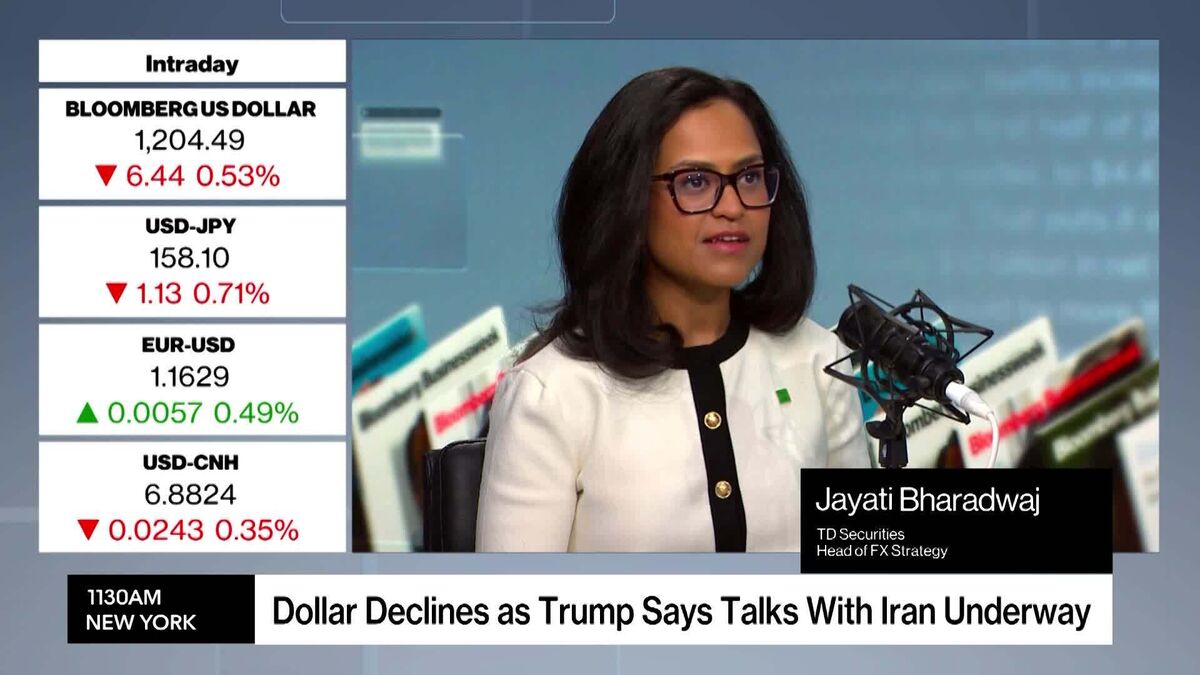

Global Markets React as Trump Postpones Strikes Against Iran, Dollar Slides and Oil Prices Dip
New York, Monday — Global financial markets experienced a dramatic shift Monday after US President Donald Trump announced the postponement of planned military strikes against Iranian energy infrastructure. The announcement, which Trump linked to ongoing discussions aimed at de-escalating tensions, sent ripples across currencies, commodities, and equities, underscoring the delicate balance between geopolitical risks and market stability.
The Bloomberg Dollar Spot Index, a key gauge of the US dollar’s strength against a basket of major currencies, fell 0.4% in New York trading, reversing earlier gains that had pushed it to its highest level since December. The dollar’s retreat was accompanied by a sharp decline in Brent crude oil prices, which dropped below $100 a barrel—a significant milestone given the recent volatility in energy markets. Meanwhile, US Treasuries rallied, driving yields lower across the curve, and equity markets gained ground as investors welcomed the news of a potential easing in US-Iran tensions.
Geopolitical Tensions and Market Reactions
The market’s abrupt reaction highlights the profound impact of geopolitical developments on global financial systems. Tensions between the US and Iran have simmered for decades, but recent escalations have brought the conflict to the forefront of investor concerns. Earlier this month, Iran was accused of orchestrating attacks on oil tankers in the Gulf of Oman, a critical shipping route for global energy supplies. The US responded by deploying additional military assets to the region and imposing stricter sanctions on Iranian oil exports, further straining relations between the two nations.
Against this backdrop, President Trump’s announcement of postponing strikes offered a rare moment of relief. Speaking to reporters, the president cited ongoing negotiations aimed at resolving the conflict, though Iranian media later downplayed the existence of high-level talks. Despite the ambiguity, markets reacted swiftly, interpreting the move as a potential de-escalation.
“The postponement of military action is a clear signal that both sides may be seeking a diplomatic resolution,” said Jayati Bharadwaj, Head of FX Strategy at TD Securities, in an interview with Bloomberg Businessweek Daily. “Markets are responding positively to the prospect of reduced geopolitical risk, but caution remains given the fluidity of the situation.”
Oil Prices Retreat, Treasury Yields Decline
The most immediate impact was felt in the oil markets, where Brent crude futures tumbled to $98.50 a barrel, marking a 3.5% decline on the day. Oil prices had surged in recent weeks amid fears that a US-Iran confrontation could disrupt Middle Eastern supply routes and exacerbate global shortages. The decline reflects a recalibration of risk premiums as investors reassess the likelihood of immediate conflict.
In the bond markets, US Treasuries rallied, with yields on the 10-year note falling for the first time in four sessions. Bond yields move inversely to prices, and the decline signaled increased demand for safe-haven assets amid lingering uncertainty. “The Treasury rally suggests that while investors are relieved, they’re not entirely convinced that the threat has passed,” noted Bharadwaj.
Equity markets, meanwhile, posted modest gains, with the S&P 500 and Dow Jones Industrial Average both closing higher. Technology and energy stocks led the rally, benefiting from the dual tailwinds of lower oil prices and a weaker dollar.
Dollar Weakens Amid Shifting Sentiment
The dollar’s slide was particularly noteworthy, given its recent strength. The greenback had been on a steady upward trajectory in recent weeks, bolstered by expectations of a more hawkish Federal Reserve and its status as a safe-haven currency during periods of geopolitical uncertainty. However, Trump’s announcement appears to have shifted sentiment, at least temporarily.
Analysts caution that the dollar’s decline may be short-lived. “The dollar’s role as a global reserve currency means it remains attractive during times of uncertainty,” said Bharadwaj. “While today’s move is significant, it’s premature to predict a sustained downturn.”
Broader Implications for Global Markets
Monday’s market movements underscore the interconnectedness of global financial systems and the sensitivity of asset prices to geopolitical developments. The US-Iran conflict, while geographically confined, has far-reaching implications for trade, energy supplies, and investor confidence.
For energy markets, the situation remains precarious. While the postponement of strikes has eased immediate concerns, the underlying tensions between the US and Iran persist. Any further escalation could reignite fears of supply disruptions, sending oil prices soaring once again.
In currency markets, the dollar’s performance will likely hinge on a combination of geopolitical developments and macroeconomic factors, including the Federal Reserve’s monetary policy outlook. Next week’s Federal Open Market Committee (FOMC) meeting will be closely watched for signals on interest rates, which could influence the dollar’s trajectory.
A Balancing Act for Investors
For investors, the challenge lies in navigating the dual forces of geopolitical risk and economic fundamentals. While Monday’s developments offer a reprieve, the situation remains fluid, and market sentiment could shift rapidly in response to new developments.
“The key takeaway is that markets are highly reactive to geopolitical headlines,” said Bharadwaj. “Investors need to remain vigilant and prepared for volatility as events unfold.”
As global markets continue to grapple with the complexities of US-Iran relations, the hope for diplomacy offers a glimmer of optimism. Yet, as history has shown, the path to peace is often fraught with uncertainty. For now, investors remain cautiously optimistic, balancing relief with a healthy dose of skepticism.
The coming days will be critical in determining whether the current calm marks the beginning of a lasting resolution or merely a brief respite in an ongoing crisis.
