



Denmark’s Political Crossroads: A Nation Divided Amidst Global Uncertainty
Copenhagen, Denmark — As Denmark grapples with deepening political polarization, its leaders face a critical decision that could reshape the country’s governance and its role on the global stage. The Liberal Party, led by Troels Lund Poulsen, has unequivocally rejected any coalition with the Social Democrats, urging former Prime Minister Lars Løkke Rasmussen to align with the right-wing bloc. This refusal marks a dramatic escalation in the country’s political crisis, raising questions about Denmark’s ability to maintain stability in an era of global turmoil.
The stakes are high—not just for Denmark but for Europe and beyond. As NATO allies confront escalating tensions in Ukraine and the Arctic, and as the European Union navigates economic fragility and migration challenges, Denmark’s political cohesion is more critical than ever. Poulsen’s call for a “new direction” reflects a broader ideological struggle that mirrors divisions across Western democracies, where centrist alliances are increasingly under strain.
A Fragmented Landscape: Denmark’s Political Divide
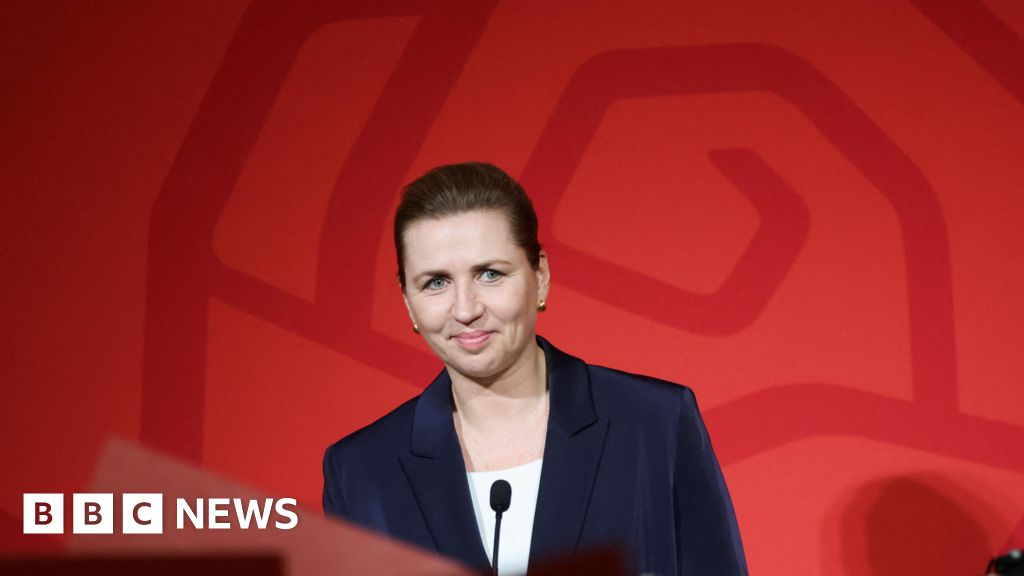
Denmark’s political scene has long been characterized by a robust multi-party system, but recent years have seen growing fragmentation. The Social Democrats, led by Prime Minister Mette Frederiksen, have traditionally championed progressive policies, while the Liberal Party advocates for economic liberalism and tighter immigration controls. This ideological clash has made coalition-building increasingly complex.
Poulsen’s outright rejection of collaboration with the Social Democrats signals a hardening of positions. His appeal to Rasmussen—a centrist figure who has shifted between alliances—reflects an effort to consolidate the right-wing bloc. Rasmussen’s potential alignment with the Liberals could tilt the balance of power, but it also risks alienating moderate voters and deepening societal divisions.
This impasse comes at a delicate time for Denmark, which is facing pressing domestic challenges, including rising inflation, energy security concerns, and the aftermath of a controversial COVID-19 mink culling policy that eroded public trust in Frederiksen’s government.
Global Implications: A Small Nation on the World Stage
While Denmark may be a small nation, its geopolitical significance cannot be overstated. As a founding member of NATO and a key player in Arctic security, Denmark’s political stability is vital to regional and global security. The Arctic, in particular, has become a hotspot of geopolitical competition, with Russia and China expanding their presence. Denmark’s leadership in this arena is crucial, and any domestic instability could weaken its ability to influence international outcomes.
Moreover, Denmark’s role in the European Union adds another layer of complexity. As the EU confronts challenges ranging from energy dependence on Russia to the integration of Ukrainian refugees, Denmark’s voice is needed more than ever. A prolonged political crisis in Copenhagen could hinder the country’s capacity to contribute to these critical discussions.
The current standoff also highlights broader trends in Western democracies. From the United States to France, centrist coalitions are under pressure as voters gravitate toward polarizing extremes. Denmark’s situation serves as a microcosm of this global phenomenon, underscoring the fragility of democratic systems in an increasingly interconnected world.
Why It Matters: A Test for Democracy and Security
Denmark’s political crisis is not merely a domestic affair; it has far-reaching implications for global security and democratic governance. At a time when authoritarian regimes are emboldened and democratic norms are under threat, Denmark’s ability to navigate this turmoil will send a powerful message.
A failure to forge a stable government could embolden populist forces, both within Denmark and across Europe. It could also undermine confidence in democratic institutions, fueling narratives that democracies are unable to address contemporary challenges.
For NATO and the EU, a weakened Denmark would represent a strategic setback. As the alliance prepares for its summit later this year, Denmark’s political instability could complicate efforts to present a united front against Russia’s aggression. Similarly, within the EU, Denmark’s inability to resolve its internal divisions could hinder progress on critical issues such as climate change and migration.
Looking Ahead: The Path to Resolution
The road ahead for Denmark is fraught with uncertainty. Poulsen’s call for Rasmussen to join the right-wing bloc may galvanize conservative voters, but it also risks deepening political polarization. Meanwhile, Frederiksen’s Social Democrats face the challenge of rebuilding trust and demonstrating leadership in a divided landscape.
International observers will be watching closely as Denmark navigates this crisis. The country’s ability to find common ground—or its failure to do so—will have implications far beyond its borders.
Conclusion: A Nation at a Crossroads
Denmark’s political standoff is more than a local dispute; it is a reflection of the broader challenges facing democracies worldwide. As leaders in Copenhagen grapple with their differences, they must also contend with the weight of global expectations.
In an era defined by uncertainty and division, Denmark’s ability to forge a path forward will serve as a litmus test for the resilience of democratic governance and international cooperation. The world is watching—and the stakes could not be higher.
