



Escalation in the Middle East: Iran Launches Ballistic Missile Strike on Israel
October 10, 2023
The skies over Tel Aviv lit up in a blaze of fire and smoke early Tuesday morning as Iranian ballistic missiles tore through the night, striking residential areas in Israel’s largest city and the northern town of Nesher. The attack, one of the most brazen escalations in recent months, marks a dangerous new chapter in the already volatile relationship between Iran and Israel. While no fatalities were reported, the strikes left buildings damaged, residents shaken, and the world watching anxiously as tensions in the Middle East threaten to spiral further out of control.
The Attack: What Happened?
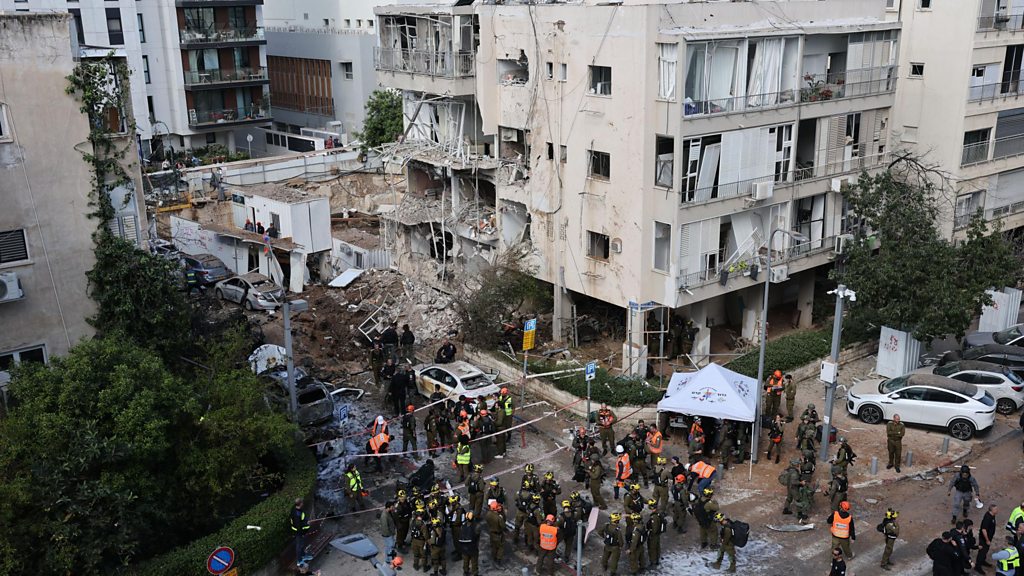
According to Israeli officials and eyewitness accounts, the Iranian missile strike occurred in the early hours of the morning, catching many residents off guard. One missile, carrying a warhead packed with 100 kilograms (220 pounds) of explosives, landed in a densely populated neighborhood in central Tel Aviv, damaging several residential buildings. In Nesher, a smaller town near Haifa, another missile caused structural damage but resulted in no serious injuries.
Israeli emergency services reported that approximately four individuals sustained minor injuries, primarily from shrapnel and debris. Local media captured images of shattered windows, scorched walls, and stunned residents surveying the aftermath. Authorities swiftly cordoned off the affected areas, deploying bomb disposal teams to ensure no unexploded ordnance remained.
The Iranian Revolutionary Guard Corps (IRGC) claimed responsibility for the attack, stating it was a retaliatory measure for what it described as “Israeli aggression” against Iranian interests in the region. While Iran did not specify which incidents it was responding to, analysts suggest the strikes may be linked to recent covert operations attributed to Israel, including cyberattacks on Iranian infrastructure and targeted assassinations of Iranian nuclear scientists.
Global Context: A Fragile Region on Edge
The latest missile strike comes amid rising tensions in the Middle East, a region already grappling with multiple overlapping crises. Iran and Israel have long been locked in a shadow war, marked by proxy conflicts, espionage, and covert operations. However, direct military confrontations between the two nations have been rare, making Tuesday’s attack a significant escalation.
The broader geopolitical landscape adds further complexity. Iran’s nuclear program remains a focal point of international concern, with negotiations to revive the 2015 Joint Comprehensive Plan of Action (JCPOA) at a standstill. Meanwhile, Israel has strengthened its alliances with regional powers such as the United Arab Emirates and Bahrain, as part of the Abraham Accords, while also deepening ties with the United States. These dynamics have created a precarious balance of power, with both Iran and Israel increasingly willing to test each other’s limits.
The timing of the attack is also noteworthy. Just days earlier, the United Nations General Assembly convened in New York, where world leaders addressed pressing global issues, including the ongoing conflict in Ukraine and the climate crisis. The Middle East’s instability was a recurring theme, with calls for de-escalation and diplomatic solutions. Iran’s bold strike underscores the challenges of achieving peace in a region rife with historical grievances and geopolitical rivalries.
Why It Matters: Implications for Global Security
The Iranian missile strike on Israel is not just a regional incident—it has far-reaching implications for global security. The Middle East remains a critical flashpoint for international stability, home to vital shipping routes, energy reserves, and strategic alliances. Escalating hostilities between Iran and Israel could disrupt oil supplies, exacerbate humanitarian crises, and draw in external powers, further complicating efforts to resolve conflicts.
For the United States and its allies, the attack poses a dilemma. While Washington has reaffirmed its commitment to Israel’s security, it also seeks to avoid a broader conflict that could destabilize the region and strain diplomatic relations. The Biden administration has previously expressed a desire to re-engage with Iran on nuclear negotiations, but Tuesday’s strike may harden positions on both sides, making dialogue more difficult.
The international community’s response will be closely watched. The United Nations Security Council is expected to convene an emergency session to address the crisis, with calls for restraint and de-escalation likely to dominate the discussions. However, history has shown that words alone are often insufficient to curb hostilities in the Middle East, raising concerns about the potential for further violence.
Human Impact: Lives Upended in an Instant
Beyond the geopolitical ramifications, the missile strike has had a profound impact on the lives of ordinary Israelis. In Tel Aviv, residents described the moment the missile hit as “terrifying,” with one eyewitness recounting how the explosion shattered windows and sent debris flying through the air. Families were evacuated from their homes, many left unsure when—or if—they could return.
The psychological toll is equally significant. For Israelis, the attack serves as a stark reminder of the persistent threats they face, even in the heart of their most populous city. For Iranians, the strike may stoke fears of retaliation, further deepening the cycle of mistrust and hostility between the two nations.
Looking Ahead: A Precarious Future
As the dust settles in Tel Aviv and Nesher, the world is left grappling with the implications of Iran’s latest provocation. The missile strike represents a dangerous escalation in a long-standing feud, one that has the potential to upend regional stability and draw in global powers.
Diplomatic efforts to de-escalate the situation are urgently needed, but the path to peace is fraught with challenges. Trust is in short supply, and the stakes could not be higher. For now, the people of Israel and Iran are left to pick up the pieces, hoping that cooler heads will prevail before the next missile is launched.
In a world already beset by conflict and uncertainty, the Middle East once again reminds us of the fragility of peace—and the devastating consequences when it is shattered. The coming days will be critical, as the international community navigates this latest crisis in a region where the line between war and peace is perilously thin.
