


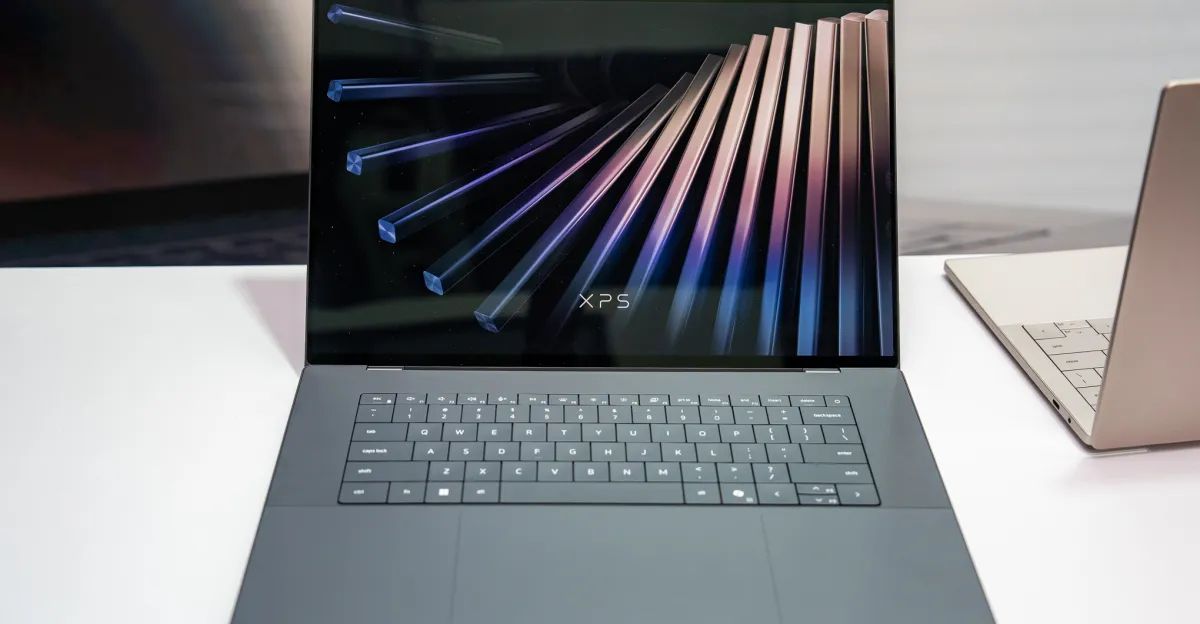

Dell’s Panther Lake-Powered Laptop Sets New Benchmark for Battery Efficiency
A Game-Changer in Mobile Computing
In an era where battery life remains a critical pain point for laptop users, Dell has unveiled a groundbreaking machine that redefines efficiency. Powered by Intel’s next-generation Panther Lake processor and featuring an ultra-low-power LG Display panel, this laptop has shattered records in endurance testing, idling at just 1.5 watts and delivering nearly 27 hours of continuous web browsing on a modest 70 watt-hour battery.
Independent testing by Notebookcheck confirms this as the most energy-efficient laptop ever subjected to their rigorous Wi-Fi browsing benchmark—outperforming even Apple’s vaunted MacBooks and Qualcomm-powered rivals. The implications are significant: a future where laptops no longer demand constant charging, even under heavy workloads.
The Secret Behind the Efficiency
At the heart of this achievement lies a combination of cutting-edge hardware innovations:
1. Intel’s Panther Lake Chip
Intel’s upcoming Core Ultra 325 processor, part of the Panther Lake lineup, is engineered for extreme power efficiency. Early benchmarks suggest it drastically reduces energy consumption during idle and low-intensity tasks while maintaining performance—a crucial balance for professionals and students alike.
2. LG Display’s Ultra-Low-Power Panel
The laptop’s display plays an equally critical role. LG Display’s new 1Hz–120Hz adaptive refresh rate LCD minimizes power draw by dynamically adjusting to usage. Unlike traditional screens that refresh at a fixed rate (typically 60Hz or higher), this panel scales down to 1Hz when static, conserving energy without sacrificing responsiveness.
3. Dell’s Optimization Efforts
Beyond hardware, Dell’s system-level optimizations—including aggressive power management and thermal design—ensure minimal energy waste. The tested model deliberately avoids power-hungry features like OLED and touchscreens, prioritizing longevity over flashy extras.
How It Stacks Up Against the Competition
Notebookcheck’s historical data reveals only two laptops have ever surpassed this model’s endurance:
- A Qualcomm Snapdragon X Plus device with an 84Wh battery and a basic 60Hz screen.
- A rugged Durabook S14I packing dual batteries (149Wh total)—effectively a niche, bulky solution.
By contrast, Dell’s offering achieves similar results with a smaller battery and superior performance, making it a far more practical choice for everyday users.
The Future of Energy-Efficient Laptops
This breakthrough isn’t an isolated feat. Industry trends suggest a broader shift toward ultra-efficient computing:
- LG Display has announced plans to mass-produce 1Hz OLED laptop panels by 2027, potentially bringing similar benefits to premium devices.
- Intel is collaborating with BOE, a leading Chinese display manufacturer, to develop 1Hz adaptive refresh rate screens for future laptops.
The race is clearly on to eliminate one of the last major frustrations of portable computing—short battery life.
Real-World Considerations
While lab results are impressive, real-world usage often differs. Factors like background apps, screen brightness, and connectivity (Bluetooth, cellular modems) can reduce actual endurance. However, even accounting for these variables, Dell’s new laptop stands as a milestone in efficiency, offering a glimpse of a future where all-day battery life is the norm, not the exception.
For consumers, the trade-off is clear: prioritize longevity over luxury features (like high-resolution OLED) if endurance is the goal.
Conclusion: A New Standard in Mobile Computing
Dell’s Panther Lake-powered laptop isn’t just another incremental upgrade—it’s a paradigm shift in energy efficiency. As Intel, LG, and other manufacturers push forward, the days of hunting for power outlets may soon be behind us.
The question now isn’t whether other brands will follow suit, but how quickly they can catch up.
