


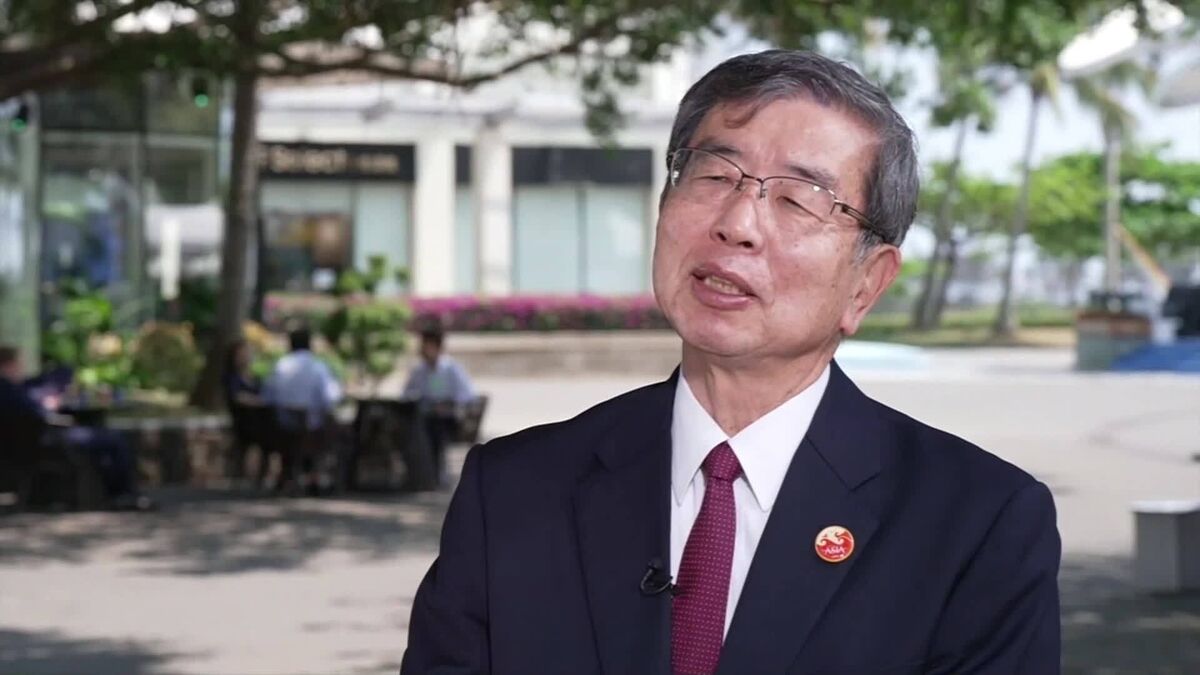

Global Economies at a Crossroads: Former ADB President Takehiko Nakao Weighs In on Iran War, Yen Weakness, and AI’s Rising Influence
At a time of heightened geopolitical tensions and economic uncertainty, Takehiko Nakao, Japan’s former currency chief and ex-President of the Asian Development Bank (ADB), has emerged as a pivotal voice analyzing the ripple effects of global crises on Asian economies. Speaking at the Boao Forum for Asia, Nakao engaged in a wide-ranging discussion with Bloomberg’s Stephen Engle, shedding light on the potential fallout of the Iran conflict, the persistent weakness of the yen, and the transformative role of artificial intelligence (AI) in reshaping productivity.
Nakao’s insights come at a critical juncture for the global economy. With rising geopolitical risks, fluctuating currency markets, and rapid technological advancements, policymakers and financial leaders are grappling with unprecedented challenges. His remarks offer a rare blend of regional expertise and global perspective, drawing from his extensive experience steering one of Asia’s most influential financial institutions.
The Iran Conflict and Its Economic Implications
One of the forum’s central topics was the ongoing conflict in Iran and its potential impact on Asian economies. Nakao emphasized that the geopolitical instability stemming from the region could have far-reaching consequences, particularly for energy-dependent nations in Asia.
“The Middle East remains a critical supplier of oil and gas to the world, and any escalation in Iran could disrupt global supply chains, leading to higher energy prices,” Nakao cautioned. He noted that Asian economies, many of which are net importers of energy, would be particularly vulnerable to such shocks.
The former ADB president also highlighted the interconnectedness of global markets, pointing out that prolonged instability in Iran could trigger a domino effect, affecting trade, investment, and consumer confidence across Asia. “We must not underestimate the spillover effects of geopolitical crises. Even distant conflicts can have profound economic impacts, especially in an era of globalization,” he warned.
Nakao’s comments underscore the delicate balance Asian economies must strike in navigating external shocks. While countries like China and India have diversified their energy sources in recent years, many smaller economies remain heavily reliant on Middle Eastern oil, leaving them exposed to potential supply disruptions.
The Yen’s Persistent Weakness and Its Broader Implications
Another pressing issue Nakao addressed was the continued depreciation of the Japanese yen, which has reached multi-decade lows against the US dollar. The yen’s weakness has sparked concerns about its impact on Japan’s economy and the broader regional financial landscape.
Nakao attributed the yen’s decline to a combination of factors, including Japan’s ultra-loose monetary policy, widening interest rate differentials with the US, and a flight to the dollar as a safe-haven currency amid global uncertainty.
“The yen’s weakness is a double-edged sword,” Nakao observed. “On one hand, it boosts Japanese exports by making them more competitive globally. On the other hand, it raises the cost of imports, exacerbating inflationary pressures and squeezing household budgets.”
The implications of the yen’s depreciation extend beyond Japan’s borders. As a key regional currency, the yen’s volatility can influence trade and investment flows across Asia. Nakao urged policymakers to remain vigilant, noting that sudden currency fluctuations could destabilize financial markets and undermine economic recovery efforts.
AI: A Game-Changer for Productivity
Shifting gears, Nakao turned his attention to the rapid advancements in artificial intelligence and their transformative potential for productivity. He described AI as a “double-edged sword,” acknowledging its capacity to revolutionize industries while raising concerns about job displacement and ethical considerations.
“AI has the potential to drive unprecedented productivity gains, particularly in sectors like manufacturing, healthcare, and finance,” Nakao said. “However, we must also address the challenges it poses, such as the need for reskilling workers and ensuring equitable access to technological benefits.”
Nakao highlighted examples of AI-driven innovations already making waves in Asia, from automated factories in China to AI-powered financial services in Singapore. He emphasized that governments and businesses must work together to harness AI’s potential while mitigating its risks.
“The key lies in striking a balance between innovation and inclusivity,” Nakao asserted. “We must ensure that the benefits of AI are shared broadly across society, rather than concentrated in the hands of a few.”
A Regional Call to Action
Throughout his remarks, Nakao stressed the importance of regional cooperation in addressing these multifaceted challenges. He called on Asian leaders to strengthen economic integration, enhance financial resilience, and invest in sustainable development initiatives.
“Asia has emerged as a global economic powerhouse, but its continued success depends on our ability to navigate uncertainty and adapt to changing realities,” Nakao said. “We must work together to build a more resilient and inclusive future for our region.”
His message resonated strongly with forum attendees, many of whom are grappling with the same issues in their own countries. Nakao’s blend of pragmatism and optimism offered a roadmap for navigating the complexities of the current economic landscape.
Conclusion: Navigating Uncertainty with Vision and Collaboration
Takehiko Nakao’s insights at the Boao Forum underscore the interconnected nature of today’s economic challenges. From the geopolitical risks posed by the Iran conflict to the intricacies of currency markets and the disruptive potential of AI, his analysis highlights the need for proactive leadership and regional cooperation.
As Asia continues to play a pivotal role in the global economy, Nakao’s call for resilience and inclusivity serves as a timely reminder that the path forward requires both vision and collaboration. In an era of uncertainty, his words offer a glimmer of hope—and a challenge—for policymakers and leaders around the world.
This report has been crafted for a global audience, combining factual accuracy with detailed context and analysis, in line with the standards of leading international news outlets like the BBC and CNN.
