



Oil Prices Surge as Geopolitical Tensions Escalate Between U.S. and Iran
Global oil markets witnessed a sharp uptick in prices on Thursday, fueled by escalating geopolitical tensions between the United States and Iran. The latest spike came after U.S. President Donald Trump threatened Iran with intensified military action, reigniting fears of a prolonged conflict in the Middle East that could disrupt global energy supplies. The standoff between the two nations, which has already roiled oil markets in recent months, shows no signs of abating, leaving investors and industry analysts bracing for further volatility.
The benchmark Brent crude price rose by over 2% to $66 per barrel, while West Texas Intermediate (WTI) climbed to $60, its highest level in weeks. The surge in oil prices underscores the precarious balance of the global energy market, where geopolitical instability in key regions can send shockwaves across economies. Iran, a major oil producer and a pivotal player in the Middle East, has been locked in a tense standoff with the U.S. since Washington withdrew from the 2015 nuclear deal last year and imposed crippling economic sanctions.
A Conflict with Global Implications
The latest flare-up began when President Trump issued a stern warning to Iran, stating that the U.S. military was “locked and loaded” and ready to respond to any provocation. This rhetoric followed reports of Iran’s involvement in recent attacks on oil tankers in the Gulf of Oman, a critical shipping route for global oil trade. While Tehran has denied responsibility, the U.S. has pointed to evidence allegedly linking Iran to the incidents, raising concerns of a potential military confrontation.
For oil markets, the stakes could not be higher. The Middle East accounts for nearly a third of the world’s crude oil production, and any disruption in the region could have cascading effects on global supply chains. The Strait of Hormuz, a narrow waterway between Oman and Iran, is particularly vulnerable. Approximately 20% of the world’s oil supply passes through this chokepoint, making it a flashpoint in the ongoing tensions.
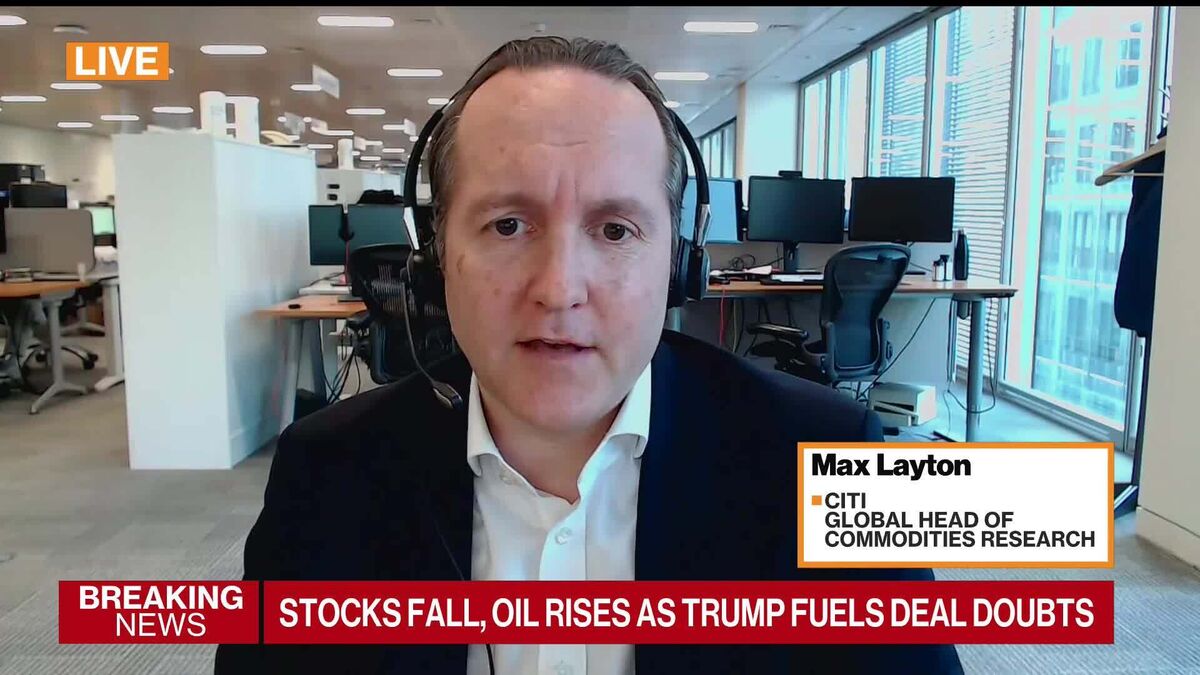
“The geopolitical risk premium in oil prices is back,” said Max Layton, global head of commodities research at Citi, in an interview with Bloomberg. “The market is pricing in the possibility of a protracted conflict, which could lead to supply disruptions and higher prices.”
Historical Context: A Cycle of Escalation
The current crisis is the latest chapter in a decades-long struggle between the U.S. and Iran, rooted in divergent geopolitical interests and ideological differences. The 2015 nuclear deal, formally known as the Joint Comprehensive Plan of Action (JJCPOA), was hailed as a diplomatic breakthrough, with Iran agreeing to curb its nuclear program in exchange for relief from international sanctions. However, President Trump’s decision to withdraw from the agreement in 2018 and reimpose sanctions plunged bilateral relations into a new era of hostility.
Iran has responded by gradually scaling back its compliance with the nuclear deal, while also threatening to disrupt oil shipments through the Strait of Hormuz. The recent attacks on oil tankers and the downing of a U.S. drone by Iran have further heightened tensions, drawing the region closer to the brink of conflict.
Economic Ramifications: A Delicate Balance for Global Markets
The rise in oil prices comes at a delicate time for the global economy, which is already grappling with slowing growth, trade wars, and uncertainty over central bank policies. Higher energy costs could exacerbate these challenges, particularly for energy-importing nations and industries heavily reliant on oil, such as aviation and transportation.
Emerging markets, in particular, are vulnerable to the ripple effects of rising oil prices. Countries like India and China, which are among the world’s largest oil importers, face inflationary pressures and potential currency volatility when energy costs spike. For consumers, this could translate into higher prices at the pump and increased costs for goods and services.
At the same time, oil-producing nations stand to benefit from the price surge. Countries such as Russia, Saudi Arabia, and the United States, which have ramped up production in recent years, could see a boost in revenues. However, analysts caution that the long-term consequences of prolonged instability in the Middle East could outweigh these short-term gains.
Industry Outlook: Uncertainty Looms
For energy companies and investors, the current environment is fraught with uncertainty. While higher oil prices can improve profit margins, the potential for supply disruptions and geopolitical instability poses significant risks. Companies operating in the Middle East are increasingly wary of the escalating tensions, with some reassessing their investment plans and deferring major projects.
The situation is further complicated by shifting dynamics in the global energy landscape. The rise of renewable energy sources and the growing push for climate action have added pressure on traditional oil and gas producers to adapt to a changing market. However, oil remains a critical component of the global energy mix, and its geopolitical significance shows no signs of diminishing.
Diplomatic Efforts: A Path to De-escalation?
Amid the mounting tensions, diplomatic efforts to defuse the crisis have so far yielded little progress. European nations, which were key signatories to the 2015 nuclear deal, have sought to mediate between the U.S. and Iran, urging both sides to exercise restraint. However, their influence appears limited in the face of Washington’s unilateral approach and Tehran’s increasingly assertive stance.
Iran has signaled its willingness to return to negotiations but insists that sanctions must be lifted first. The U.S., meanwhile, has maintained that Iran must cease its “malign activities” in the region before any dialogue can resume. With neither side willing to compromise, the prospects for a peaceful resolution remain uncertain.
Conclusion: Navigating Uncharted Waters
As the U.S.-Iran standoff continues to unfold, the global energy market finds itself navigating uncharted waters. The interplay of geopolitical tensions, economic uncertainty, and shifting industry dynamics creates a complex and volatile landscape. While higher oil prices may offer short-term benefits for some, the broader implications of prolonged instability in the Middle East are deeply concerning.
For now, the world watches with bated breath, hoping for a de-escalation of tensions but bracing for the possibility of further turmoil. As Max Layton aptly put it, “In the oil market, geopolitics often trumps economics.” The coming weeks will test this truism as the global community grapples with the far-reaching consequences of a conflict that shows no signs of abating.
