



The Mystery Unearthed: Could This Be the Skeleton of the Legendary d’Artagnan?
By [Author Name]
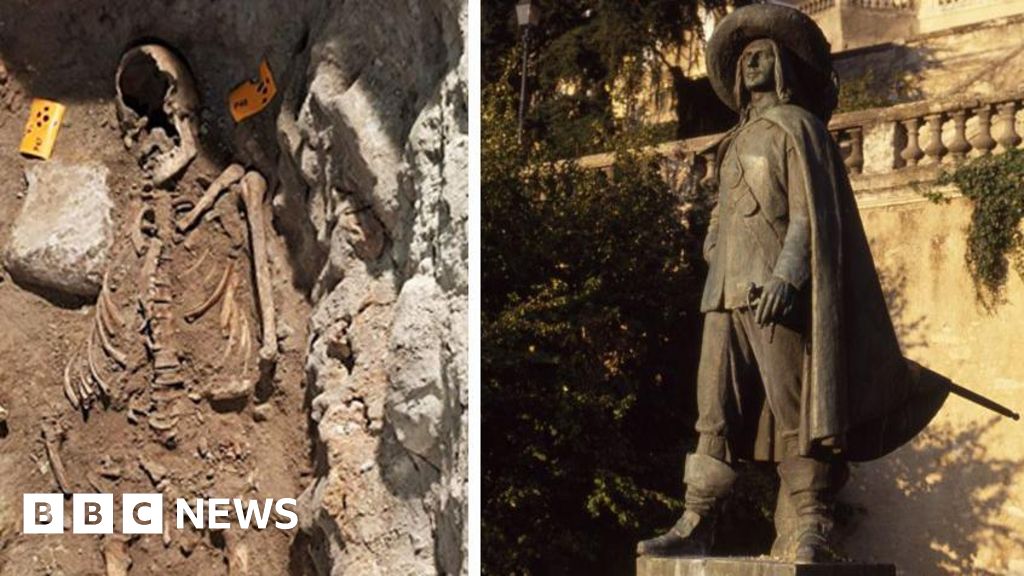
In the quiet, cobblestone streets of Maastricht, Netherlands, a discovery has sent ripples through the worlds of history, archaeology, and literature. Beneath the hallowed grounds of St. Peter and Paul Church, a team led by Jos Valke, a local deacon, has unearthed a skeleton that may belong to none other than Charles de Batz de Castelmore, the real-life inspiration for Alexandre Dumas’ legendary character, Count d’Artagnan. Valke claims to be “99% certain” of the identity of the remains, sparking international intrigue over the potential link to one of France’s most iconic historical figures.
For centuries, d’Artagnan has been immortalized in literature as the brave musketeer who famously declared, “All for one, and one for all.” But the man behind the legend—Charles de Batz—was far more than a fictional hero. He was a trusted aide to King Louis XIV, the Sun King, and a pivotal figure in 17th-century European politics. If confirmed, this discovery could shed new light on the life and death of a man who played a crucial role in shaping France’s military and diplomatic strategies during a tumultuous era of European history.
The Discovery: A Centuries-Old Mystery Resurfaces
The skeleton was uncovered during routine restoration work at St. Peter and Paul Church, a historic site in Maastricht. Jos Valke, who has been instrumental in the excavation process, explained that the church’s archives pointed to the burial of a high-ranking French military officer from the 17th century. Further investigation revealed that the skeletal remains matched the physical description of Charles de Batz, who died in 1673 during the Siege of Maastricht—a pivotal conflict in the Franco-Dutch War.
The Franco-Dutch War marked a critical juncture in European history, as France sought to expand its influence across the continent. Charles de Batz, who served as captain of the Musketeers of the Guard, was reportedly killed by a musket ball during the siege, a detail that historians have long debated. The discovery of a skeleton with a skull wound consistent with a bullet hole aligns with historical accounts of his death, adding weight to Valke’s assertion.
Global Context: The Franco-Dutch War and Its Lasting Impact
The Franco-Dutch War (1672–1678) was more than just a regional conflict; it was a power struggle that reshaped the geopolitical landscape of Europe. King Louis XIV, driven by ambitions of territorial expansion, sought to weaken the Dutch Republic, a formidable economic and naval power. The war involved multiple European nations, including England, Spain, and Sweden, and set the stage for future conflicts, including the War of the Spanish Succession.
Charles de Batz’s role in this war highlights the interconnectedness of European politics during this period. As a trusted confidant of the Sun King, he was at the forefront of France’s military campaigns, embodying the era’s shifting alliances and rivalries. His death in Maastricht underscores the city’s strategic importance as a battleground for control over key trade routes and territories.
Why This Discovery Matters
The potential identification of Charles de Batz’s remains is significant for several reasons. First, it bridges the gap between history and legend, offering a tangible connection to a figure whose exploits have captivated generations. Second, it provides historians with an opportunity to re-examine the events of the Franco-Dutch War and the role of key individuals like de Batz in shaping its outcomes.
Beyond its historical implications, the discovery resonates with modern audiences by underscoring the enduring relevance of history in understanding contemporary conflicts. The Franco-Dutch War, like many conflicts today, was driven by territorial ambitions, economic interests, and power dynamics. By studying the past, we can gain insights into the forces that continue to shape global politics.
Moreover, the find highlights the importance of preserving cultural and historical sites. St. Peter and Paul Church, like many historic landmarks, is a repository of stories that connect us to our shared heritage. Efforts to restore and study such sites ensure that these stories are not lost to time.
The Human Element: Honoring a Forgotten Hero
While the discovery has captured headlines, it also serves as a reminder of the individuals who lived and died in the shadows of history. Charles de Batz was more than a musketeer; he was a soldier, a diplomat, and a man whose life was shaped by the turbulence of his time. Unearthing his remains allows us to honor his legacy and reflect on the sacrifices made by countless others whose stories remain untold.
For Jos Valke and the team behind the excavation, this discovery is the culmination of years of dedication and meticulous research. Their work not only illuminates the past but also inspires future generations to explore the mysteries that lie beneath our feet.
Conclusion: A Legend Reborn
As the skeleton lies under careful examination, the world waits with bated breath for confirmation of its identity. Could this truly be the remains of Charles de Batz, the man who inspired one of literature’s greatest heroes? Whether or not the findings are conclusive, the discovery has reignited interest in a bygone era and the figures who shaped it.
In a world increasingly defined by rapid change, such moments remind us of the power of history to connect us across time and space. The story of d’Artagnan, whether fact or fiction, continues to inspire courage, camaraderie, and resilience. As the dust settles on this remarkable find, one thing is certain: the legend of d’Artagnan lives on, not just in the pages of a book, but in the very ground we walk upon.
