



Nigeria Shifts 2027 General Election Dates, Moves Presidential Poll to January
By Nexio Africa Desk
February 27, 2026
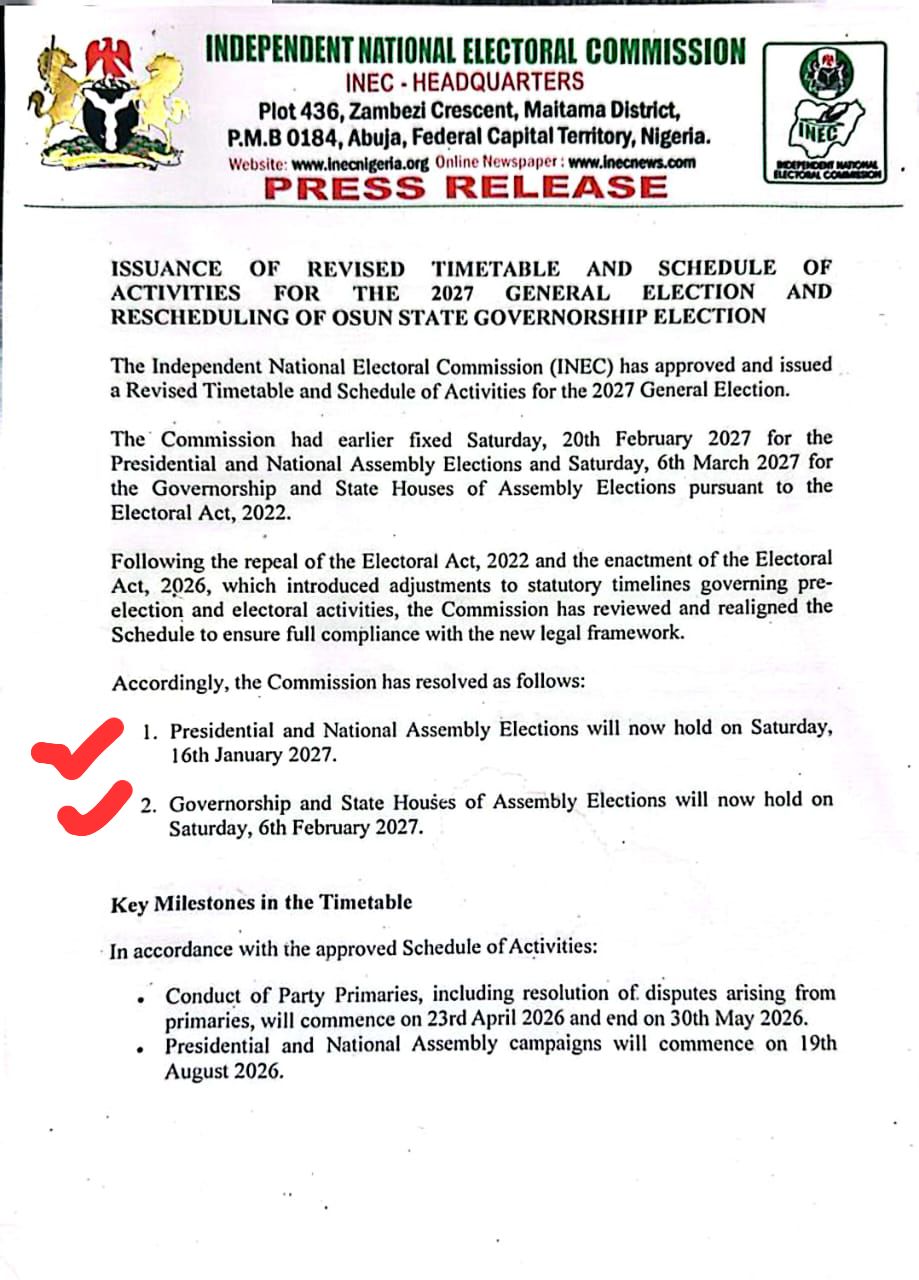
Nigeria’s electoral landscape is set for a significant adjustment after the Independent National Electoral Commission (INEC) officially released a revised timetable for the 2027 general elections, moving key national polls forward and rescheduling the Osun State governorship election.
The changes, announced in a formal press statement from INEC headquarters in Abuja, follow the repeal of the Electoral Act 2022 and the enactment of a new Electoral Act 2026, which introduces adjustments to statutory timelines governing pre-election and electoral activities.
New Election Dates Announced
Under the revised timetable, Nigeria’s presidential and National Assembly elections will now hold on Saturday, January 16, 2027, earlier than the previously scheduled February 20, 2027.
INEC also confirmed that the governorship and State Houses of Assembly elections will now take place on Saturday, February 6, 2027, replacing the earlier date of March 6, 2027.
The electoral commission said the changes were necessary to ensure full compliance with the newly enacted Electoral Act 2026 and to align all electoral activities with updated legal and administrative requirements.
“The Commission has reviewed and realigned the schedule to ensure full compliance with the new legal framework,” the statement noted.
Osun Governorship Election Rescheduled
Beyond the national elections, INEC also announced a shift in the Osun State governorship election timetable. The election, initially scheduled for Saturday, August 8, 2026, has now been moved to Saturday, August 15, 2026.
The commission stated that some preliminary activities for both Ekiti and Osun governorship elections had already been conducted, but remaining processes would now follow the revised framework under the Electoral Act 2026.
The adjustment gives political parties and election administrators additional time to complete outstanding preparations, including candidate validation, logistics planning, and campaign scheduling.
Campaign and Primary Timelines
INEC outlined key milestones leading up to the 2027 general elections.
Party primaries for the presidential and National Assembly elections are expected to begin on April 23, 2026, and conclude on May 30, 2026, including the resolution of disputes arising from the primaries.
Campaigns for presidential and National Assembly elections will commence on August 19, 2026, while governorship and State Assembly campaign activities are scheduled to begin on September 9, 2026.
As required by law, all campaigns must end 24 hours before election day.
INEC advised political parties to strictly adhere to the revised schedule, warning that the commission would enforce compliance with electoral laws and timelines.
Legal and Political Implications
Election analysts say the revised timetable represents one of the earliest presidential election schedules in Nigeria’s modern democratic history, potentially reshaping campaign strategies and political calculations across parties.
Moving the presidential election from late February to mid-January compresses campaign timelines and could intensify early political mobilization. Parties will now need to finalize candidates, resolve internal disputes, and begin nationwide outreach months earlier than previously anticipated.
Political observers also note that shifting the election calendar may affect governance and policy planning as officeholders prepare for potential transitions earlier in the year.
A Lagos-based political analyst said the new timetable “signals a structural shift in Nigeria’s electoral cycle and will require rapid adaptation from political parties, civil society groups, and electoral observers.”
INEC Calls for Cooperation
INEC emphasized that the revised dates remain consistent with Nigeria’s 1999 Constitution (as amended) and the Electoral Act 2026. The commission called on all stakeholders — including political parties, security agencies, civil society organizations, and voters — to cooperate in ensuring peaceful and credible elections.
“The successful conduct of the forthcoming elections remains a collective responsibility,” the commission stated. “All stakeholders must work together to ensure peaceful, credible, and inclusive elections that reflect the sovereign will of the Nigerian people.”
Looking Ahead
With less than a year before the first round of primaries begins, Nigeria’s political space is expected to become increasingly active as parties reposition and alliances form ahead of the 2027 race.
The revised timetable effectively signals the start of a new electoral cycle, one likely to shape Nigeria’s political direction for years to come.
For Africa’s largest democracy, the countdown to 2027 has now begun earlier than expected.
