



Oil Prices Surge Amid Escalating Middle East Tensions as Iran and Israel Exchange Strikes
The global oil market has been thrust into turmoil as tensions between Iran and Israel intensify, with both nations targeting key energy facilities in a series of retaliatory strikes. The escalating conflict, now stretching into its third week, has sent crude prices soaring, raising fears of prolonged instability in a region crucial to global energy supplies. The renewed hostilities come at a time when markets are already grappling with geopolitical uncertainties and supply chain disruptions, prompting analysts to warn of potential ripple effects across the global economy.
On Monday, international benchmark Brent crude surged by over 3%, reaching its highest level in weeks, following reports of airstrikes on oil infrastructure in both Iran and Israel. The attacks mark a significant escalation in a shadow war that has simmered for years but has now erupted into open confrontation. The strikes targeted critical facilities, including refineries and export terminals, raising concerns about potential disruptions to Middle Eastern oil exports, which account for nearly one-third of global supply.
A Dangerous Escalation
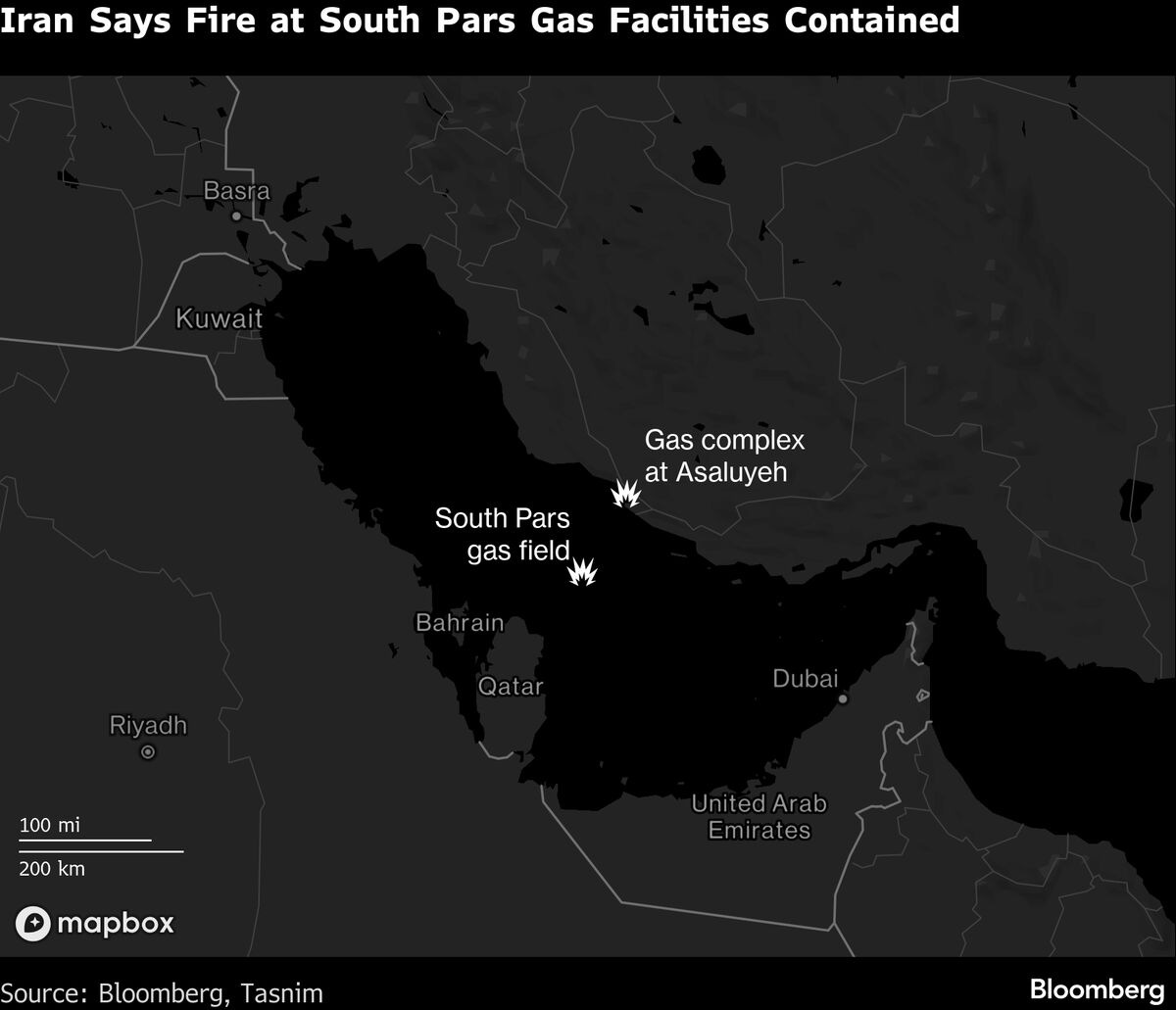
The conflict began earlier this month after Iran launched a drone strike against an Israeli-linked tanker in the Persian Gulf, accusing Israel of sabotaging its nuclear program. Israel responded with precision strikes on Iranian military installations, including a drone base near the city of Isfahan. The tit-for-tat exchanges escalated further over the weekend when Iran targeted Israeli-operated oil facilities in the Mediterranean, prompting Israel to retaliate with attacks on Iranian oil infrastructure in the Gulf region.
Analysts warn that the situation is now at its most volatile point in decades. “This is no longer a proxy war or a series of covert operations,” said Dr. Leila Al-Mari, a Middle East expert at the London School of Economics. “What we’re seeing is a direct confrontation between two regional powers with the potential to draw in other actors, including the United States and its allies.”
Impact on Global Energy Markets
The Middle East has long been a flashpoint for global energy security, and the latest escalation has sent shockwaves through the markets. Brent crude futures climbed to $94.50 per barrel, while U.S. West Texas Intermediate (WTI) crude rose to $91.75, marking the highest levels since early September. The price surge has reignited fears of inflationary pressures at a time when central banks worldwide are already grappling with rising costs of living.
“The market is pricing in the risk of a prolonged conflict that could disrupt supply lines,” said John Kilduff, a partner at Again Capital LLC, a New York-based energy investment firm. “Even if production isn’t directly affected, the threat of further escalation is enough to drive prices higher.”
The Strait of Hormuz, a critical chokepoint for global oil shipments, has emerged as a focal point of concern. Approximately 20% of the world’s oil passes through this narrow waterway, which borders Iran. Any disruption to traffic through the strait could have catastrophic consequences for global energy supplies.
Regional and International Reactions
The international community has expressed alarm over the escalating tensions. The United Nations Secretary-General, Antonio Guterres, called for an immediate de-escalation, warning that further conflict could destabilize the entire region. “The stakes are too high for any miscalculation or misstep,” he stated during a press briefing on Monday.
The United States, a key ally of Israel, has urged restraint while reiterating its commitment to Israel’s security. “We are closely monitoring the situation and are in constant communication with our partners in the region,” said a State Department spokesperson. Meanwhile, European leaders have called for diplomatic efforts to defuse the crisis, with France and Germany offering to mediate talks between the two sides.
Iran has accused Israel of violating international law and warned of a “severe response” to any further provocation. “The Zionist regime’s aggression will not go unanswered,” said Iranian Foreign Ministry spokesman Nasser Kanaani.
Economic and Geopolitical Implications
The conflict has far-reaching implications beyond the energy sector. For Israel, the strikes represent a significant test of its military strategy and its ability to deter Iran, which it views as an existential threat. For Iran, the confrontation comes at a delicate moment, with the country already facing economic sanctions and domestic unrest over its nuclear program.
The broader Middle East, still recovering from years of conflict and instability, now faces the prospect of a wider regional war. “This is not just about Israel and Iran,” said Dr. Youssef Choueiri, a historian of the Middle East. “It has the potential to draw in other actors, including Hezbollah in Lebanon, Saudi Arabia, and even Turkey, turning this into a multi-front conflict.”
For the global economy, the stakes are equally high. Rising oil prices threaten to exacerbate inflationary pressures, complicating the efforts of central banks to stabilize economies. “Higher energy costs could slow down economic recovery efforts worldwide,” said Sarah Jones, chief economist at Global Insight. “This is a moment of extreme vulnerability for the global economy.”
Looking Ahead
As the conflict enters its third week, the path to de-escalation remains unclear. Diplomatic efforts have so far yielded little progress, with both sides digging in their heels. Analysts warn that without a swift resolution, the situation could spiral out of control, with devastating consequences for the region and the world.
“The longer this goes on, the harder it becomes to pull back,” said Dr. Al-Mari. “The international community must act now to prevent a full-blown crisis.”
In the meantime, the world watches and waits, acutely aware that the stakes are nothing short of global stability. As oil prices continue to climb, the Middle East once again finds itself at the center of a geopolitical storm, with far-reaching implications for energy markets, economies, and international relations. The coming days will be critical in determining whether diplomacy can prevail—or whether the region is headed for yet another chapter of conflict and chaos.
