



Shadow Justice Secretary Criticizes Mass Muslim Prayer as “Act of Domination and Division”
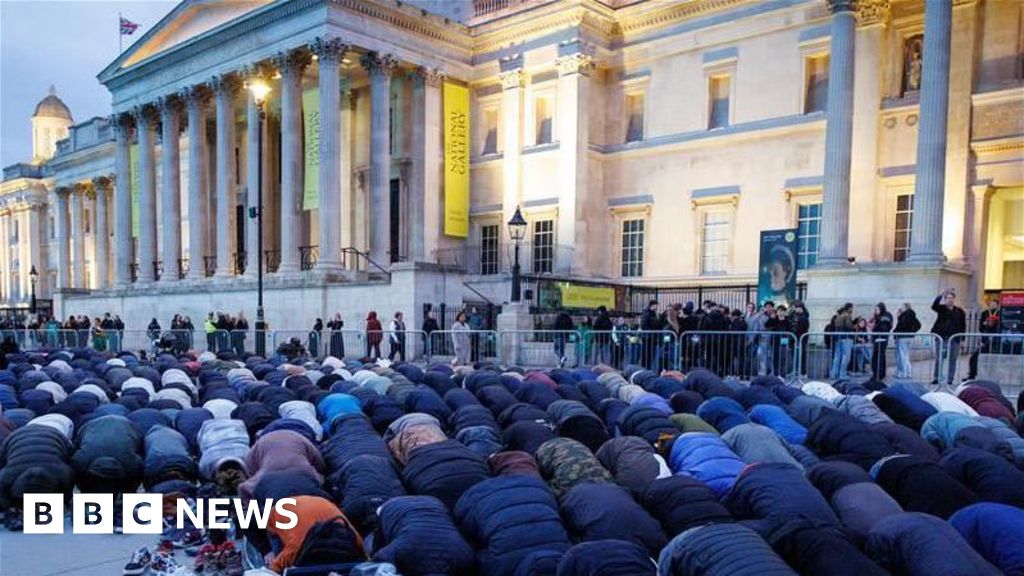
In a statement that has sparked widespread debate, Nick Timothy, the UK’s Shadow Justice Secretary, described a recent mass Muslim public prayer as an “act of domination and division.” The remark came in response to a large-scale prayer event held in Birmingham, England, which saw thousands of Muslims gather in a public square to pray during Eid al-Adha celebrations. Timothy’s comments have ignited a fierce discussion about religious freedom, social cohesion, and the role of public expressions of faith in Britain.
The prayer event, organized by local Muslim community leaders, was hailed as a vibrant expression of religious devotion and cultural heritage. Participants gathered in Centenary Square, laying down prayer mats and engaging in communal worship. Organizers emphasized the inclusivity of the event, inviting people of all faiths to observe and learn about Muslim traditions. However, Timothy’s characterization of the event as divisive has drawn both support and criticism from political figures, religious leaders, and the public.
In a statement released on social media, Timothy argued that such public displays of faith could exacerbate societal tensions. “While we respect the right to religious freedom, mass public prayers of this nature risk being seen as acts of domination and division,” he wrote. “They can make members of other faiths or no faith feel excluded or uncomfortable in their own country.” The comments have been interpreted by some as a reflection of broader concerns about the increasing visibility of Islam in British public life.
Timothy’s remarks have been met with sharp rebukes from Muslim leaders and human rights advocates. Ahmed Ali, a spokesperson for the Birmingham Muslim Council, described the comments as “deeply disappointing” and “misguided.” “This event was about unity and celebration, not division,” he said. “It was an opportunity for Muslims to come together peacefully and for others to witness the beauty of our faith. To frame it as divisive is to misunderstand its purpose.”
The controversy also highlights ongoing tensions around multiculturalism and identity in the UK. Britain has long prided itself on its diversity and tolerance, but debates over immigration, integration, and religious expression have become increasingly polarized in recent years. Timothy’s comments reflect a growing sentiment among some segments of British society that public displays of faith, particularly by Muslim communities, are incompatible with national values.
Political commentators have noted that Timothy’s intervention could signal a shift in the Conservative Party’s approach to issues of religion and identity. As Shadow Justice Secretary, Timothy is a key figure in shaping the party’s policies on legal and social matters. His comments may be seen as an attempt to appeal to voters who feel alienated by the changing cultural landscape of the UK. However, the backlash suggests that such rhetoric risks alienating moderate voters and minority communities.
The debate over public expressions of faith is not unique to the UK. Across Europe, similar discussions have emerged as Muslim communities grow and become more visible in public spaces. In France, for example, recent legislation has restricted the wearing of religious symbols in schools and public institutions, citing the principle of secularism. In Germany, debates over mosque construction and public prayer have sparked heated political discourse. Timothy’s comments reflect a broader European trend of grappling with the challenges of multiculturalism.
For many British Muslims, the controversy is a reminder of the challenges they face in being fully accepted as part of British society. Aisha Khan, a Birmingham resident who attended the prayer event, described Timothy’s comments as “hurtful” and “unfair.” “We were simply exercising our right to worship,” she said. “For someone in a position of power to label it as divisive sends a message that we don’t belong here. That’s not the Britain I know.”
The dispute also raises important questions about the limits of religious freedom in a secular society. While the UK has a long tradition of accommodating diverse faiths, balancing individual religious rights with societal cohesion remains a complex issue. Legal experts have pointed out that the right to manifest religious beliefs is protected under the European Convention on Human Rights, which the UK has enshrined in domestic law. However, the extent to which these rights can be exercised in public spaces continues to be a contentious topic.
As the debate unfolds, the challenge for policymakers will be to navigate these tensions without eroding the principles of tolerance and inclusion that underpin British society. Timothy’s comments serve as a reminder of the importance of fostering dialogue and understanding between different communities. In a country as diverse as the UK, finding common ground is essential to maintaining social harmony.
Looking ahead, the controversy could have significant implications for public policy and interfaith relations in the UK. It may prompt a reevaluation of how religious events are organized in public spaces and how they are perceived by the wider community. It could also influence the Conservative Party’s stance on issues of multiculturalism and integration as it prepares for the next general election. For now, the debate underscores the need for thoughtful and inclusive leadership in addressing the challenges of a rapidly changing society.
