


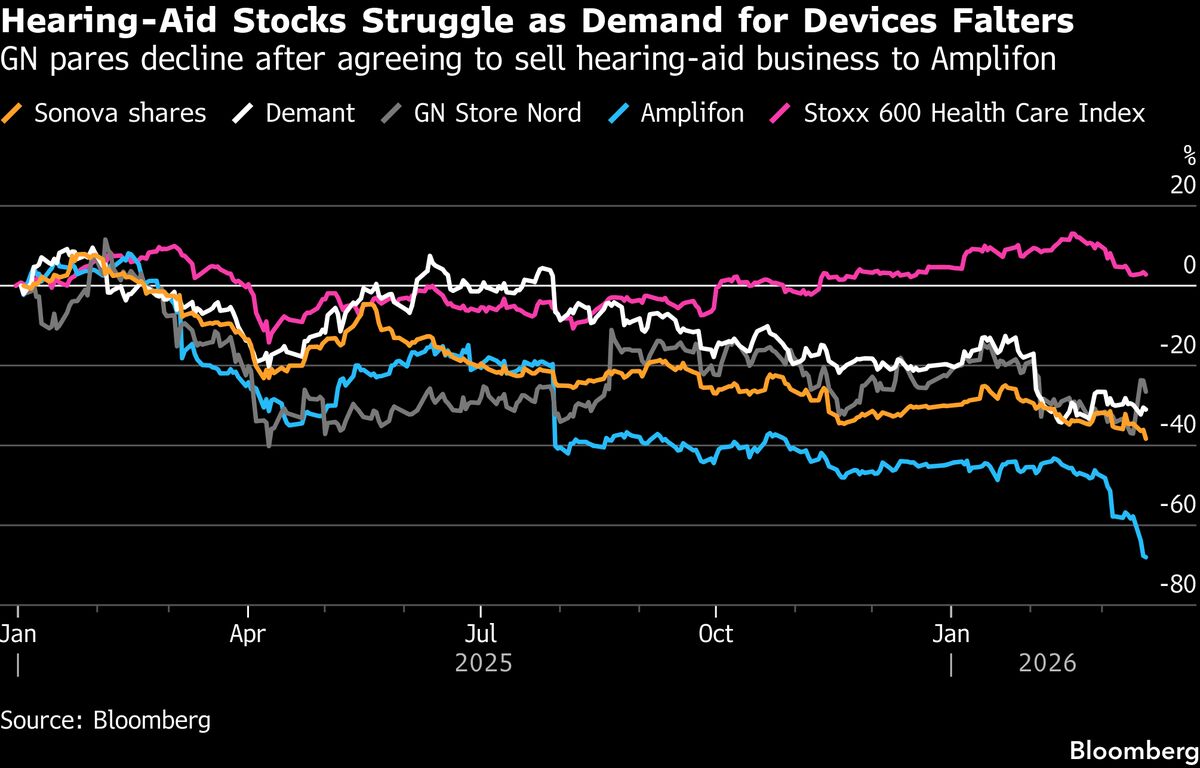

Global Hearing-Aid Industry Faces Transformative Deal as European Healthcare Stocks Brace for Impact
In what could mark a seismic shift for the global hearing-aid industry, a groundbreaking deal is on the horizon, threatening to intensify pressure on some of Europe’s most beleaguered healthcare stocks. The impending agreement, details of which are still emerging, has sent ripples through financial markets and healthcare sectors alike, raising questions about the competitive landscape and the future of traditional hearing-aid manufacturers. As speculation mounts, industry analysts warn that the deal could accelerate consolidation efforts, reshape consumer accessibility, and deepen the divide between innovators and laggards in the healthcare space.
A Deal with Far-Reaching Implications
While specifics of the agreement remain under wraps, sources close to the matter suggest it involves a strategic partnership or acquisition between a major tech company and a leading player in the hearing-aid sector. Such a move would not only disrupt the $10 billion global hearing-aid market but also pave the way for broader integration of hearing technology into consumer electronics. This aligns with a growing trend of tech giants entering the healthcare arena, leveraging their expertise in connectivity, miniaturization, and artificial intelligence to develop cutting-edge solutions for hearing loss—a condition affecting over 1.5 billion people worldwide, according to the World Health Organization.
The deal comes at a time when traditional hearing-aid manufacturers are already grappling with existential challenges. Regulatory changes in key markets, including the U.S., have lowered barriers to entry, allowing tech companies to compete directly with established players. In 2021, the U.S. Food and Drug Administration (FDA) approved over-the-counter hearing aids, opening the door to a wave of innovation and affordability. This policy shift has been a double-edged sword: while it has democratized access to hearing solutions, it has also eroded the dominance of legacy brands that once enjoyed near-monopolistic control over the industry.
European Healthcare Stocks in the Crosshairs
The potential deal is particularly worrisome for European healthcare stocks, many of which have struggled to keep pace with rapidly evolving market dynamics. Companies like Sonova Holdings AG, Demant A/S, and GN Store Nord—key players in the hearing-aid sector—have seen their valuations plummet in recent years as investors grow increasingly skeptical of their ability to adapt to disruptive forces.
For instance, GN Store Nord, a Danish multinational specializing in hearing aids and audio solutions, has witnessed its share price decline by more than 50% over the past two years. Similarly, Sonova, a Swiss-based leader in hearing systems, has faced mounting pressure from both competitors and investors. These companies, once considered stalwarts of the industry, now find themselves at a crossroads, grappling with the dual challenges of technological disruption and shifting consumer expectations.
The looming deal could exacerbate these challenges by introducing a formidable competitor with deep pockets, global reach, and a proven track record of innovation. Analysts warn that traditional manufacturers may struggle to compete on pricing, product development, and marketing, potentially leading to further erosion of market share and shareholder value.
Tech Giants Eye Health Sector
The involvement of a tech giant in the hearing-aid space underscores the broader trend of Silicon Valley companies encroaching on healthcare markets. Giants like Apple, Google, and Amazon have already made significant inroads into wellness and medical technology, offering everything from fitness trackers to telehealth platforms. Their entry into hearing aids represents a natural extension of this strategy, given the growing demand for affordable, user-friendly solutions that integrate seamlessly with everyday devices.
Apple, in particular, has been at the forefront of this movement, with its AirPods Pro offering features like adaptive transparency and conversation boost—functions that blur the line between consumer electronics and hearing aids. Similarly, Bose has developed its own range of hearing-enabled earbuds, further intensifying competition in the space.
For consumers, this convergence of technology and healthcare holds the promise of improved accessibility and affordability. Traditional hearing aids can cost thousands of dollars, placing them out of reach for many who need them. Tech-driven solutions, on the other hand, often come at a fraction of the price, making hearing assistance more inclusive and widely available.
The Road Ahead for Traditional Manufacturers
As the deal unfolds, traditional hearing-aid manufacturers face a critical juncture. To remain relevant, they must embrace innovation, streamline operations, and explore partnerships with tech companies. Some have already taken steps in this direction—Sonova, for example, has invested heavily in digital hearing aids and telehealth services, while GN Store Nord has focused on integrating hearing aids with smartphones and other devices.
However, these efforts may not be enough to stave off the threat posed by tech giants. According to industry experts, the key to survival lies in leveraging their deep expertise in audiology while adopting the agility and customer-centric approach of their new competitors.
“The hearing-aid industry is at a tipping point,” said Sarah Thompson, a healthcare analyst at Morgan Stanley. “Traditional players have the advantage of experience and clinical credibility, but they need to rethink their business models to compete in a rapidly changing landscape.”
The broader implications of the deal extend beyond the hearing-aid sector, highlighting the growing convergence of technology and healthcare. As tech companies continue to disrupt traditional markets, they are reshaping industries, driving innovation, and redefining the way consumers access essential services.
A Balancing Act
As the world watches closely, the proposed deal serves as a stark reminder of the transformative power of technology and the challenges it poses for established industries. While it promises to bring significant benefits to consumers, it also raises important questions about competition, regulation, and the future of healthcare.
For now, the hearing-aid industry remains on edge, bracing for a new era of innovation and disruption. Whether this deal will be a catalyst for progress or a harbinger of decline remains to be seen, but one thing is certain: the landscape of hearing healthcare is changing, and the stakes have never been higher.
