


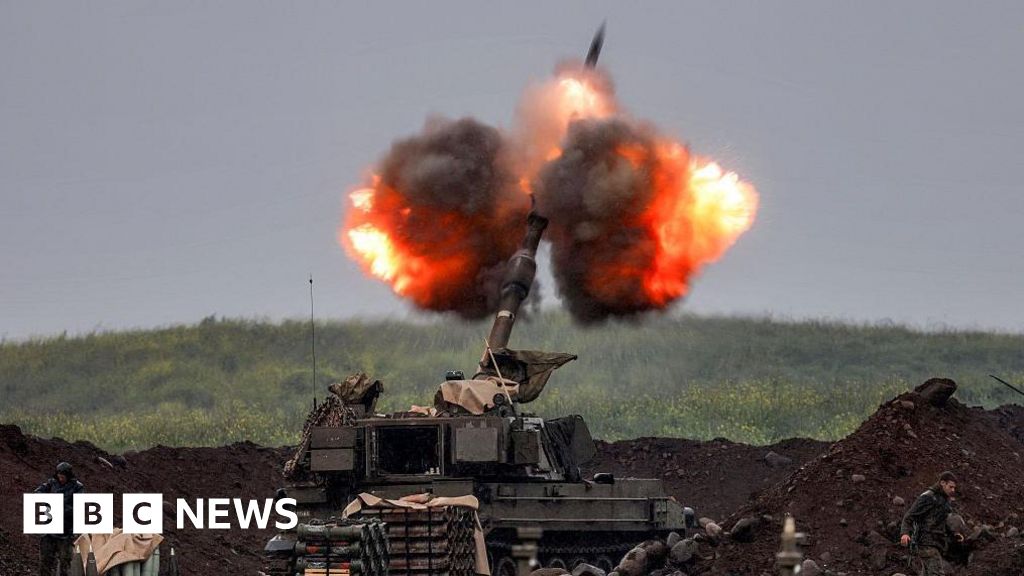

Israel Approves Prolonged Ground Operations Against Hezbollah Amid Rising Regional Tensions
A Region on the Brink
The skies over northern Israel and southern Lebanon crackled with tension this week as the Israeli military announced a major escalation in its operations against Hezbollah. The Iran-backed militant group, entrenched along Lebanon’s southern border, has exchanged near-daily rocket fire with Israel since the outbreak of the Gaza war in October. Now, with the approval of a “prolonged” ground offensive by Israel’s top military commander, Lt. Gen. Eyal Zamir, fears of a full-scale regional conflict loom larger than ever.
The decision marks a significant shift in Israel’s strategy—no longer limited to airstrikes and artillery, but now preparing for sustained ground engagements. For civilians on both sides of the border, the announcement signals a dangerous new phase in a conflict that has already displaced tens of thousands.
Why Now? Escalation in the Shadow of Gaza
The roots of this escalation trace back to October 7, when Hamas’s deadly attack on southern Israel triggered a devastating war in Gaza. Hezbollah, a far more formidable adversary than Hamas, immediately opened a second front in support of its Palestinian allies. Since then, cross-border skirmishes have intensified, with Hezbollah launching drones, rockets, and anti-tank missiles, while Israel responds with airstrikes deep into Lebanese territory.
Israeli officials insist the expanded military campaign is purely defensive—aimed at pushing Hezbollah away from the border to prevent another October 7-style attack. Yet analysts warn that a prolonged ground operation risks spiraling into a broader war, one that could drag in Iran and destabilize the entire Middle East.
Global Implications: A Test for U.S. Diplomacy
The stakes extend far beyond Israel and Lebanon. The Biden administration has worked tirelessly to prevent a full-blown regional war, deploying high-level envoys to Beirut and Tel Aviv in recent weeks. But with Israel now signaling its intent for a sustained ground campaign, Washington’s diplomatic balancing act grows ever more precarious.
Hezbollah’s arsenal—estimated at 150,000 rockets and missiles—poses a direct threat not only to Israel but to U.S. interests in the region. Should the conflict escalate, it could disrupt global energy markets, reignite proxy wars in Syria and Iraq, and strain relations between Washington and Arab allies. For Europe, already grappling with the fallout from Ukraine, another Middle Eastern crisis could trigger fresh waves of refugees and further destabilize an already volatile neighborhood.
Human Toll: Civilians Caught in the Crossfire
While military strategists debate the risks of escalation, civilians bear the brunt of the violence. Over 60,000 Israelis have been evacuated from northern towns, while in Lebanon, entire villages near the border lie deserted. Hospitals on both sides report mounting casualties, with children and the elderly among the most vulnerable.
“We sleep with the sound of explosions,” said Miriam Cohen, a resident of Kiryat Shmona, one of the hardest-hit Israeli towns. “No one knows when—or if—we can return.” Similar stories echo across southern Lebanon, where Hezbollah’s entrenched presence has turned civilian areas into military zones.
What Comes Next?
Israel’s military leadership has made clear that this will not be a swift operation. Unlike previous limited engagements, the new strategy suggests a deliberate, phased campaign aimed at degrading Hezbollah’s capabilities over months, not weeks. But history offers a cautionary tale: Israel’s 2006 war against Hezbollah ended inconclusively, leaving the group stronger than ever.
For now, the world watches nervously. Diplomatic efforts continue, but with trust in short supply and both sides preparing for a long fight, the risk of miscalculation grows by the day.
A Fragile Peace Hangs in the Balance
As smoke rises over the Israel-Lebanon border, the world faces a sobering reality: the Middle East stands at a crossroads. A prolonged Israeli ground offensive could either restore security to northern Israel or plunge the region into its most devastating conflict in decades. With global powers scrambling to contain the fallout, the coming weeks will test whether diplomacy can prevail—or whether war, once again, becomes inevitable.
For now, the people of the borderlands wait, hoping that the guns will fall silent before it’s too late.
