



Escalating Violence in the West Bank Sparks Fears of Wider Conflict
The West Bank, a region long scarred by cycles of violence and tension, erupted into chaos this week following the death of an 18-year-old Israeli settler, Yehuda Sherman. Sherman was fatally struck by a vehicle reportedly driven by a Palestinian while riding his quad bike in the northern West Bank. The incident, which occurred near the settlement of Einav, quickly spiraled into retaliatory attacks, further inflaming an already volatile situation. As settlers and Palestinian communities brace for further escalation, the international community watches anxiously, fearing the potential for this localized violence to ignite a broader regional conflict.
The Immediate Catalyst: A Tragic Incident
Sherman’s death on Wednesday sent shockwaves through the Israeli settler community and beyond. Initial reports suggest that the young settler was riding his quad bike when he was struck by a Palestinian driver near the village of Deir al-Ghusun. While details of the incident remain under investigation, Israeli authorities have described it as a deliberate act, though Palestinian sources have countered that it may have been an accident.
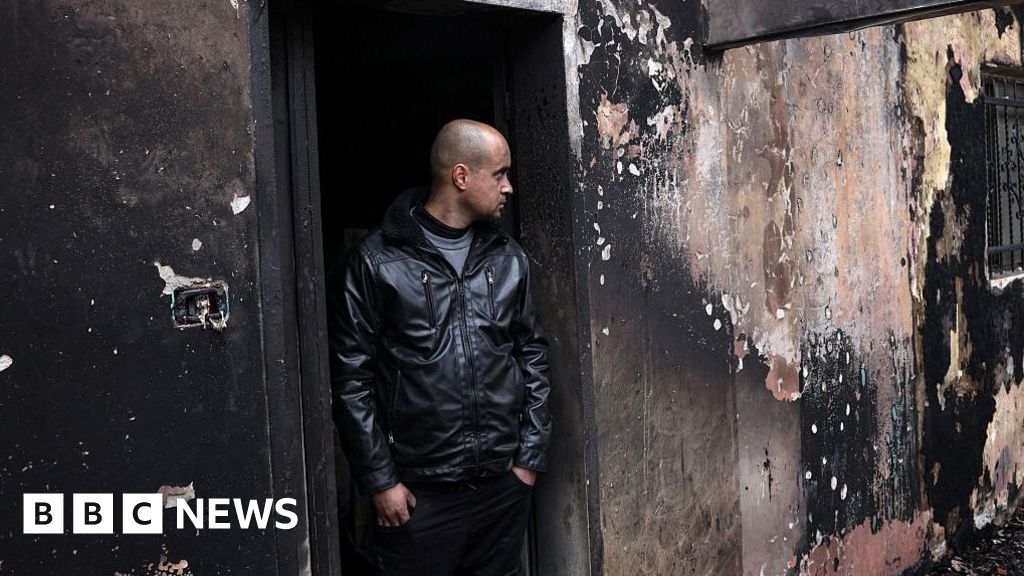
The aftermath was swift and brutal. Israeli settlers launched retaliatory attacks on Palestinian villages, targeting homes, vehicles, and agricultural land. Videos circulating on social media show scenes of burning fields, vandalized property, and terrified civilians fleeing their homes. Palestinian officials reported that at least two Palestinians were injured in the clashes, while Israeli forces deployed additional troops to the area to contain the unrest.
A History of Escalating Tensions
The latest violence is emblematic of the deepening tensions in the West Bank, a territory that has been a flashpoint for decades. Since the 1967 Six-Day War, Israel has maintained control over the West Bank, constructing settlements that are considered illegal under international law. These settlements, home to hundreds of thousands of Israeli citizens, are seen by Palestinians as a direct obstacle to their aspirations for statehood.
The past year has seen a sharp rise in violence, with both Palestinian militants and Israeli settlers carrying out attacks. According to the United Nations, 2023 has already been one of the deadliest years for Palestinians in the West Bank in nearly two decades. Israeli military operations have intensified, often targeting militant groups, but civilian casualties have fueled resentment and calls for retaliation.
Settler violence, meanwhile, has reached alarming levels, with extremist groups attacking Palestinian communities with impunity. The Israeli government has been criticized for failing to rein in these groups, further eroding trust between the two sides.
Global Implications: A Crisis with Broader Ramifications
The violence in the West Bank is not just a regional issue but one with significant global implications. The Israeli-Palestinian conflict has long been a central issue in Middle Eastern geopolitics, influencing alliances, diplomatic relations, and even economic stability.
For Israel’s allies, particularly the United States and European Union, the latest escalation presents a diplomatic challenge. While these nations have repeatedly expressed support for Israel’s right to self-defense, they have also condemned settler violence and called for de-escalation. The Biden administration, in particular, has sought to balance its support for Israel with its commitment to a two-state solution, but the current crisis threatens to undermine these efforts.
For the broader Middle East, the conflict has the potential to destabilize fragile alliances. Neighboring countries, such as Jordan and Egypt, which have peace treaties with Israel, face domestic pressure to take a stronger stance against Israeli actions. Meanwhile, Iran and its proxies have sought to exploit the situation, framing themselves as defenders of Palestinian rights and further complicating regional dynamics.
Humanitarian Concerns: Civilians Bear the Brunt
Amid the political and strategic implications, it is the civilians who suffer the most. Palestinian villages in the West Bank face daily threats of violence, displacement, and economic hardship. Schools have been closed, businesses shuttered, and families forced to flee their homes. The psychological toll on children, who grow up in an environment of constant fear, is immeasurable.
Israeli settlers, too, live in a state of heightened anxiety, fearing attacks by militants. The death of Yehuda Sherman has brought these fears into sharp focus, with settler communities calling for stronger military protection and harsher measures against perceived threats.
Why It Matters Globally
The escalation in the West Bank matters globally because it underscores the fragility of peace in the Middle East and the potential for localized conflicts to spiral into wider wars. The Israeli-Palestinian conflict has long been a symbol of unresolved tensions, and its persistence serves as a reminder of the challenges of achieving lasting peace in a divided world.
Moreover, the crisis has implications for international norms and the rule of law. The continued expansion of Israeli settlements and the failure to address settler violence raise questions about accountability and the role of the international community in upholding human rights.
Looking Ahead: A Path Forward?
As the dust settles on this latest outbreak of violence, the question remains: Can the cycle of retaliation be broken? Diplomatic efforts to broker a ceasefire have so far yielded little progress, with both sides deeply entrenched in their positions.
The international community must play a proactive role in urging restraint and facilitating dialogue. Without meaningful intervention, the risk of further escalation remains high, with potentially devastating consequences for the region and beyond.
Conclusion: A Call for Calm Amid Chaos
The death of Yehuda Sherman and its violent aftermath serve as a stark reminder of the human cost of conflict. As the West Bank teeters on the brink of chaos, the world must not look away. The stakes are too high, and the consequences too grave, to allow this crisis to spiral out of control. In a world already grappling with multiple crises, from climate change to geopolitical rivalry, the need for peace in the West Bank has never been more urgent. The time for action is now—before more lives are lost and the hope for a better future vanishes entirely.
