



Missile Strikes Near Israel’s Nuclear Facility Expose Gaps in Air Defense
A Shocking Breach in Israel’s Fortified Defenses
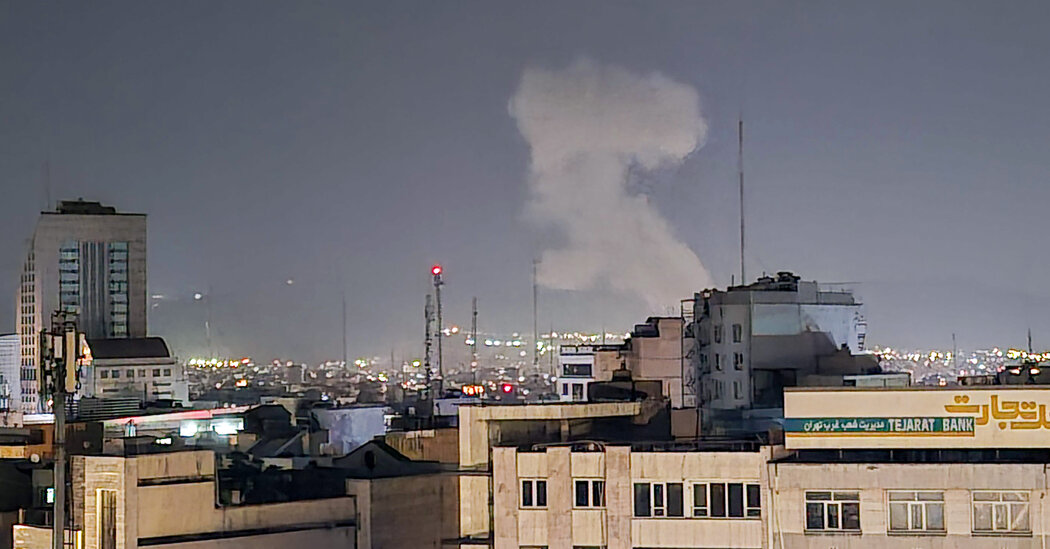
Under the cover of darkness on Saturday night, two Iranian ballistic missiles tore through the skies of southern Israel, evading the country’s vaunted air defense systems before crashing into residential neighborhoods near Dimona—home to Israel’s most heavily guarded nuclear research facility. The strikes, which also hit the nearby city of Arad, sent shockwaves through a nation long accustomed to conflict but now confronting unsettling vulnerabilities in its security infrastructure.
The attacks marked one of the most serious breaches of Israel’s multilayered missile defense network in recent years, raising urgent questions about the effectiveness of a system built over decades with billions in U.S. and Israeli investment. With tensions between Israel and Iran escalating into open warfare, the incident has far-reaching implications—not just for the Middle East, but for global security.
A Test of Israel’s Air Defense—and Its Limits
Israel’s missile defense is among the most advanced in the world, comprising several interceptor systems designed to counter threats at varying ranges. The Iron Dome, widely known for its success against short-range rockets from Gaza, is just one component. More sophisticated systems like the Arrow 3—developed jointly with the U.S.—are meant to intercept ballistic missiles in space, while David’s Sling targets cruise and medium-range missiles.
Yet on Saturday, these defenses faltered. Military officials confirmed that attempts were made to intercept the incoming missiles, but both slipped through, striking roughly three hours apart. While Israel maintains that its interception rate against Iranian ballistic missiles exceeds 90%, the failures in Dimona and Arad underscore a grim reality: no system is foolproof.
Brig. Gen. Ran Kochav, a former commander of Israel’s air and missile defense forces, acknowledged the operational failure but stressed that “nothing is perfect.” The military has launched an investigation but remains tight-lipped on specifics, fueling speculation about whether Israel is rationing its most advanced—and expensive—interceptors.
A War of Attrition Strains Israel’s Stockpiles
The conflict with Iran has stretched Israel’s military resources thin. After a 12-day war last year, reports emerged that Israel’s stockpiles of interceptor missiles had been significantly depleted. While officials deny current shortages, concerns persist that the military may be conserving its most sophisticated defenses for prolonged combat.
Prime Minister Benjamin Netanyahu, visiting the impact sites on Sunday, called it a “miracle” that no one was killed but offered no explanation for the failed interceptions. His warning to citizens—”Don’t be complacent”—highlighted the precariousness of the situation.
Meanwhile, Israel’s Ministry of Defense has reportedly sought additional munitions and interceptors from the U.S., signaling potential strains on its arsenal. “It is not a bottomless barrel,” General Kochav cautioned. “When we intercept, we also have to think of the next day’s battle.”
Human Toll and the Shadow of Nuclear Risk
Beyond the strategic implications, the strikes inflicted significant human suffering. At least 175 people were wounded, with 10 in serious condition. Residents described scenes of chaos—buildings reduced to rubble, streets littered with debris, and the lingering terror of near-misses.
Yitzhak Salem, a Dimona resident, recounted sheltering with his wife as a missile struck nearby. “It felt like a hurricane mixed with an earthquake,” he said. Many others narrowly escaped death by reaching bomb shelters in time.
The proximity of the strikes to Dimona’s nuclear facility adds another layer of global concern. While the reactor itself was unharmed, the attack underscores the risks of a conflict that could escalate beyond conventional warfare.
Why This Matters to the World
The missile strikes near Dimona are not just an Israeli security issue—they are a litmus test for global missile defense capabilities. If a system as advanced as Israel’s can be penetrated, it raises questions about the vulnerability of other nations to ballistic missile threats, particularly from adversarial states like Iran and North Korea.
Moreover, the ongoing conflict risks drawing in regional and global powers, further destabilizing an already volatile Middle East. With Iran signaling no intention to back down and Israel vowing retaliation, the world watches nervously as the specter of a wider war looms.
A Fragile Balance in a High-Stakes Conflict
As Israel grapples with the fallout from these strikes, the broader implications are clear: even the most sophisticated defenses have limits, and in a prolonged conflict, resources—and luck—can run thin. For now, the people of Dimona and Arad pick up the pieces, while military strategists recalibrate their defenses for the battles ahead.
In an era where missile technology is rapidly advancing, Saturday’s attack serves as a stark reminder: no nation is invulnerable, and in the high-stakes game of modern warfare, the margin for error is perilously thin.
