


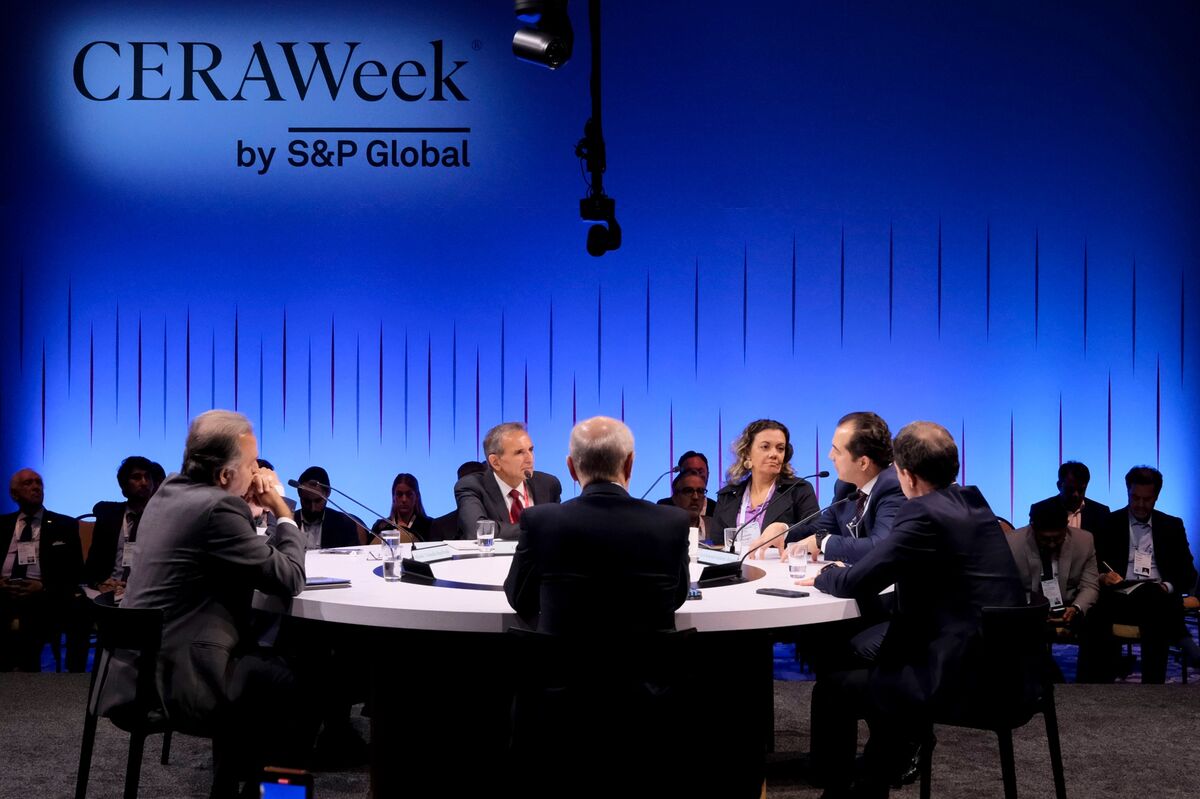

Geopolitical Tensions and Energy Security Dominate Global Energy Summit Amidst Unprecedented Uncertainty
Houston, Texas – March 2024
The world’s most influential energy leaders, policymakers, and industry titans have converged in Houston for CERAWeek, the annual flagship conference hosted by S&P Global, but this year’s gathering is overshadowed by an urgent and inescapable theme: the collision of geopolitics and energy security. Against a backdrop of escalating conflicts, supply chain disruptions, and the accelerating energy transition, delegates face a sobering reality—the era of predictable energy markets is over.
What was once a forum for discussing market trends and technological innovation has transformed into a high-stakes diplomatic arena, where the specter of war, sanctions, and resource nationalism looms large. From the war in Ukraine to rising Middle East tensions and the deepening rivalry between the U.S. and China, geopolitical instability is reshaping energy strategies at an unprecedented pace.
A World on Edge: The Geopolitical Flashpoints Reshaping Energy
The invasion of Ukraine in 2022 sent shockwaves through global energy markets, exposing the fragility of Europe’s reliance on Russian gas and triggering a scramble for alternative supplies. Two years later, the conflict remains a defining crisis, with Western sanctions tightening and Moscow pivoting energy exports toward Asia. Meanwhile, the war in Gaza and Houthi attacks on Red Sea shipping have further destabilized trade routes, forcing companies to reroute vessels and absorb soaring insurance costs.
“We are witnessing a fundamental rewiring of global energy flows,” said Daniel Yergin, Vice Chairman of S&P Global and a leading energy historian. “Geopolitics is no longer a secondary consideration—it is the driving force behind investment decisions, supply contracts, and national security strategies.”
The U.S. and Europe are racing to secure long-term LNG deals to replace Russian gas, while China and India continue to snap up discounted Russian crude, deepening the divide between Western-aligned economies and the so-called Global South. At the same time, OPEC+ remains locked in a delicate balancing act, with Saudi Arabia and Russia coordinating production cuts to prop up prices despite pressure from Washington.
Energy Security vs. Climate Goals: A Growing Dilemma
The geopolitical storm has also complicated the world’s transition to cleaner energy. While renewables and electric vehicles continue to gain traction, many nations are prioritizing short-term energy security over long-term decarbonization. Europe’s energy crisis led to a temporary revival of coal plants, and Japan has extended the life of its nuclear reactors to reduce reliance on imported fuels.
“The energy transition is still happening, but it’s no longer linear,” said Fatih Birol, Executive Director of the International Energy Agency (IEA). “Governments are making pragmatic choices, and in some cases, that means delaying climate commitments to keep the lights on.”
The tension was palpable in Houston, where oil executives argued for sustained investment in hydrocarbons while clean energy advocates warned against backsliding. The Biden administration’s pause on new LNG export approvals—a move criticized by industry but praised by environmentalists—has added another layer of complexity, with Gulf Coast producers warning of lost market share to Qatar and Russia.
The New Energy Cold War: U.S.-China Rivalry Intensifies
Perhaps the most consequential geopolitical shift is the escalating competition between the U.S. and China over critical minerals, clean tech dominance, and supply chain control. China commands over 80% of global rare earth processing and dominates solar panel and battery production, while the U.S. seeks to counter with subsidies under the Inflation Reduction Act (IRA).
“This isn’t just about energy—it’s about economic supremacy,” said Meghan O’Sullivan, a former White House adviser and Harvard professor. “Whoever leads in clean tech will shape the 21st-century economy, and neither side is willing to concede.”
The rivalry extends to Africa and Latin America, where both nations are courting resource-rich countries for lithium, cobalt, and copper. Meanwhile, China’s surging EV exports have triggered protectionist responses from the U.S. and Europe, raising fears of a broader trade war.
Industry Adapts: Resilience and Reinvention
Amid the turbulence, energy companies are rewriting playbooks. European firms are diversifying suppliers, U.S. shale producers are optimizing output, and Asian buyers are locking in multi-year LNG contracts. Digitalization and AI are playing a growing role in predicting disruptions and optimizing logistics.
“Volatility is the new normal,” said ExxonMobil CEO Darren Woods. “The winners will be those who can navigate uncertainty while still investing in the future.”
Yet risks remain. A further escalation in the Middle East could send oil prices skyrocketing, while a prolonged U.S.-China standoff might fracture supply chains. The outcome of the 2024 U.S. election could also reshape energy policy, with potential implications for everything from drilling permits to climate regulations.
Conclusion: A Fragmented Energy Future
As CERAWeek draws to a close, one message is clear: the world is entering an era of energy fragmentation, where national interests increasingly override global cooperation. While the transition to renewables continues, geopolitical fault lines will dictate its speed and shape.
“The challenge,” summarized IEA’s Birol, “is to ensure that the pursuit of energy security doesn’t come at the expense of climate security—because in the long run, we cannot afford to fail on either front.”
For now, the energy world remains on edge, navigating an unstable present while preparing for an even more uncertain future.
