


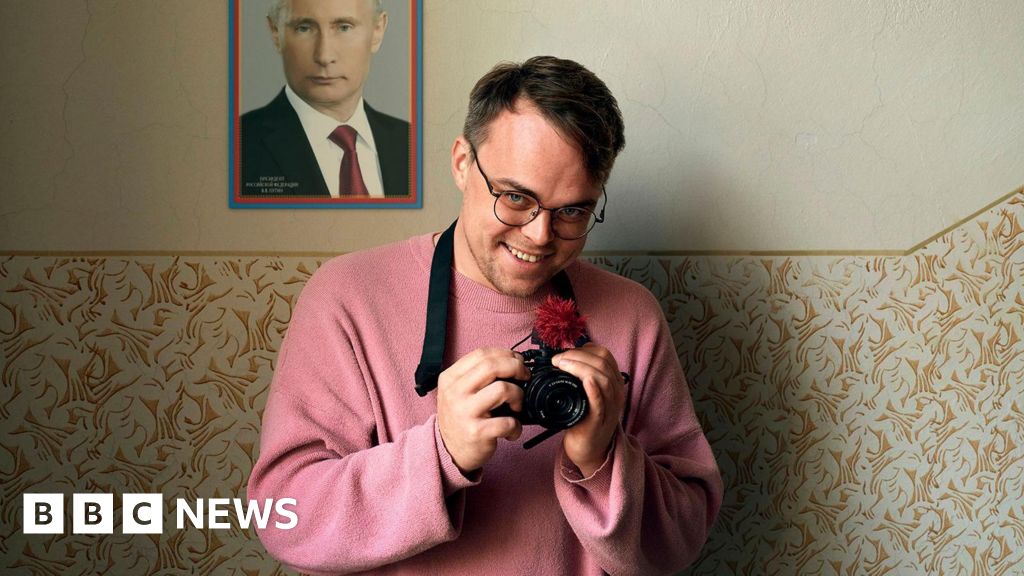

Russian Court Bans Anti-War Documentary, Escalating Crackdown on Dissent
A Dramatic Blow to Free Speech
In a move that underscores Moscow’s tightening grip on dissent, a Russian court has banned a documentary critical of the government’s war in Ukraine, labeling it as promoting “negative attitudes” toward the Kremlin. The ruling marks another chilling step in Russia’s sweeping censorship campaign, which has seen independent media shuttered, journalists imprisoned, and opposition voices silenced. As the war in Ukraine drags into its third year, the Kremlin is doubling down on its domestic propaganda machine, leaving little room for debate—or truth.
The Court’s Decision and Its Implications
The banned documentary, whose title remains undisclosed in state media reports, allegedly portrayed Russia’s military actions in Ukraine in a negative light. The court ruled that the film’s distribution—whether online or offline—would now be illegal, with violators facing potential fines or prosecution.
This case is not isolated. Since the invasion of Ukraine in February 2022, Russia has enacted draconian laws criminalizing “discrediting” the armed forces or spreading “false information” about the war. Penalties range from hefty fines to up to 15 years in prison. Thousands have been prosecuted under these laws, including prominent activists, journalists, and even ordinary citizens who posted anti-war messages on social media.
Global Context: Russia’s Information War Extends Beyond Its Borders
Russia’s crackdown on dissent is part of a broader strategy to control narratives both at home and abroad. State-funded media outlets like RT and Sputnik push pro-Kremlin propaganda globally, while domestic critics face increasing repression. Independent news organizations, including Meduza and Novaya Gazeta, have been forced to relocate or operate in exile.
The ban on this documentary follows a pattern seen in authoritarian regimes—China, Iran, and North Korea similarly suppress media that challenges official narratives. But Russia’s aggressive censorship has far-reaching consequences, influencing global perceptions of the war and stifling international discourse.
Why This Matters Beyond Russia
Free press advocates warn that Russia’s escalating censorship sets a dangerous precedent. If a major global power can silence dissent with impunity, other authoritarian leaders may follow suit. The European Union and the United States have repeatedly condemned Moscow’s media crackdowns, but with limited effect.
For Ukrainians, the suppression of anti-war voices in Russia means fewer opportunities for Russians to hear alternative perspectives—potentially prolonging public support for the invasion. For the West, it underscores the challenges of countering disinformation in an era where truth is increasingly under siege.
The Human Cost of Silencing Dissent
Behind the legal rulings and political rhetoric are real people paying a steep price. Journalists like Evan Gershkovich of The Wall Street Journal remain imprisoned on espionage charges widely seen as fabricated. Opposition leader Alexei Navalny died in a penal colony earlier this year, and his allies continue to face persecution.
Ordinary Russians, too, risk punishment for speaking out. A teacher fined for criticizing the war in class, a musician arrested for an anti-war song, a grandmother detained for holding a blank protest sign—these are the faces of resistance in a country where dissent has become a crime.
What Comes Next?
With elections looming in 2024, the Kremlin is likely to intensify its suppression of opposition voices. State media will continue to dominate the airwaves, while independent outlets struggle to survive. Meanwhile, the war in Ukraine shows no signs of ending, meaning further crackdowns on dissent are almost guaranteed.
International pressure has so far failed to curb Russia’s repression. Sanctions and diplomatic condemnations have done little to loosen the Kremlin’s grip on information. Unless global powers find more effective ways to support free speech—both inside and outside Russia—the world may witness further erosion of press freedom in the years ahead.
A Closing Warning
Russia’s war on truth is as consequential as its war in Ukraine. When a government criminalizes dissent, it doesn’t just silence its own people—it threatens the very foundations of democracy everywhere. The banning of this documentary is not just a legal ruling; it’s another step toward a world where only one narrative is allowed. And in that world, the truth is always the first casualty.
