


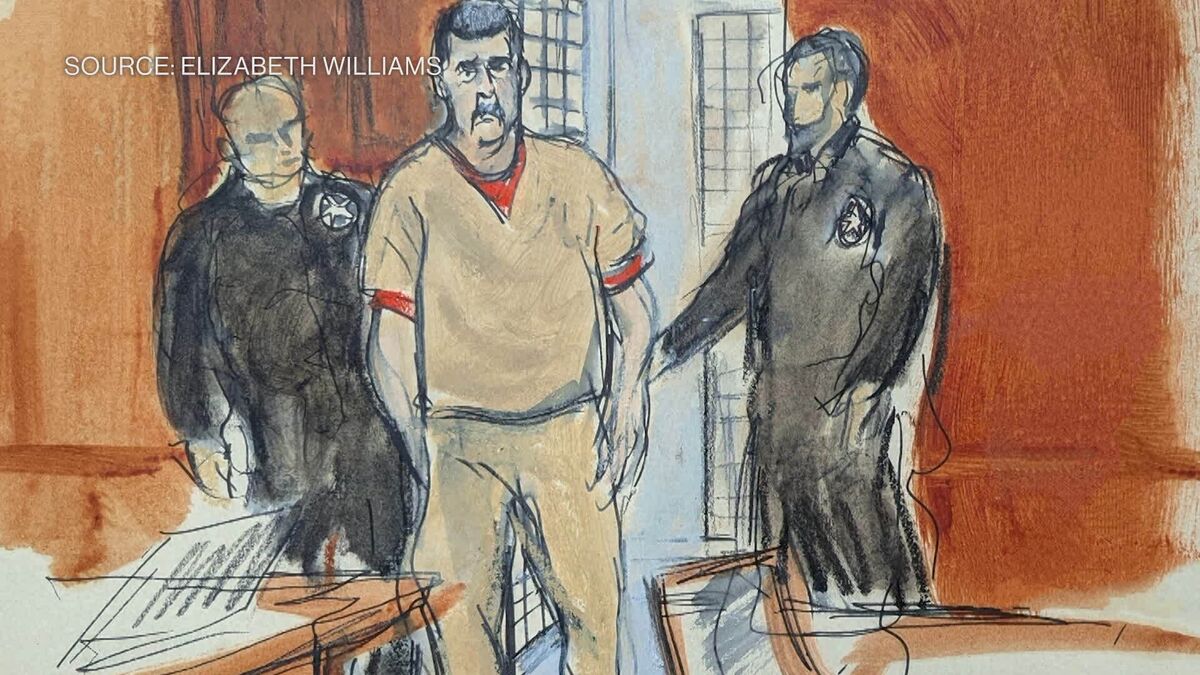

Venezuelan Leader Nicolás Maduro Faces U.S. Court Amid Narco-Terrorism Allegations
New York City — In a dramatic legal showdown with far-reaching geopolitical implications, Venezuelan President Nicolás Maduro made a virtual appearance in a Manhattan federal court on Thursday, marking a significant escalation in a long-running U.S. criminal case accusing him of orchestrating a vast drug-trafficking and narco-terrorism conspiracy. The hearing, which underscores the Biden administration’s hardline stance against Maduro’s regime, has reignited debates about U.S. foreign policy in Latin America and the broader fight against international narcotics networks.
The case, filed in March 2020 by the U.S. Department of Justice, alleges that Maduro and his inner circle transformed Venezuela into a “narco-state,” using the country’s institutions to facilitate the production and distribution of cocaine, primarily to the United States. Prosecutors claim the operation, dubbed the “Cartel of the Suns,” involved high-ranking military officials, political allies, and even Maduro himself, who is accused of using drug profits to enrich himself and maintain his grip on power. The charges include drug trafficking, money laundering, and narco-terrorism, the latter carrying a potential life sentence.
Maduro, who has repeatedly denied the allegations, attended the hearing via videoconference from Venezuela, flanked by his legal team. His appearance comes amid heightened tensions between Washington and Caracas, as the Biden administration continues to pressure Maduro’s government over its alleged human rights abuses, electoral fraud, and ties to international criminal organizations. The Venezuelan leader’s court appearance was largely procedural, focusing on the status of the case and setting the stage for future proceedings. However, the symbolism of a sitting head of state facing U.S. criminal charges cannot be overstated.
A Case Rooted in Decades of Turmoil
The backdrop to this legal drama is Venezuela’s descent into political and economic chaos over the past decade. Once one of Latin America’s wealthiest nations, thanks to its vast oil reserves, Venezuela has been crippled by hyperinflation, widespread poverty, and a humanitarian crisis that has driven millions to flee the country. Maduro, who succeeded Hugo Chávez in 2013, has been accused of consolidating power through authoritarian means, including rigged elections and the suppression of dissent.
The U.S. government has long viewed Maduro’s regime with hostility, imposing sanctions and recognizing opposition leader Juan Guaidó as Venezuela’s legitimate president in 2019. The drug-trafficking case is part of a broader U.S. strategy to isolate Maduro and undermine his government. However, critics argue that the charges against him are politically motivated and question the legitimacy of prosecuting a foreign leader under U.S. law.
The allegations against Maduro are not unprecedented. In 2006, the U.S. indicted Panamanian strongman Manuel Noriega on similar charges, leading to his eventual capture and imprisonment. Yet, prosecuting a sitting head of state remains a rare and controversial move, raising questions about sovereignty and the extraterritorial reach of U.S. justice.
The Allegations: A Narco-State Unveiled
According to the indictment, Maduro and his co-conspirators allegedly worked with Colombia’s FARC guerrilla group to smuggle tons of cocaine through Venezuela, leveraging the country’s strategic location as a gateway to the Caribbean and Central America. Prosecutors claim that Venezuelan military officials, known as the “Cartel of the Suns” due to the insignia on their uniforms, oversaw the operation, ensuring safe passage for drug shipments in exchange for bribes.
The case also alleges that Maduro personally directed these activities, using drug proceeds to fund his political campaigns and secure loyalty from key allies. Notably, the charges include narco-terrorism, a designation reserved for individuals who use drug trafficking to support or advance terrorist activities. Prosecutors argue that Maduro’s actions destabilized Venezuela and fueled violence across the region, justifying the severe penalties tied to the charge.
Global Implications and Mixed Reactions
The case against Maduro has drawn mixed reactions from the international community. While some countries, particularly in Latin America, have expressed support for holding Maduro accountable, others view the U.S. action as an overreach that undermines Venezuela’s sovereignty. Russia and China, staunch allies of Maduro, have condemned the charges as politically motivated and called for diplomatic resolution.
Within Venezuela, the case has further polarized an already divided society. Supporters of Maduro dismiss the charges as baseless propaganda aimed at delegitimizing his government, while critics see the U.S. case as a necessary step toward justice and accountability. The Biden administration, meanwhile, has sought to balance its tough stance on Maduro with broader efforts to address Venezuela’s humanitarian crisis, including easing some sanctions to facilitate aid delivery.
What’s Next?
The near-term future of the case remains uncertain. Maduro is unlikely to voluntarily surrender to U.S. authorities, and Venezuela’s government has no extradition treaty with the United States. This raises the possibility of a prolonged legal standoff, with the charges hanging over Maduro’s head as a symbolic rebuke of his regime.
Moreover, the case could complicate U.S. diplomacy in Latin America, where many countries are wary of Washington’s interventionist tendencies. Some analysts warn that prosecuting Maduro could embolden other authoritarian leaders to tighten their grip rather than risk facing similar charges.
As the legal and geopolitical drama unfolds, one thing is clear: the case against Nicolás Maduro represents a pivotal moment in the fraught relationship between the United States and Venezuela. Whether it leads to justice or further entrenchment of Maduro’s regime remains to be seen, but its impact will undoubtedly reverberate far beyond the courtroom.
In the complex interplay of law, power, and diplomacy, the pursuit of accountability often comes with unintended consequences. Only time will tell whether this case will serve as a catalyst for change or deepen the divisions it seeks to address.
