



Global Markets Navigate Uncertainty as Analysts Weigh Key Trends Impacting Investors
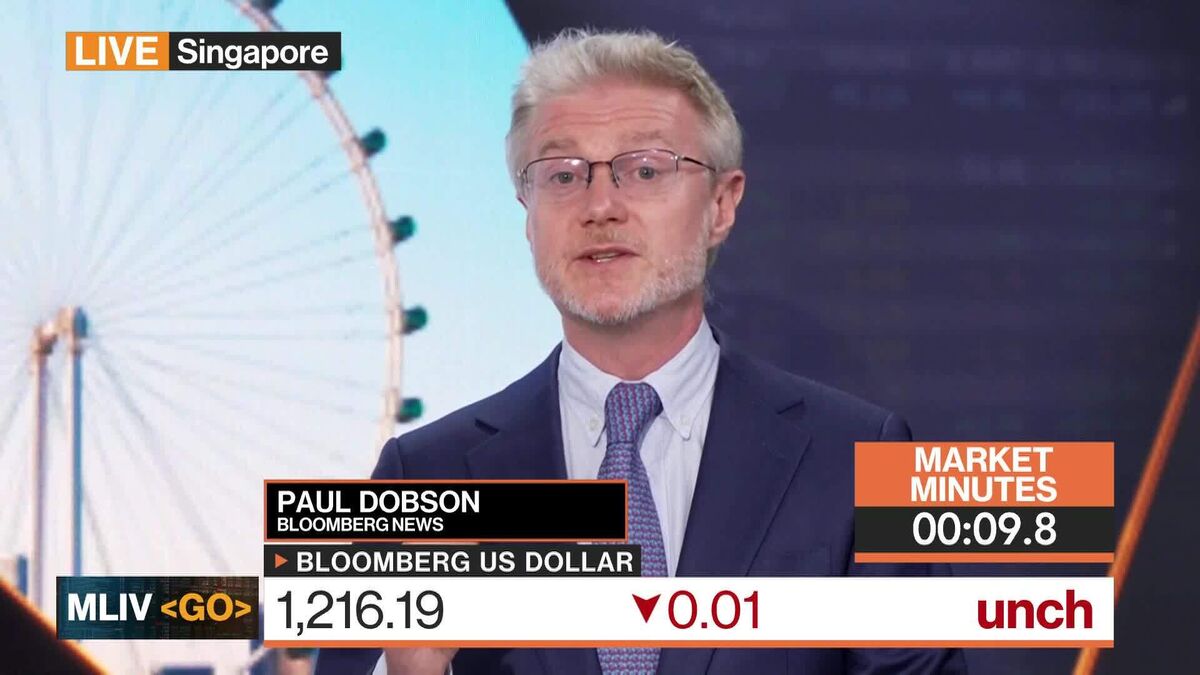
In a world grappling with economic volatility, geopolitical tensions, and shifting monetary policies, global investors are turning their attention to the latest insights from financial experts to navigate an increasingly complex market landscape. On Bloomberg’s flagship program The Opening Trade, analysts Lizzy Burden, Tom Mackenzie, and Paul Dobson dissected the critical themes shaping investor sentiment today, offering a comprehensive overview of the forces driving markets across equities, bonds, commodities, and currencies.
The discussion comes at a pivotal moment for global markets, as central banks, governments, and corporations alike grapple with the lingering impacts of inflation, the specter of recession, and the ripple effects of geopolitical crises. With the Federal Reserve signaling a cautious approach to interest rate cuts and Europe facing sluggish growth, investors are seeking clarity in an environment fraught with both risks and opportunities.
Inflation and Central Bank Policies Remain in Focus
At the heart of today’s market analysis is the ongoing battle against inflation, which has been a dominant theme shaping monetary policy decisions over the past two years. Lizzy Burden highlighted the Federal Reserve’s recent dovish stance, noting that while inflation has cooled from its peak, it remains stubbornly above the Fed’s 2% target. This has forced policymakers to temper expectations for aggressive rate cuts, leaving investors to recalibrate their strategies.
“The Fed’s message is clear: they’re not ready to declare victory on inflation just yet,” Burden explained. “This cautious approach has injected a sense of uncertainty into the markets, particularly in sectors like technology and real estate that are highly sensitive to interest rate movements.”
Across the Atlantic, the European Central Bank (ECB) faces a similar dilemma. With inflation in the Eurozone hovering near 3%, ECB President Christine Lagarde has emphasized the need for prudence, even as economic growth remains tepid. Tom Mackenzie pointed out that this divergence in monetary policy between the U.S. and Europe could lead to increased volatility in currency markets, particularly for the euro-dollar exchange rate.
Geopolitical Risks and Energy Markets
Another key theme discussed on The Opening Trade was the role of geopolitics in shaping global markets. Paul Dobson underscored the ongoing conflict in the Middle East and its impact on energy prices, which have remained volatile in recent months. Despite efforts to stabilize oil production, tensions in the region—particularly between Israel and Hamas—continue to pose a significant risk to global energy supplies.
“The energy market is a wildcard in today’s geopolitical environment,” Dobson noted. “Any escalation in conflict could send oil prices soaring, which would have immediate inflationary consequences for the global economy.”
Investors are also closely monitoring developments in Asia, where China’s economic recovery remains uneven. The world’s second-largest economy has struggled to regain momentum post-pandemic, with sluggish consumer demand and a deepening property crisis weighing on growth. This has prompted Beijing to implement targeted stimulus measures, though their effectiveness remains uncertain.
Corporate Earnings and the Tech Sector
Against this backdrop of macroeconomic uncertainty, corporate earnings have emerged as a critical barometer of market health. The tech sector, in particular, has been under scrutiny, with mega-cap companies like Microsoft, Apple, and Alphabet reporting mixed results in recent weeks. Lizzy Burden highlighted the sector’s resilience but cautioned that lofty valuations could make tech stocks vulnerable to a pullback if economic conditions deteriorate.
“Tech has been a standout performer in recent years, but investors are increasingly questioning whether these companies can sustain their growth trajectory,” she said. “Especially with regulatory pressures mounting and competition intensifying.”
Meanwhile, industries like healthcare and consumer staples have seen growing interest as investors seek safer bets in uncertain times. Tom Mackenzie noted that defensive sectors are likely to remain attractive as long as the threat of recession looms.
Emerging Markets and Currency Dynamics
Emerging markets have also been a focal point for analysts, with many economies grappling with currency depreciation and capital outflows. Paul Dobson pointed out that countries like Turkey and Argentina are facing acute challenges, while others, such as India and Mexico, are showing signs of resilience due to structural reforms and strong domestic demand.
“The divergence within emerging markets is striking,” Dobson observed. “Investors need to be highly selective, as the risks and opportunities vary widely across regions.”
Currency markets have been another area of concern, with the U.S. dollar maintaining its strength despite expectations of a Fed pivot. Tom Mackenzie explained that a strong dollar could weigh on export-driven economies while benefiting U.S. consumers by making imports cheaper. However, he cautioned that any significant shift in Fed policy could alter this dynamic.
Sustainability and ESG: A Growing Investor Priority
Amid the focus on traditional market drivers, sustainability and environmental, social, and governance (ESG) considerations continue to gain traction among investors. Lizzy Burden emphasized that companies with robust ESG practices are increasingly attracting capital, particularly from institutional investors.
“Sustainability is no longer a niche concern—it’s a core component of investment strategy,” she said. “Companies that fail to address ESG risks could find themselves at a competitive disadvantage.”
However, Burden also noted that the ESG landscape remains complex, with varying definitions and regulations across regions. This has led to calls for greater standardization and transparency to ensure that ESG investing delivers on its promises.
Looking Ahead: Navigating Uncertainty
As global markets confront a myriad of challenges, the insights shared by Burden, Mackenzie, and Dobson provide a roadmap for investors navigating this uncertain terrain. From the Fed’s cautious approach to inflation to the geopolitical risks roiling energy markets, the interplay of these factors will likely shape market dynamics in the months ahead.
While opportunities exist for those willing to take calculated risks, the overarching theme remains one of caution. As Burden succinctly put it, “In today’s market environment, patience and prudence are paramount.”
In a world where certainty is elusive, investors must remain vigilant, adaptable, and informed to succeed in an increasingly interconnected global economy. The conversations on The Opening Trade serve as a timely reminder that in the face of complexity, knowledge is indeed power.
