



Strait of Hormuz Sees Dramatic Drop in Ship Traffic Amid Escalating Regional Tensions
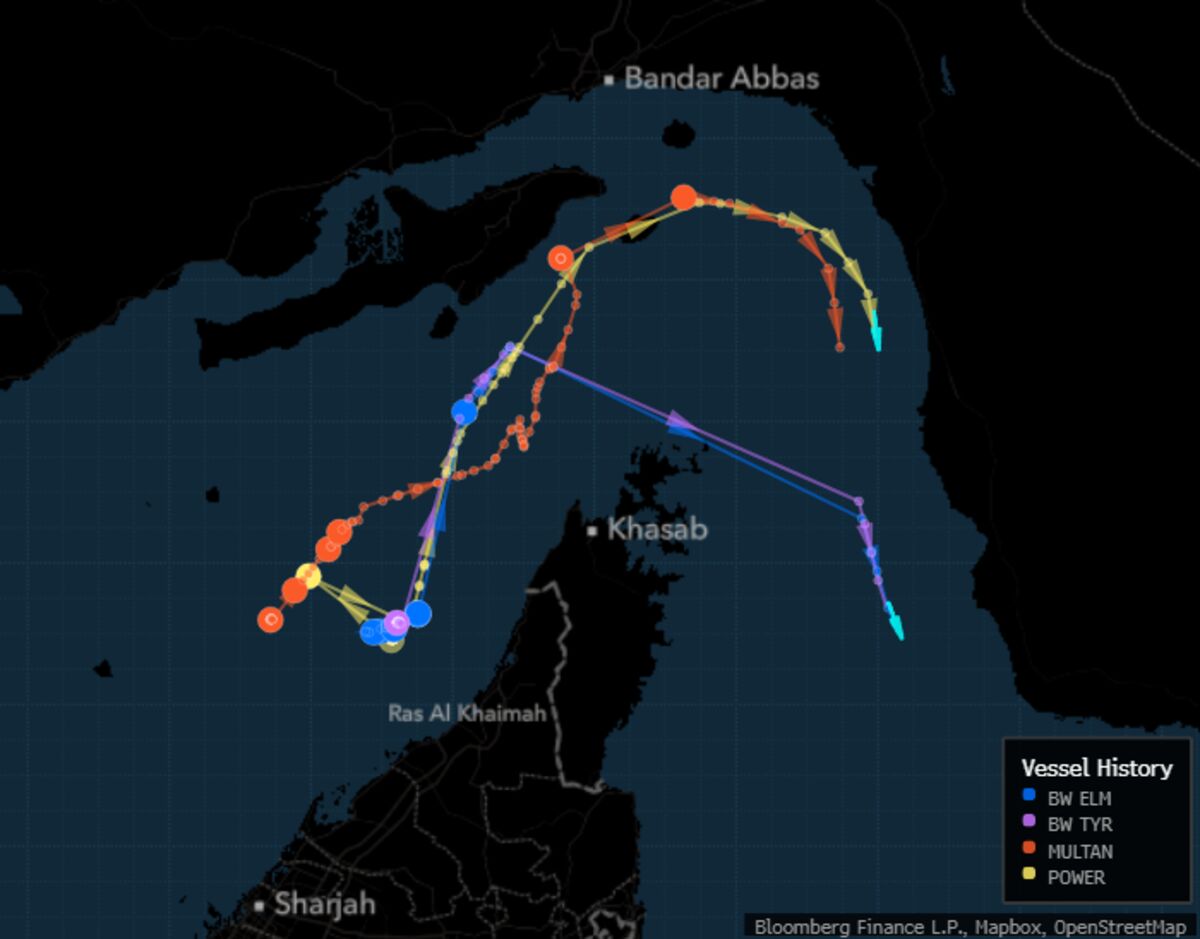
Dubai, United Arab Emirates — The Strait of Hormuz, one of the world’s most critical maritime chokepoints, has witnessed a significant decline in ship traffic as the Israel-Hamas conflict enters its second month. Satellite imagery and shipping data reveal that only a handful of vessels have traversed the narrow waterway in recent days, with most hugging the Iranian coastline in an apparent attempt to minimize risks. This unprecedented slowdown has raised concerns about the economic and geopolitical ramifications of prolonged instability in the region.
The Strait of Hormuz, a narrow passage between Oman and Iran, is a vital artery for global energy supplies. It connects the Persian Gulf to the Arabian Sea and facilitates the movement of nearly 21 million barrels of oil daily, accounting for about 20% of the world’s oil consumption. The waterway is also a key route for liquefied natural gas (LNG) shipments, making it indispensable to global energy markets. However, the escalating conflict between Israel and Hamas, coupled with heightened tensions between Iran and Western powers, has cast a shadow over the region’s maritime security.
A Trickle of Ships in a Once-Bustling Waterway
Over the past 24 hours, satellite images have shown only four vessels leaving the Persian Gulf, a stark contrast to the usual steady stream of tankers and cargo ships. Analysts attribute this sharp decline to a combination of factors, including fears of targeted attacks, rising insurance costs, and uncertainty over the intentions of regional actors.
The route hugging the Iranian coastline, historically a less-traveled path, has reportedly become the preferred choice for some ship operators. This shift suggests growing apprehension about potential hostilities in the central and southern parts of the strait, where military activity has been observed in recent weeks.
The situation is reminiscent of previous periods of tension in the region. In 2019, Iran was accused of attacking commercial vessels in the Strait of Hormuz, prompting a temporary spike in insurance premiums and a cautious approach from shipping companies. The current slowdown, however, appears to be more prolonged and could have far-reaching consequences for global trade and energy markets.
Economic Repercussions and Rising Costs
The sharp drop in maritime traffic has already begun to impact global markets. Oil prices have surged in recent weeks, driven by fears of supply disruptions in the Middle East. Analysts warn that a prolonged closure or severe restriction of the Strait of Hormuz could send shockwaves through the global economy, potentially triggering inflation and hampering recovery efforts in energy-dependent nations.
Insurance premiums for ships transiting the region have also skyrocketed, with some underwriters reportedly quadrupling their rates. This added cost is likely to be passed on to consumers, further exacerbating economic pressures.
“The Strait of Hormuz is a linchpin of global trade,” said Sarah Hunt, a senior analyst at the International Energy Agency. “Any disruption here has a ripple effect that can be felt across the world. The current slowdown is a stark reminder of how vulnerable the global economy is to geopolitical instability.”
Geopolitical Tensions and Regional Risks
The Israel-Hamas conflict has added a new layer of complexity to an already volatile region. Iran, a key supporter of Hamas, has been accused of stoking tensions in the Strait of Hormuz, though Tehran has denied any involvement in maritime disruptions. The Iranian government has repeatedly emphasized its commitment to maintaining free navigation through the strait, but its rhetoric has done little to reassure global shipping companies.
The United States and its allies have heightened their naval presence in the region, deploying additional warships to deter potential threats. “We are closely monitoring the situation in the Strait of Hormuz,” said a spokesperson for the U.S. Fifth Fleet. “Our priority is to ensure the safety of maritime traffic and prevent any escalation.”
Meanwhile, regional players like Saudi Arabia and the UAE have called for de-escalation, emphasizing the importance of stability for the global economy. Both nations rely heavily on the Strait of Hormuz for their oil exports and have invested heavily in alternative routes, such as pipelines, to mitigate risks.
Global Implications and the Road Ahead
The current slowdown in ship traffic underscores the fragile balance of power in the Middle East and the interconnectedness of global trade. While the immediate focus is on the Israel-Hamas conflict, the situation in the Strait of Hormuz serves as a reminder of the broader geopolitical stakes at play.
For shipping companies, navigating this uncertainty requires a delicate balancing act. Many are opting to reroute vessels or delay shipments, incurring additional costs and logistical challenges. Others are adopting a wait-and-see approach, hoping for a swift resolution to the crisis.
“The Strait of Hormuz is a barometer of regional stability,” said John Thompson, a maritime security expert at King’s College London. “Right now, the needle is pointing toward danger. The longer this situation persists, the greater the risk of miscalculation or direct conflict.”
As the world watches closely, the Strait of Hormuz remains a flashpoint in an increasingly volatile region. While the immediate impact of the slowdown is evident, the long-term consequences hinge on the ability of global powers to navigate this crisis without triggering a wider conflict. For now, the trickle of ships serves as a silent testament to the fragility of peace in the Middle East.
The coming weeks will be critical in determining whether the Strait of Hormuz can return to its role as a bustling artery of global trade or whether it will remain a symbol of the region’s enduring tensions. Until then, the world waits, weighing the risks and hoping for a path forward that avoids further escalation.
